
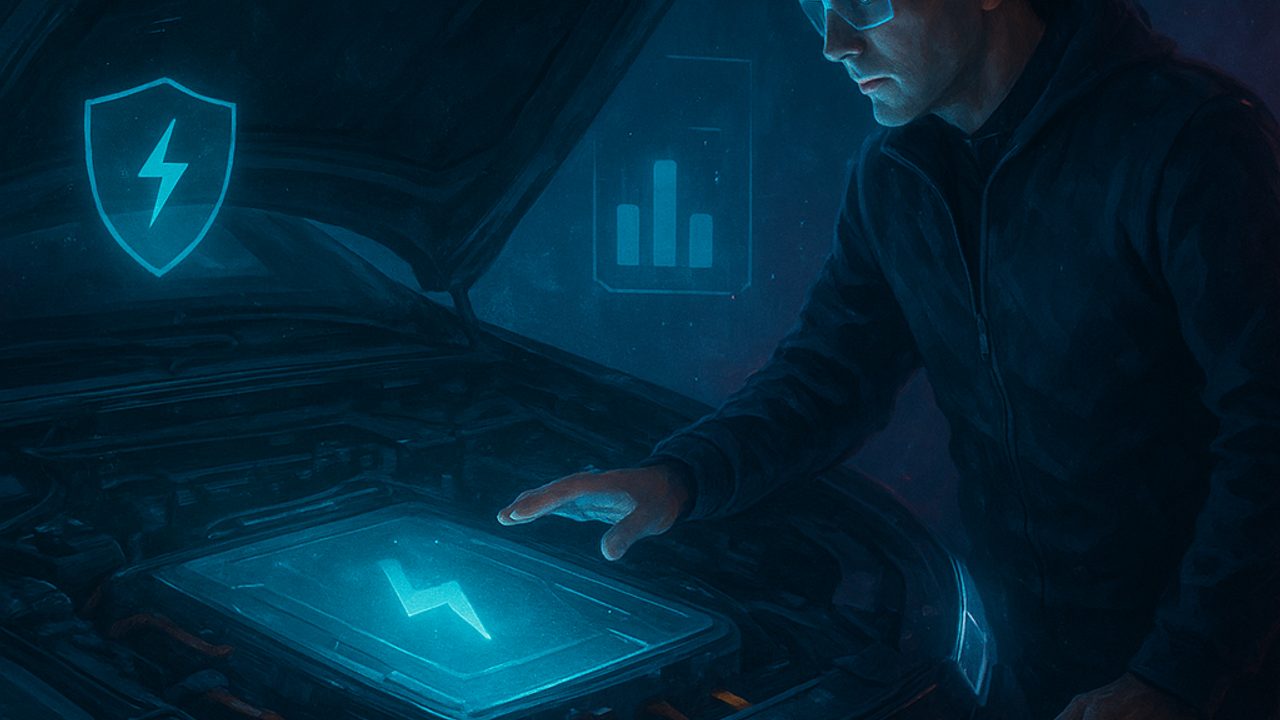
Those who are switching to an electric car often hear alarming stories about batteries: fire risks, electric shocks, and unexpected failures. For beginners, separating myth from fact is essential to drive and charge with greater peace of mind.
The good news is that battery safety has evolved a lot. Still, there are limits, basic precautions, and situations that deserve attention — especially for those just starting out.
Myth: electric car batteries catch fire easily
This is one of the most common myths. Electric car batteries undergo rigorous impact, temperature, vibration, and short-circuit tests before reaching the market. Statistically, fires in electric vehicles are rare and do not happen “out of nowhere.”
What is true: - Fires can occur in extreme cases, such as severe collisions or structural damage to the battery - Protection systems automatically shut down high voltage when faults are detected - The risk is not greater than in internal combustion vehicles, just different
Fact: the battery is well protected, but not indestructible
The battery is installed in a reinforced structure, usually in the vehicle’s floor. This improves stability and creates a protective zone against impacts. Even so, it can be damaged in specific situations.
Watch out for: - Strong impacts to the underside of the car (deep potholes, rocks, non-standard speed bumps) - Severe flooding above the limit indicated by the manufacturer - Repair attempts outside qualified workshops
Myth: charging from a home outlet is dangerous
Charging at home is safe as long as the electrical installation is adequate. The danger is not in the car, but in unsuitable outlets, cables, or circuit breakers.
For beginners, it is important to know: - The car and the charger monitor temperature and current at all times - In case of an anomaly, charging is automatically interrupted - Extension cords, improvised adapters, and old outlets increase risks
Fact: electric shocks are not part of normal use
Despite the high internal voltage, the user has no direct contact with it. Connectors, cables, and plugs are designed to prevent electrical exposure.
Safe everyday situations: - Connecting and disconnecting the cable with the car turned off - Washing the vehicle normally, even after rain - Driving on wet roads or during storms
Risk only exists in cases of system tampering, serious accidents, or improper technical interventions.
Myth: a damaged battery always explodes
Cinematic explosions are not part of the reality of electric cars. In serious failures, the most common behavior is localized overheating, with controlled gas release.
Vehicles are equipped with: - Thermal sensors distributed throughout the battery - Liquid or air cooling systems - Protocols that isolate affected modules
Fact: dashboard warnings should be taken seriously
One of the main safety allies is the car itself. Alerts related to the battery, temperature, or electrical system should not be ignored, even if the vehicle continues to operate.
Best practices for beginners: - Stop the vehicle in a safe place when a critical warning appears - Avoid charging if there is an active battery-related alert - Seek technical assistance if the warning persists
Understanding these myths and facts helps beginner drivers use electric cars with more confidence. The battery is safe, as long as its limits and basic daily precautions are respected — something much simpler than it may seem at first glance.
Comments
Comments are public and the sole responsibility of the author. Don’t share personal data. We may store technical signals (e.g. IP hash) to reduce spam and remove abusive, illegal, or off-topic content.