
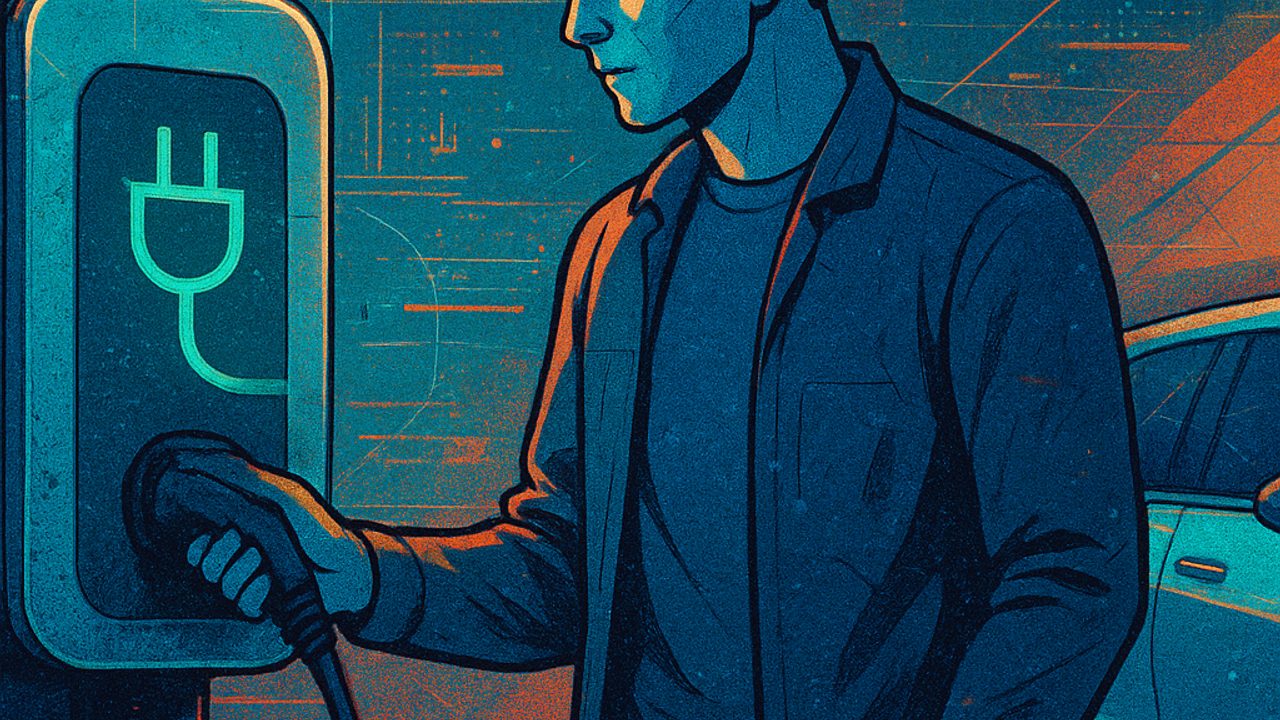
A standard household outlet solves a lot at the beginning of life with an electric car. Still, there comes a time when the wallbox enters the conversation: more power, more predictability, and less improvisation.
For beginner drivers, the decision shouldn’t revolve only around charging speed. Electrical safety comes first. This checklist helps identify when a wallbox is really worth it — and what to look at before installing.
1) Does your routine require frequent and predictable charging?
A wallbox starts to make sense when charging becomes a fixed part of the routine, not a backup plan.
Some clear signs:
- Daily use of the car, with charging almost every night. - Mileage that requires recovering a large portion of the battery in just a few hours. - Dependence on specific schedules (for example, leaving early every day with a full charge).
From a safety standpoint, this matters because it avoids risky adaptations, such as extension cords, overloaded outlets, or improvised installations. The more frequent the charging, the greater the care required with the electrical point.
2) Can your home’s electrical installation handle the load with margin?
Before thinking about the equipment, think about the infrastructure. A safe wallbox depends more on what’s behind the wall than on the design of the box.
Check whether:
- The breaker panel has a dedicated circuit breaker for charging. - The wiring supports continuous current for several hours. - There is functional and identified grounding.
Even for beginners, the logic is simple: electric car charging is a high and prolonged load. Old or adapted household systems can heat up, trip, or fail silently. When the installation is adequate, the wallbox reduces risks instead of creating new ones.
3) Does the wallbox offer integrated electrical protections?
Not every wallbox is the same, and safety is not a technical detail — it’s a purchase criterion.
Look for equipment that includes:
- Protection against overcurrent and short circuit. - Ground-fault detection. - Internal temperature control.
These features act as an extra layer between the car and the home’s electrical grid. For those just starting out, this reduces reliance on manual adjustments and lowers the chance of incorrect day-to-day use.
Standard outlet vs. wallbox: the practical difference in safety
The standard household outlet was designed for appliances, not for hours of sustained high load. It can work, but it operates close to its limit.
The wallbox, when properly installed:
- Operates within safer margins. - Maintains firm, monitored connections. - Reduces heating in cables and contacts.
This doesn’t mean the outlet is “forbidden,” but rather that the wallbox becomes worthwhile when use stops being occasional.
Common beginner mistakes when deciding on a wallbox
Some rushed decisions increase risk instead of solving the problem:
- Buying the wallbox before evaluating the electrical network. - Installing it anywhere in the garage without ventilation. - Choosing maximum power without real need.
For those just starting out, simplicity and compatibility are usually safer than excess power.
Quick checklist before installing
If you can check all the items below, a wallbox probably makes sense now:
- Frequent charging has become routine. - Electrical installation reviewed and dedicated. - Equipment with clear and adequate protections.
If any of these still raises doubts, the best decision may be to wait, adjust the infrastructure, and only then move forward. In the world of electric vehicles, safety almost always goes hand in hand with planning.
Comments
Comments are public and the sole responsibility of the author. Don’t share personal data. We may store technical signals (e.g. IP hash) to reduce spam and remove abusive, illegal, or off-topic content.