
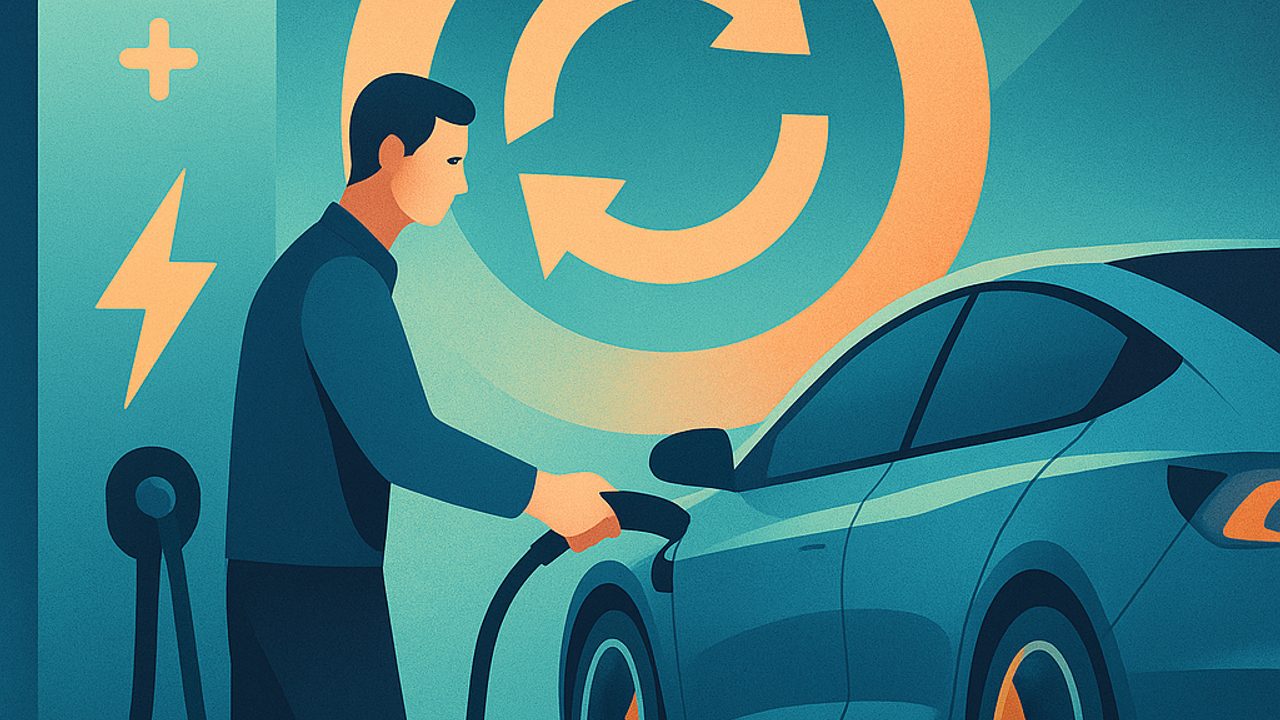
Bidirectional energy — known by the acronyms V2L (vehicle-to-load) and V2G (vehicle-to-grid) — is one of the most talked-about technologies in modern electric cars. The idea of using the vehicle to power equipment or even send energy back to the grid seems simple, but it involves technical limits and important precautions.
For those just starting out, some misconceptions are recurring and can lead to electrical risks, malfunctions, or improper system use. Understanding these pitfalls from the beginning helps you use the technology in a safer and more informed way.
First of all: what V2L and V2G really do
Although the terms are similar, they do not mean the same thing:
- **V2L (Vehicle-to-Load)**: allows external equipment to be powered directly by the car, such as household appliances, tools, or electronic devices. - **V2G (Vehicle-to-Grid)**: allows the car to send energy back to the electrical grid, something that depends on infrastructure, technical standards, and vehicle compatibility.
Not every electric car with V2L is compatible with V2G, and confusing these functions is the starting point for many mistakes.
Pitfall 1: believing every electric car is a “mobile power plant”
A common mistake is assuming that any electric car can power an entire house or operate high loads for long periods. In practice, there are clear limits:
- Maximum output power defined by the manufacturer - Usage time conditioned by the battery’s state of charge - Restrictions for high-consumption equipment
How to avoid it safely
- Always check the maximum power supported by the vehicle’s V2L - Prioritize simple and predictable loads - Avoid connecting multiple devices simultaneously without knowing the total consumption
Pitfall 2: improvising cables, adapters, and installations
Bidirectional energy requires specific accessories. Improvising extension cords, homemade adapters, or improper connections can cause overheating, short circuits, or damage to equipment.
This risk increases when use takes place outdoors or without protection against moisture.
How to avoid it safely
- Use only cables and adapters approved for the vehicle’s system - Check that connectors are in good condition before use - Never use V2L in wet locations or without adequate ventilation
Pitfall 3: ignoring the impact on range and vehicle availability
Using the car as a power source reduces the charge of the main battery. For beginners, it’s common to forget this detail and end up without enough range for the next trip.
In addition, some systems reduce or interrupt power output when minimum battery levels are reached, which can shut down equipment abruptly.
How to avoid it safely
- Set a minimum battery level before activating V2L - Use the function only when the car will not be needed afterward - Monitor consumption during use, not just at the beginning
Technical limits that help avoid surprises
Even when everything is done correctly, bidirectional energy does not replace dedicated systems. Some important limits:
- It was not designed for continuous use over many days - It may face automatic restrictions due to battery temperature - It depends on the vehicle’s software and safety sensors
Understanding these limits helps align expectations with real-world use.
Bidirectional energy with a focus on safety from the first use
V2L and V2G are useful and promising technologies, but they are not unrestricted “plug and play” solutions. For beginners, the safest path is to use bidirectional energy in a punctual, planned manner and within the vehicle’s specifications.
With clear information, attention to limits, and respect for basic electrical safety recommendations, this technology can be explored without scares and with much greater peace of mind.
Comments
Comments are public and the sole responsibility of the author. Don’t share personal data. We may store technical signals (e.g. IP hash) to reduce spam and remove abusive, illegal, or off-topic content.