
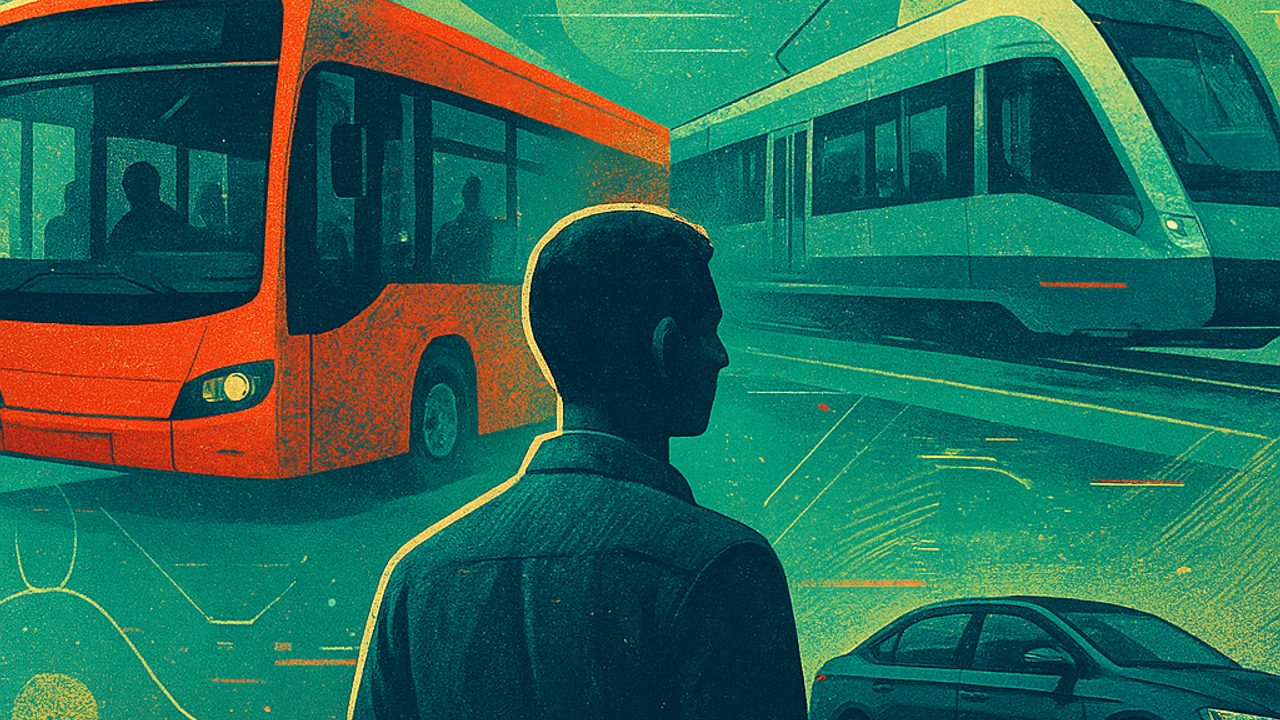
The discussion about transport emissions often falls into slogans. In practice, the difference between cars and public transport depends on how, when, and by whom each option is used.
When we look at emissions per passenger, collective transport almost always comes out ahead. Still, there are exceptions that matter in everyday life — especially outside peak hours.
Emissions per passenger: the calculation that matters
The fairest comparison is not per vehicle, but per passenger transported. A full bus spreads its emissions across dozens of people; a car with a single occupant does not.
In practical terms:
- Well-occupied urban buses tend to emit far less CO₂ per passenger than individual cars. - Subways and electric trains usually have the lowest emissions, especially when electricity comes from less carbon-intensive sources. - Cars only approach these figures when they are full — something rare in daily life.
The role of occupancy: efficiency rises and falls throughout the day
The environmental efficiency of public transport varies with occupancy. At peak times, the advantage is clear. Outside them, the picture changes.
- **Peak hours:** full vehicles, diluted emissions, higher efficiency per passenger. - **Between peaks and at night:** nearly empty buses may emit more per passenger than a car with two or three people.
This does not invalidate public transport, but it shows why matching supply and demand is so important for reducing emissions.
Energy and technology make a real difference
The type of energy used matters as much as occupancy.
- Electric systems (subways, light rail, trains) tend to perform better climatically. - Old diesel buses lose efficiency and increase local emissions. - Fleets with electrification or lower carbon-intensity fuels improve outcomes, even with average occupancy.
Here, emission reductions come more from fleet policy than from individual passenger choices.
When the car seems to “tie” — and why
There are situations in which the car approaches public transport in emissions per person:
- Short trips with two or more occupants. - Routes outside main corridors, where buses make long detours. - Low-demand periods, with collective vehicles running almost empty.
Even in these cases, the car rarely wins by a wide margin. The tie is usually circumstantial, not structural.
Indirect effects that don’t show up in the spreadsheet
Reducing emissions is not only about the tailpipe.
- Fewer cars mean less congestion, which reduces emissions from all vehicles. - Well-used corridors and rail lines reduce the need to expand roads, avoiding construction-related emissions. - Public transport encourages short walks at the start and end of trips, reducing motorized travel.
These accumulated effects explain why cities with strong public transport use tend to emit less in urban transport.
When it makes more sense in everyday life
Thinking about daily choices focused on emissions, public transport is usually the best option when:
- The route aligns with corridors or direct lines. - The trip occurs during higher-demand hours. - There are rail systems or high-capacity buses.
Cars may make climatic sense only in specific situations, such as shared trips outside peak hours and in poorly served areas. Overall, the more people inside collective transport, the smaller the footprint per person — and the greater the environmental gain for the city as a whole.
Comments
Comments are public and the sole responsibility of the author. Don’t share personal data. We may store technical signals (e.g. IP hash) to reduce spam and remove abusive, illegal, or off-topic content.