
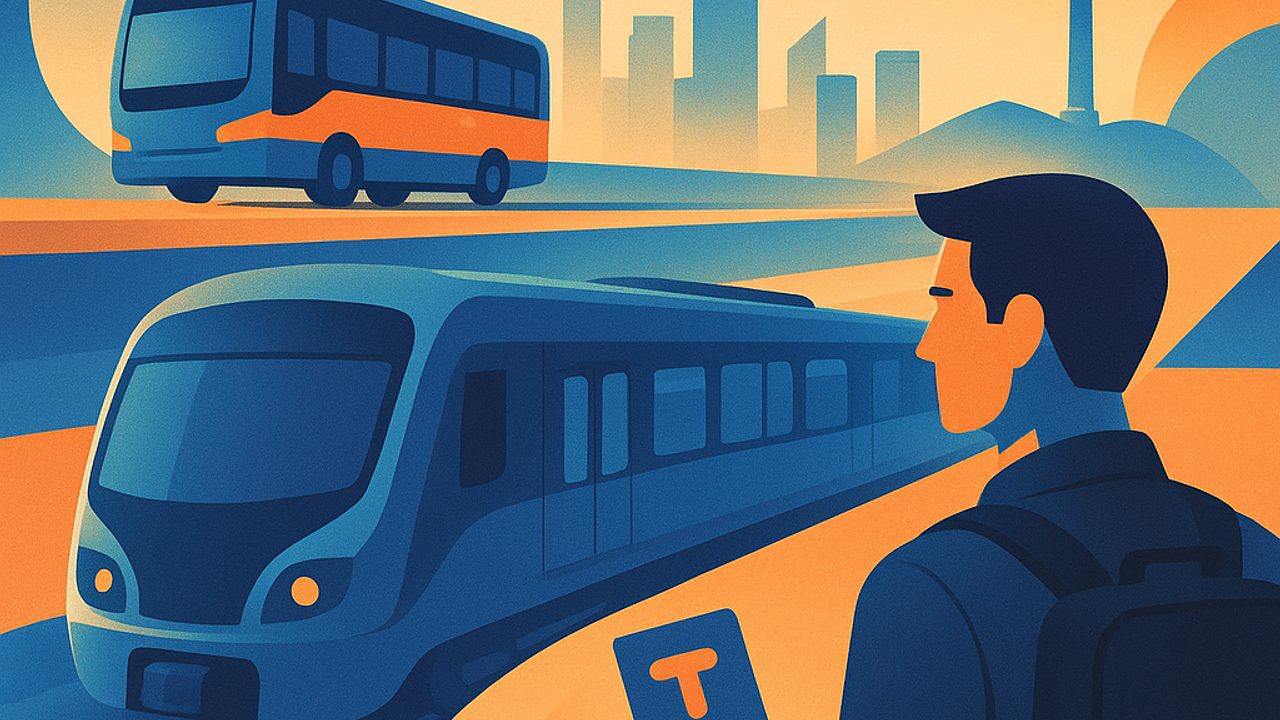
Seoul is big, intense, and very well connected. The good news: public transportation works in an integrated and predictable way, even for those who have never been to South Korea.
With a bit of planning, you avoid confusion right upon arrival and gain confidence to move between neighborhoods, attractions, and restaurants without relying on taxis.
Overview of public transportation in Seoul
The system revolves around three pillars: the subway, city buses, and the T‑money card. Everything works together.
- The subway covers virtually all tourist spots and central areas. - Buses complement the subway, reaching residential neighborhoods and more specific routes. - T‑money works as a single pass for the subway, buses, and even some convenience stores.
For first‑time visitors, the subway is usually the simplest starting point.
Seoul subway: why it makes the first trip easier
The subway is clean, punctual, and well signposted in English. Each line has a color, number, and stations identified with codes, which helps a lot with navigation.
Practical tips:
- Prioritize subway travel outside peak hours (7–9 a.m. and 6–7 p.m.). - Use the numbered station exits; they save long walks on the surface. - Trains usually have Wi‑Fi and screens with the name of the next station in Korean and English.
Even large stations become easier when you already know which line and which exit to use.
City buses: when it’s worth using them
Buses come into play when your destination isn’t very close to the subway or when you want to avoid long transfers.
In Seoul, colors help:
- Blue buses: connect distant areas via major avenues. - Green buses: run shorter routes, connecting subway stations. - Red buses: intercity (less common for tourists).
For a first trip, focus on green and blue buses, always using map apps to confirm the correct stop.
T‑money card: how it works in practice
T‑money is a rechargeable card that simplifies everything. You tap at the subway gate, board the bus, and the system automatically calculates the integrated fare.
What to know before using it:
- It can be purchased at convenience stores and stations. - Reloading is easy and done with cash. - The balance works for all travel and doesn’t expire quickly.
Beyond transportation, it’s accepted at station lockers, taxis, and some small shops.
From the airport to central Seoul without stress
Arrival is usually the first logistical challenge. There are three main options:
- Express train or regular train from the airport to central areas. - Limousine buses (comfortable, with luggage space). - Taxi, recommended only for very late arrivals or groups.
With a medium suitcase and a destination near a station, the train is usually the best value.
Planning day‑to‑day travel
Before leaving the hotel, it’s worth spending two minutes planning:
- Which station is closest to your destination. - How many transfers are needed. - Which station exit to use.
This habit reduces unnecessary walking and avoids that feeling of always being on the “wrong side” of the street.
Common mistakes for first‑time users of Seoul’s transportation
Some missteps are common but easy to avoid:
- Getting on the wrong train car (some trains have different destinations on the same line). - Forgetting to tap T‑money when getting off the bus. - Underestimating the size of large stations.
By paying attention to the screens and staying calm, everything flows better in the first few days.
A realistic pace to enjoy the city more
Transportation in Seoul is fast, but the city can be tiring. Plan at most 2 to 3 areas per day.
Grouping attractions by neighborhood, using the subway well, and trusting T‑money turns logistics into an ally — not an obstacle — to enjoying South Korea from your very first trip.
Comments
Comments are public and the sole responsibility of the author. Don’t share personal data. We may store technical signals (e.g. IP hash) to reduce spam and remove abusive, illegal, or off-topic content.