
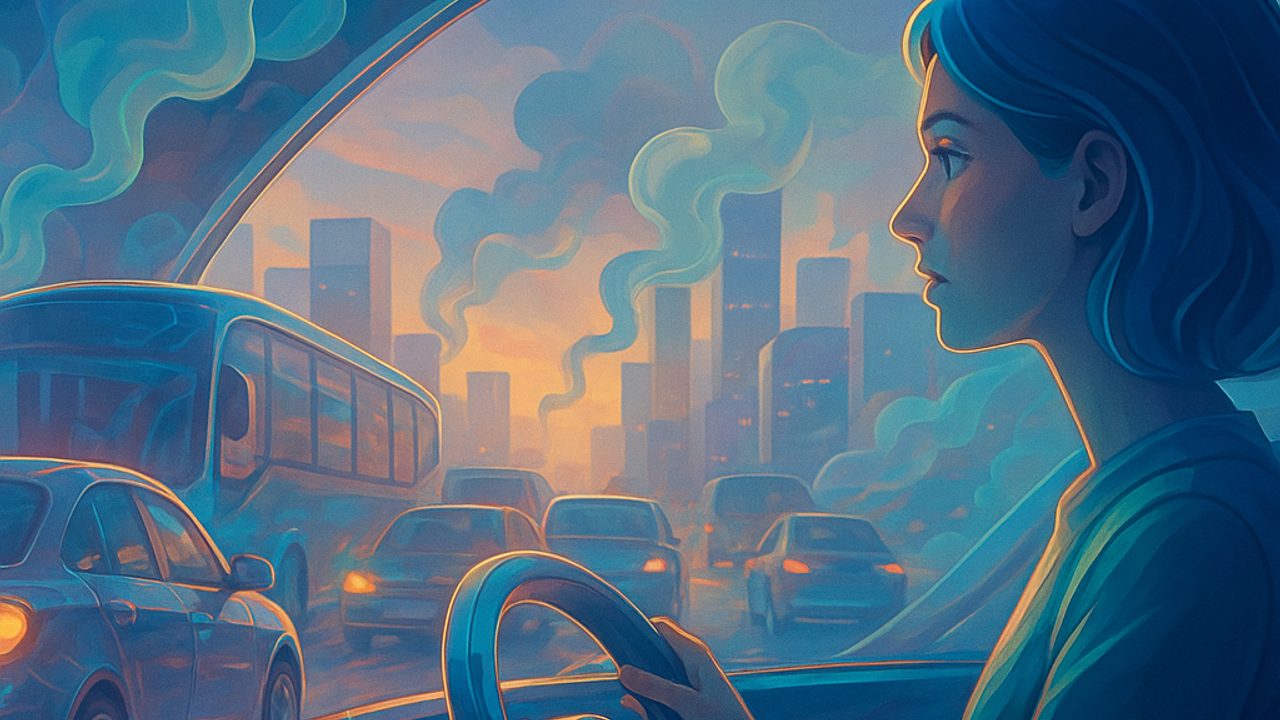
The air we breathe in cities is strongly influenced by traffic. Not only by the number of vehicles, but by how, when, and where they circulate.
Understanding the basic concepts helps reveal simple opportunities to reduce emissions in everyday life — without far-fetched solutions.
What comes out of the tailpipe (and beyond it)
Vehicles emit a mix of pollutants. The most cited are gases, but they are not the only ones.
- **Particulate matter (PM2.5 and PM10)**: microscopic particles that penetrate the lungs; they come from combustion and also from tire and brake wear. - **Nitrogen oxides (NOx)**: formed at high engine temperatures; they worsen air quality and contribute to ozone. - **Carbon monoxide (CO)**: the result of incomplete combustion, common in congestion. - **Volatile organic compounds (VOCs)**: take part in the formation of ground-level ozone.
Even “modern” vehicles emit pollutants, especially when poorly maintained or used in heavy traffic.
Congestion: why it pollutes more than it seems
Stopped traffic or stop-and-go driving multiplies emissions. The engine operates outside its most efficient range, travel time increases, and fuel consumption rises.
In addition, pollutant concentrations are higher where people are: intersections, traffic corridors, and dense areas. The impact is not only climatic; it is local and immediate.
Short distance, big impact
Short trips — those of just a few kilometers — weigh more than they seem. A cold engine emits more, and many of these routes could be done in other ways.
Common examples:
- Driving to the bakery instead of walking. - Using the vehicle for chained errands that could be grouped into a single outing.
Reducing the number of engine starts throughout the day already cuts a relevant share of emissions.
How driving style changes the city’s air
The way you drive matters. Hard acceleration, excessive speed, and inappropriate gearing raise consumption and pollution.
There are practical gains in:
- Anticipating braking and maintaining a steady speed. - Avoiding high engine revs unnecessarily. - Turning off the engine during longer stops, when safe.
These habits require no investment and also tend to improve ride comfort.
Route and timing choices also count
Not every emissions reduction depends on the vehicle itself. Small personal logistics adjustments help.
- **Off-peak hours** reduce time spent in congestion. - **Slightly longer but smoother routes** can emit less than jammed shortcuts. - **Trip planning** avoids unnecessary back-and-forth.
Over the course of a week, the difference adds up.
The role of active and collective transport in everyday life
Walking, cycling, and using public transport reduce direct emissions and ease the road system. Even when they do not replace all trips, they work well for part of them.
Simple combinations help:
- Walking or cycling on short trips. - Using public transport on days with heavier congestion. - Integrating modes (for example, walking to a more efficient stop).
Each fewer car during peak hours improves the air for everyone.
Basic maintenance: an invisible environmental impact
Poorly tuned vehicles pollute more. Simple items make an ongoing difference:
- Properly inflated tires. - Clean filters. - A well-adjusted engine with no faults.
It is not about performance, but about avoiding wasted fuel and unnecessary emissions.
Understanding how traffic and pollution are connected helps break autopilot. In urban daily life, small repeated decisions — such as when to leave, which way to go, and how to drive — shape the quality of the air the city breathes.
Comments
Comments are public and the sole responsibility of the author. Don’t share personal data. We may store technical signals (e.g. IP hash) to reduce spam and remove abusive, illegal, or off-topic content.