
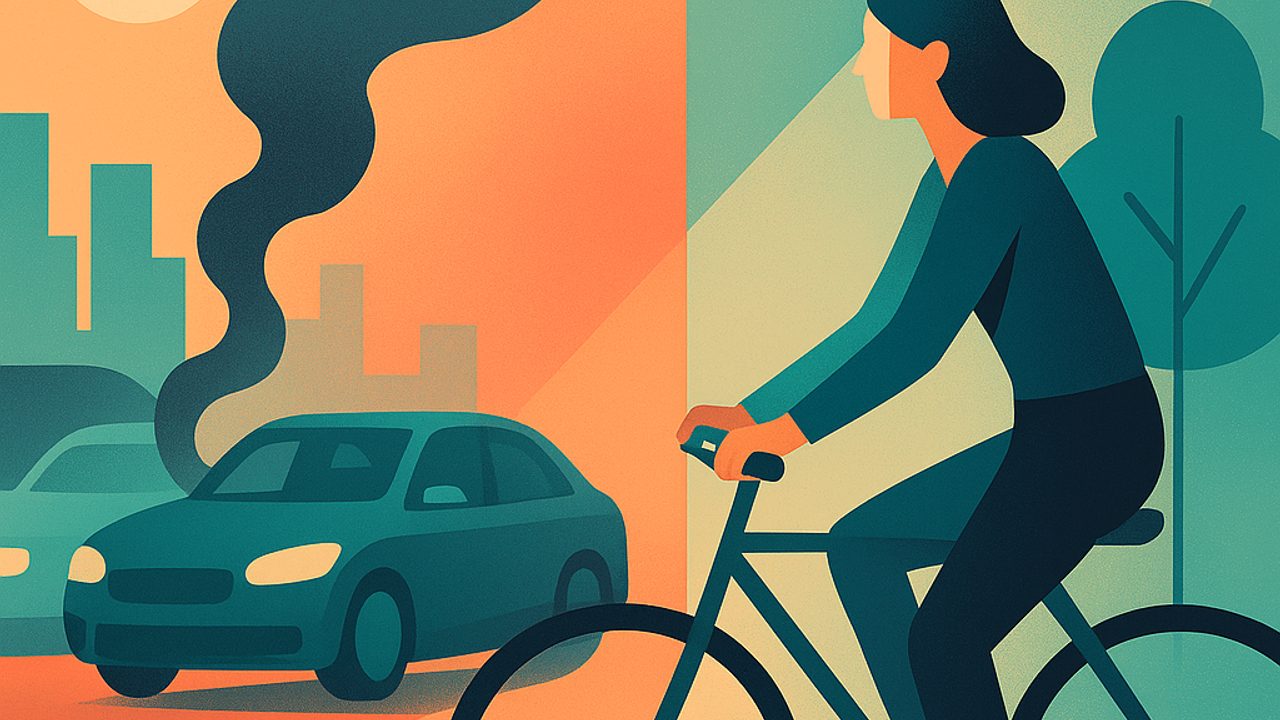
Air pollution associated with traffic is a central theme of urban sustainability. It results from fuel combustion and the wear of vehicle components, affecting health, climate, and quality of life in cities.
Understanding basic concepts and impacts helps identify where small habit changes can make a difference in daily life, especially for those who commute frequently.
What links traffic and air pollution
Urban traffic concentrates emission sources in limited spaces. Vehicles in circulation release gases and particles that accumulate, especially on congested roads and corridors with poor ventilation.
Among the factors that intensify this situation are: - High vehicle density per kilometer - Frequent stopping and starting - Engines operating outside the ideal range
Main pollutants generated in daily travel
In traffic, the most common pollutants include gases and microscopic particles. They vary according to engine type, fuel, and usage conditions.
The most recurrent are: - Carbon monoxide (CO) - Nitrogen oxides (NOx) - Particulate matter (PM) - Volatile organic compounds (VOCs)
Impacts on health and the urban environment
Continuous exposure to these pollutants is associated with respiratory discomfort and worsening air quality in cities. In the urban environment, it also contributes to heat islands and reduced visibility.
In addition, part of traffic emissions participates in processes that affect the climate on a larger scale, reinforcing the importance of local actions.
Where daily life influences emissions
Many emissions are linked to how, when, and for how long vehicles are used. Seemingly neutral routines can increase or reduce the pollutant load.
Examples of common situations: - Using the car for very short trips - Keeping the engine running during prolonged stops - Traveling during peak hours without necessity
Simple decisions that help reduce
Some everyday choices tend to reduce emissions without requiring radical changes: - Planning routes to avoid recurring congestion - Grouping tasks into a single trip - Prioritizing active or collective modes when feasible
Smoother traffic, cleaner air
Traffic flow has a direct relationship with air pollution. Vehicles that maintain a constant speed, within appropriate limits, emit less than those stuck in traffic jams.
Individual measures, when added together, contribute to a more efficient and less polluting road system.
Awareness as part of sustainable mobility
Reducing traffic emissions does not depend only on technology. Information and attention to one’s own routines are important components of sustainable mobility.
By understanding the impacts of daily travel, it becomes clearer how small adjustments can help create cities with cleaner air and better quality of life.
Comments
Comments are public and the sole responsibility of the author. Don’t share personal data. We may store technical signals (e.g. IP hash) to reduce spam and remove abusive, illegal, or off-topic content.