
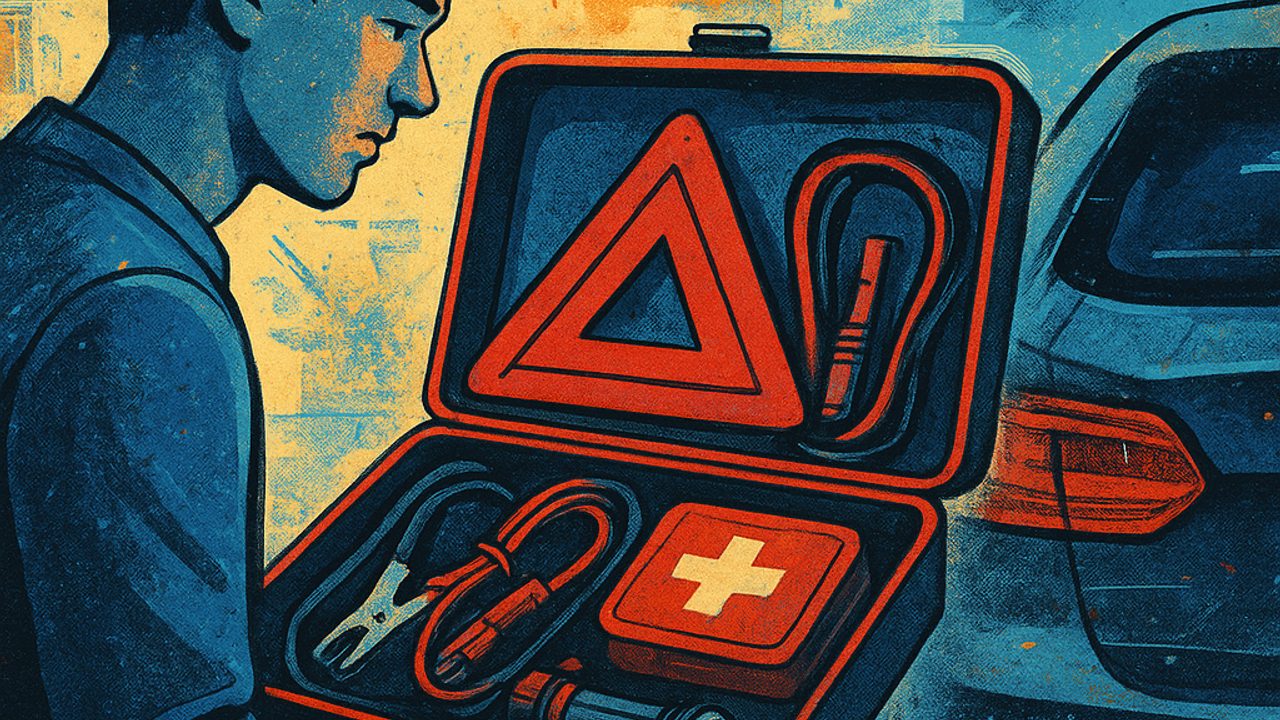
Few people think about an emergency kit until they actually need it. And when they do, the most basic item is often missing. Putting together a simple, organized set in the trunk prevents improvisation and reduces stress in common situations.
It’s not about carrying half a workshop, but about choosing items that solve frequent unexpected problems and help signal the car safely.
Mandatory and complementary safety items
Some equipment is already part of a driver’s routine and needs to be easily accessible at all times. Others are not mandatory, but help a lot.
- **Warning triangle**: used to alert other drivers during emergency stops. - **Spare tire in good condition**: check pressure and condition periodically. - **Lug wrench and jack**: without them, the spare tire is useless. - **Flashlight**: essential at night or in poorly lit places. - **Reflective vest**: increases visibility when exiting the car on highways.
When these items are most useful
Stops on the shoulder, tire changes, simple breakdowns, and any situation where the car is immobilized require clear signaling and visibility. At night or in the rain, these items stop being optional.
Simple tools that solve small unexpected issues
There’s no need to carry a full tool set. A few compact items already help a lot.
- **Jumper cables**: to help start the car if the battery is dead. - **Adjustable wrench or multitool knife**: useful for simple tightening tasks. - **Electrical tape and plastic zip ties**: temporarily secure hoses, loose panels, or exposed wires.
These items are meant for temporary solutions, just to get the car out of an unsafe situation.
Items for comfort and personal protection
Unexpected situations also affect the people inside the car. Thinking about comfort helps keep calm.
- **Drinking water** - **Paper towels or wet wipes** - **Rain poncho or light jacket** - **Sunscreen**
In which situations they make a difference
Long waits for assistance, unexpected traffic jams, or stops under strong sun. These items are especially helpful on trips and drives outside the city.
Basic first aid: the minimum recommended
A simple first aid kit doesn’t take up space and can be useful in minor accidents.
- Adhesive bandages - Gauze and tape - Disposable gloves - Antiseptic
The idea is to take care of minor cuts or scrapes until the person can receive proper medical attention.
Organizing the kit in the trunk
Good organization is just as important as choosing the right items.
- Use a **rigid box or insulated bag** to keep everything from rolling around. - Separate by categories: safety, tools, comfort. - Keep the triangle and flashlight in a quick-access spot.
Avoid mixing emergency items with groceries, loose objects, or products that could leak.
Periodic check: the detail many people forget
From time to time, it’s worth checking the kit.
- Do the flashlight batteries still work? - Is the water within its expiration date and properly sealed? - Are the tools still there?
This quick review can be done along with tire pressure checks or trunk cleaning. Small precautions prevent surprises when the kit is actually needed.
Comments
Comments are public and the sole responsibility of the author. Don’t share personal data. We may store technical signals (e.g. IP hash) to reduce spam and remove abusive, illegal, or off-topic content.