
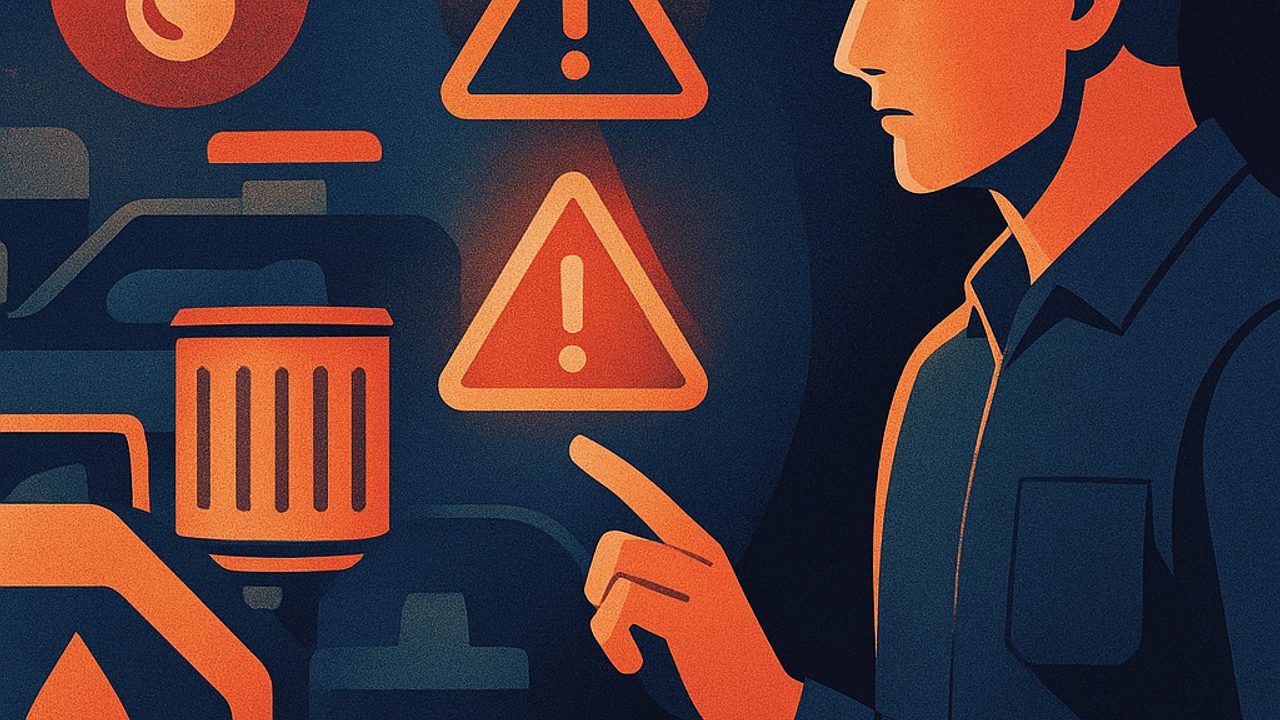
Engine oil and filters work quietly. When something goes off normal, the signs usually appear early — and ignoring them can turn into a breakdown or accident.
For those just starting out, the challenge is separating real alerts from everyday noise. Here are three clear signs, why they matter for safety, and how to act calmly.
Sign 1: oil light on or flashing
The red oil light is not a maintenance reminder. It indicates insufficient pressure in the system, which can leave parts without lubrication.
**Why it’s critical for safety:** an engine without enough oil can seize suddenly. While moving, this means loss of power and the risk of stopping in a dangerous place.
**What to do immediately:** - Reduce speed and look for a safe place to pull over. - Turn off the engine. Avoid “driving just a little more.” - Wait a few minutes, check the level with the dipstick, and look for visible leaks. - If the level is low, top up only if you know which oil to use. If the light doesn’t go out, do not continue.
Pay attention to the sensor
Sometimes the level is correct and the issue is the sensor or a clogged filter. Still, don’t ignore it: driving with the light on is betting against the engine.
Sign 2: oil very dark, thick, or with a strong smell
Oil darkens with use; that’s normal. The warning appears when it becomes too thick, smells burnt, or looks like sludge.
**Why it’s critical for safety:** degraded oil loses its ability to lubricate and cool. The engine runs hotter and can fail under load, such as during overtaking.
**What to do:** - Check the mileage since the last change (oil and filter together). - If it’s past the interval or use has been severe (heavy traffic, short trips), bring the change forward. - Avoid mixing brands or viscosities without guidance from the manual.
The role of the oil filter
A saturated filter lets dirty oil circulate or triggers bypass valves. Changing only the oil and keeping the old filter is false economy.
Sign 3: abnormal oil consumption
Topping up a little between changes can happen. Topping up constantly, at short intervals, is a warning sign.
**Why it’s critical for safety:** high consumption can indicate leaks or oil burning. In both cases, the level can drop quickly without a dashboard warning.
**What to do:** - Park in the same spot for a few days and look for stains on the ground. - Check the level weekly, with the car cold and on level ground. - If consumption increases, reduce long trips until you investigate.
Don’t confuse it with evaporation
Modern engines hardly “evaporate” oil. Frequent top-ups usually have a mechanical cause or an inadequate filter.
Filters beyond oil: air and fuel also matter
Air and fuel filters don’t lubricate, but they directly influence engine operation.
**Common signs of a compromised filter:** - Loss of power on climbs. - Hesitation at steady acceleration. - Increased consumption without a change in driving habits.
Dirty filters strain the engine, raise temperature, and can lead to failures at critical moments.
Quick prevention checklist (safety first)
Simple habits greatly reduce risk: - Check the oil level every two weeks. - Change oil and filter together, respecting the car’s real usage. - Use the specification in the manual, not “whatever the station has.” - Watch the garage or parking spot floor. - Be wary of any red light on the dashboard.
When to stop and ask for help
If the oil light is on, there are metallic noises, a burning smell, or overheating, stop. Continuing to drive turns a simple alert into a serious failure.
Taking care of oil and filters is basic, but it’s also one of the greatest protections against the unexpected. Safety starts with what doesn’t show — until the day it does.
Comments
Comments are public and the sole responsibility of the author. Don’t share personal data. We may store technical signals (e.g. IP hash) to reduce spam and remove abusive, illegal, or off-topic content.