
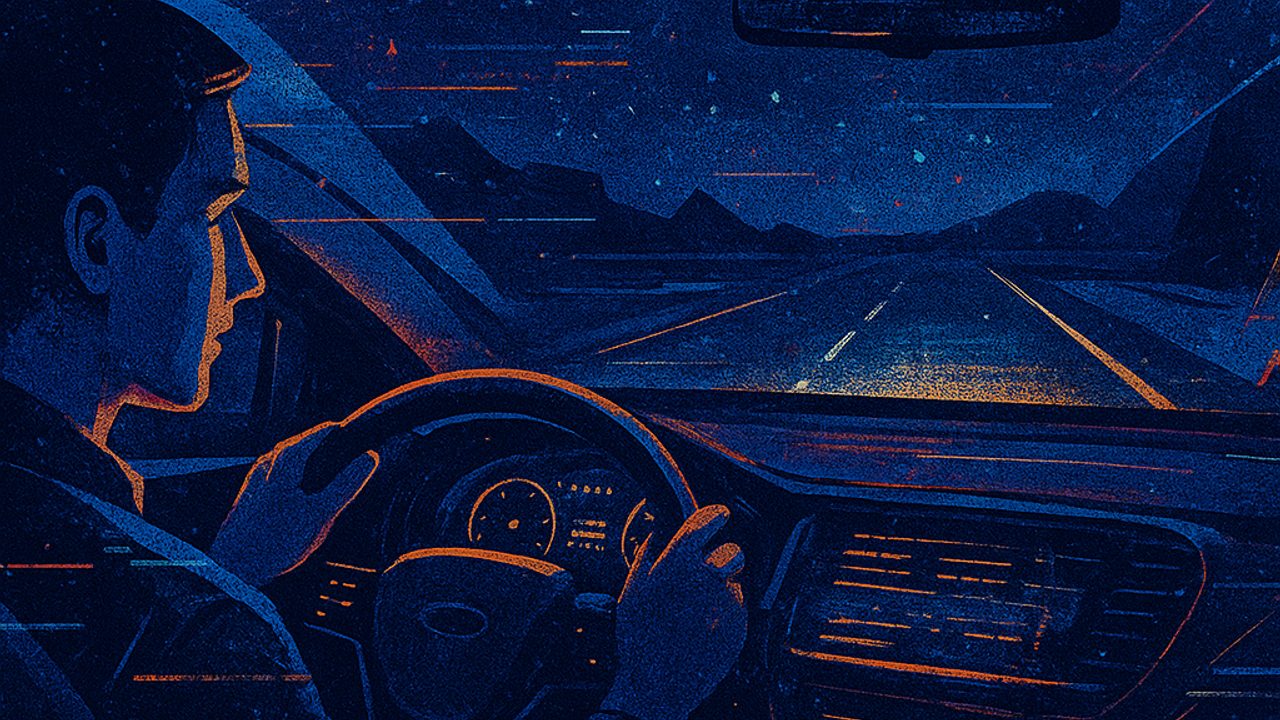
Driving at night changes everything: vision loses range, the body asks for rest, and any reflection becomes a distraction. The good news is that it’s possible to reduce risks with simple adjustments and consistent habits.
It’s not about driving faster or “powering through.” It’s about seeing better, avoiding glare — and not being blinded — and respecting the body’s limits.
Proper headlight adjustment: see far without blinding anyone
Poorly adjusted headlights either illuminate too little or bother oncoming drivers. A basic adjustment already helps a lot:
- Park on a level surface, a few meters from a wall. - Check beam height: the low-beam cutoff should be slightly below the driver’s eye level. - Use the internal height adjuster (when available) when loading the car or towing.
Different bulbs (brand, color, or intensity) also harm focus. Always replacing them in pairs helps maintain a consistent beam pattern.
Low beam, high beam, and fog lights: when to use each
Proper use prevents glare and improves road reading:
- **Low beam**: standard for city driving and highways with traffic. - **High beam**: only when there are no vehicles ahead or coming from the opposite direction; dim it in advance. - **Fog lights**: only in fog, heavy rain, or dust. In clear weather, they scatter light and worsen visibility.
Switching lights at the right time is just as important as braking at the right time.
Windshield clean inside and out
At night, any dirt turns into a halo. It’s no exaggeration:
- Clean the inside of the glass with proper products; grease causes reflections. - Check for dried-out wiper blades, which leave streaks illuminated by headlights. - Refill the washer reservoir with proper fluid.
Glasses and vision
If you wear glasses, keep the lenses clean and free of scratches. Old lenses or worn anti-reflective coating increase glare from other vehicles’ headlights.
How to deal with glare from other vehicles
When a high beam appears unexpectedly, the instinct is to stare at the light — and that makes everything worse. Try:
- Shifting your gaze to the right edge of the lane, using it as a reference. - Slightly reducing speed until vision recovers. - Adjusting the rearview mirror to the anti-glare position, if available.
Avoid “retaliating” with high beams. Besides not solving the problem, it increases risk.
Nighttime fatigue: signs that call for a break
Fatigue arrives quietly. Watch for common signs:
- Frequent yawning and burning eyes. - Difficulty staying in your lane. - Loss of sense of time or the last few kilometers driven.
Breaks that work
Stopping for 10 to 15 minutes, getting out of the car, stretching, and drinking water helps more than lowering the window or turning up the volume. Coffee can help, but it doesn’t replace rest.
Pace, distance, and reading the road at night
At night, everything happens faster because you see things later. Compensate with:
- Slightly lower speed than during the day. - Greater following distance from the vehicle ahead. - Extra attention to pedestrians, cyclists, and animals, especially on unlit stretches.
The sum of these precautions doesn’t make the trip slower — it makes it more predictable. And predictability is the foundation of safety when visibility drops.
Comments
Comments are public and the sole responsibility of the author. Don’t share personal data. We may store technical signals (e.g. IP hash) to reduce spam and remove abusive, illegal, or off-topic content.