
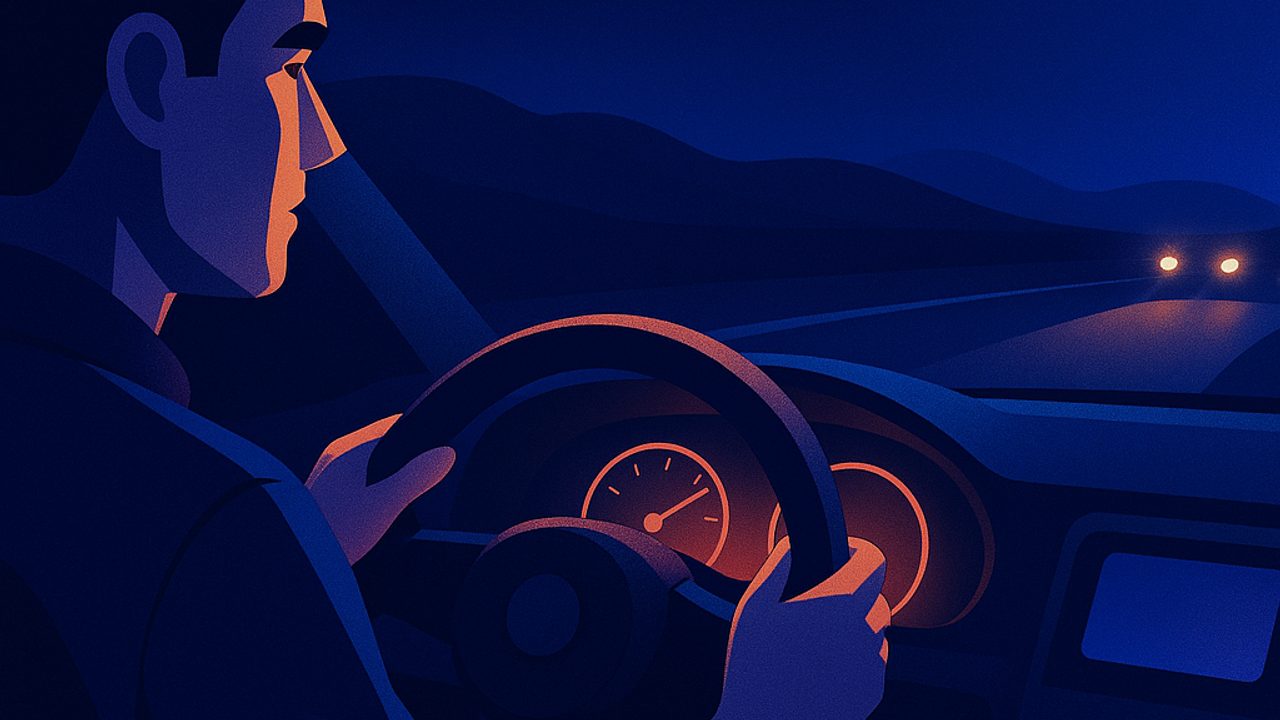
Night driving changes the game. Visibility drops, fatigue shows up faster, and small lapses carry more weight. For those just starting out, this often turns into unnecessary tension.
With a few adjustments and conscious choices, it’s possible to get through the night more safely. Below are three common traps and what to do to avoid them.
Trap 1: poorly used (or poorly adjusted) headlights
Using the wrong headlights isn’t just annoying — it’s risky. Weak low beams shorten your field of vision; high beams in the wrong place dazzle others and provoke unpredictable reactions from oncoming traffic.
**How to avoid it:** - Use **low beams** on lit roads and when passing other vehicles. - Reserve **high beams** for truly dark stretches and switch them off as soon as you notice another car ahead. - Check the **alignment**: headlights aimed too high “point at people’s eyes”; too low, they illuminate too little. - Burned-out bulbs or bulbs of different colors confuse your reading of the road.
Practical garage tip
Park a few meters from a wall at night. The beam should be symmetrical and below eye level. Large differences call for adjustment.
Trap 2: scattered attention in the dark
At night, the brain works harder to interpret shadows, reflections, and signs. Any distraction becomes a lost second — and in the dark, a second is long.
**How to avoid it:** - Reduce stimuli: lower the volume, avoid using your phone, and set the dashboard to a comfortable brightness. - Keep **more distance** from the car ahead; braking needs extra margin. - Scan your surroundings: shoulder, mirrors, and the far end of the road. Animals, cyclists, and pedestrians appear without warning.
Quick adjustments before heading out
- Clean the windshield inside and out. - Adjust mirrors to minimize reflections. - Set interior lighting so it doesn’t reflect on the glass.
Trap 3: underestimating fatigue
The body feels it. Heavy eyes, yawning, and attention lapses appear earlier at night, even on short trips.
**How to avoid it:** - Avoid driving after an exhausting day. - Take regular breaks on trips: getting out of the car and stretching helps. - If sleep hits, **stop**. Opening the window or turning up the music does not replace rest.
Warning signs that call for a stop
- Difficulty staying in your lane. - Forgetting recent stretches of the drive. - Slow reactions to lights and signs.
Habits that increase safety in the dark
- Speed compatible with the reach of your headlights. - Conscious use of hazard lights only for emergency stops. - Extra caution on wet roads: reflections deceive perception.
When the night becomes an ally
With proper headlights, focused attention, and respect for the body’s limits, night driving becomes more predictable. Traffic tends to flow better, and driving feels calmer. Safety, in this scenario, is born from simple choices made before and during the trip.
Comments
Comments are public and the sole responsibility of the author. Don’t share personal data. We may store technical signals (e.g. IP hash) to reduce spam and remove abusive, illegal, or off-topic content.