
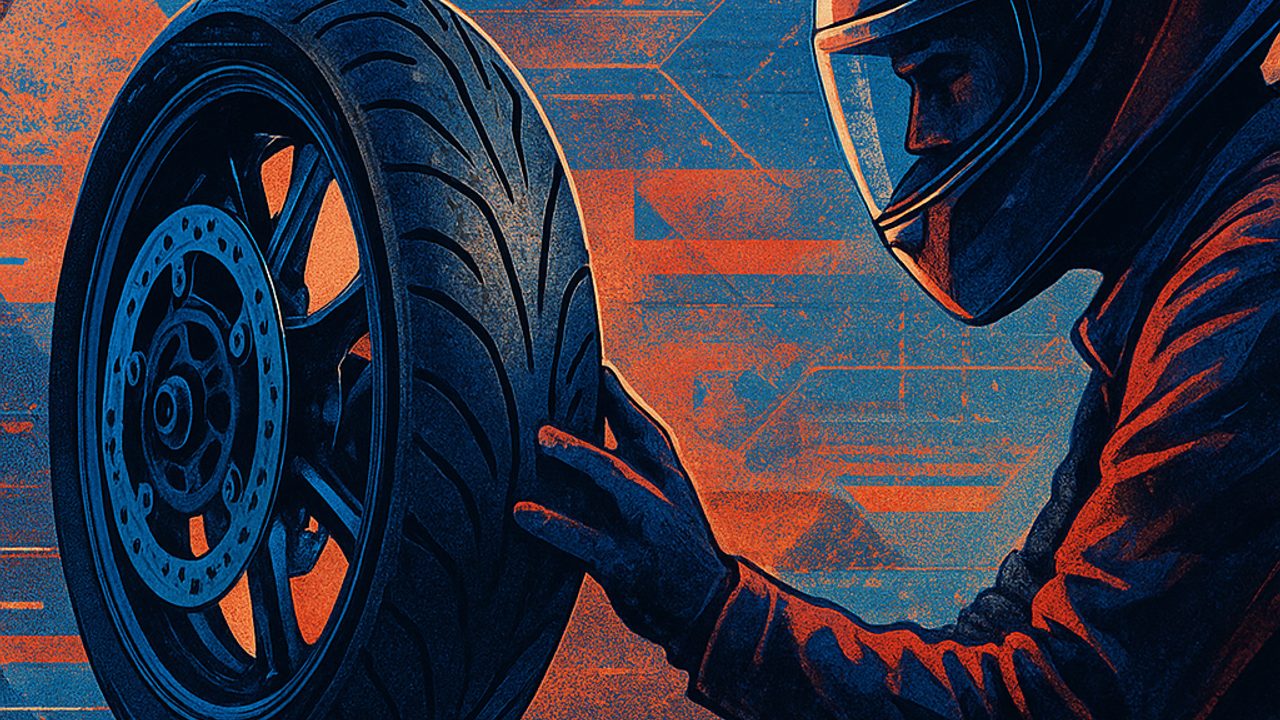
A motorcycle tire is not a detail. It defines how much the bike grips the ground, how it brakes in an emergency, and how safe you feel in a simple neighborhood corner.
For beginners, the topic often turns into confusion: correct pressure, tire type, when to replace, and what really matters in daily use. Here is a straightforward comparison, without complicated terms.
Inflation: the simplest and most ignored adjustment
Correct pressure changes the behavior of the motorcycle more than many people imagine. And it changes quickly: just a few days without checking.
- **Underinflated tire**: heavy steering, higher risk of aquaplaning, and irregular wear on the sides. - **Overinflated tire**: the bike bounces, loses contact area, and slips more easily on uneven surfaces.
For beginners, the practical rule is simple: follow the pressure indicated in the manual or on the motorcycle sticker and check at least once a week, always with cold tires.
Wear: learning to read the tire avoids scares
It’s not just tread depth that matters. The way the tire wears says a lot about safety.
Common signs in daily use:
- **Worn center**: common in urban use and straight highways; worsens braking in the wet. - **Worn sides**: more common for those who ride twisty roads or curves; when excessive, the bike becomes unstable when leaning. - **Cupping or scalloped wear**: indicates incorrect inflation or misadjusted suspension.
If wear indicators appear or if the bike starts to “dance” in gentle curves, it’s already time to plan a replacement.
New tire vs. half-life tire: when each makes sense
For those learning, a new tire is almost always the safest choice. The rubber still responds well and forgives small mistakes.
A half-life tire may make sense when:
- The origin is known - There is no dryness or cracks - Use will be light and urban
Even so, it’s good to know: a used tire reduces the safety margin, especially in the wet and during hard braking.
Tire types and their real impact on the street
Not every tire suits every use, and this shows quickly in the bike’s behavior.
Street tire (asphalt)
- Better grip on dry and wet surfaces - More predictable braking - Ideal for urban use and highways
Dual-purpose tire
- Handles dirt roads and asphalt - Less grip in the wet - Makes sense for those who alternate between city and dirt roads
Sport tire
- Very high grip in dry conditions - Wears quickly and takes time to warm up - For beginners, it’s usually overkill for daily use
Sizes and specifications: don’t get creative
Changing tire size for looks or price may seem harmless, but it affects stability, speedometer accuracy, and even braking.
For those just starting out:
- Keep the original sizes - Respect load and speed ratings - Avoid mixing very different models between front and rear
The motorcycle was designed to work well with that setup.
When the tire starts to compromise your safety
Some signs appear before a scare:
- The bike slipping on lane markings or smooth surfaces - Longer braking distances than normal - A feeling of “falling” with slight lean
Ignoring these warnings usually costs dearly. A tire doesn’t warn twice.
What to prioritize if you are just starting now
If the idea is to ride with more peace of mind:
- Correct inflation every week - Tires suited to your real use - Replacement at the right time, not at the limit
A good tire doesn’t perform miracles, but a bad tire removes all margin for error. For those still learning, that margin is what keeps the bike upright.
Comments
Comments are public and the sole responsibility of the author. Don’t share personal data. We may store technical signals (e.g. IP hash) to reduce spam and remove abusive, illegal, or off-topic content.