
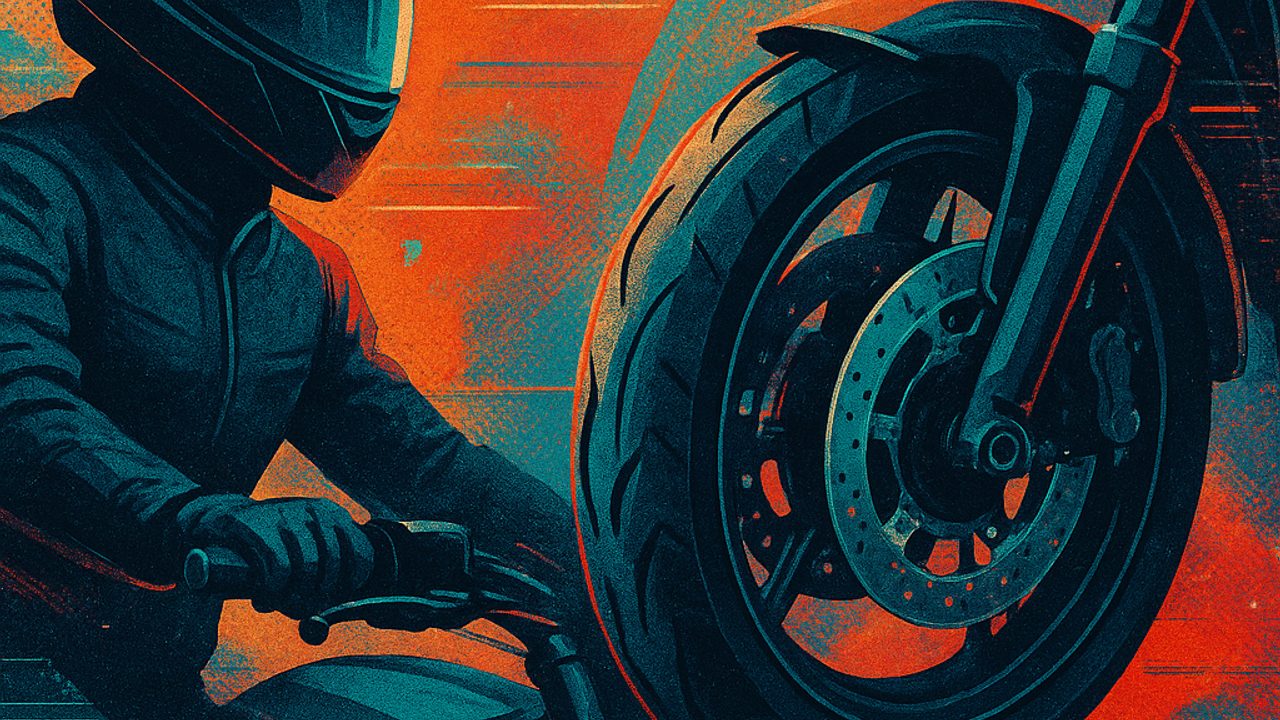
The tire is the motorcycle’s only point of contact with the ground. Everything goes through it: acceleration, braking, cornering, and even that quick correction to avoid a pothole.
For those who are starting out, building good tire habits is one of the simplest ways to gain safety without spending much. Three practices make a real difference in daily riding.
Habit 1: check and adjust tire pressure frequently
Riding with underinflated or overinflated tires completely changes the motorcycle’s behavior. Incorrect pressure affects stability, increases braking distance, and accelerates wear.
Ideally:
- Check the pressure at least every 15 days - Always inflate with cold tires (before riding) - Use the pressure indicated in the manual or on the motorcycle’s label
In practice, some common beginner mistakes:
- Copying a friend’s motorcycle pressure (weight, use, and tires may be different) - Inflating “by eye” or only when the tire looks flat - Forgetting that a passenger and load require higher pressure in the rear tire
Correct tire pressure makes steering more predictable, improves grip, and reduces scares during emergency braking.
Habit 2: learn to read tire wear
Wear isn’t only when the tire becomes bald. There are clear signs that something isn’t right — and knowing how to identify them prevents unexpected loss of grip.
What to observe day to day
- **Wear indicators (TWI)**: small raised bars in the grooves; when the tread reaches them, the tire has already lost much of its efficiency - **Irregular wear**: more wear in the center or on the sides may indicate incorrect pressure or specific use - **Cracks and dryness**: common in old or little-used tires - **Cupping on the front tire**: affects stability in corners and braking
For beginners, an important point: worn tires change the motorcycle’s response without warning. Loss of grip usually appears first on wet pavement or during harder braking.
Habit 3: choose the right tire for your real use
Not every tire suits every type of use. Choosing only by price or appearance can compromise safety.
Before replacing, it’s worth asking:
- Do I use the motorcycle more in the city, on highways, or on rough roads? - Do I ride more in dry conditions, rain, or both? - Do I prefer comfort or a firmer response in corners?
Basic points when choosing
- **Correct sizes**: follow the motorcycle’s specifications exactly - **Type of tire**: urban, mixed, or focused on durability - **Compound**: softer tires grip better, but wear out faster
For those starting out, tires with a more neutral profile and good water drainage tend to be more predictable and forgiving of mistakes.
Pressure, wear, and choice work together
These three habits are connected. A good tire that’s poorly inflated loses efficiency. The right tire for your use, but already worn, doesn’t deliver safety. And a new tire, chosen incorrectly, can bring negative surprises.
Creating a simple routine — inflating, checking condition, and choosing well when replacing — transforms how the motorcycle responds in traffic.
Small actions that prevent big scares
To wrap up, remember a few easy practices:
- Take a quick look at the tires before heading out - Be suspicious of changes in the motorcycle’s behavior - Reduce speed in the rain if the tires are already near the end of their life - Avoid mixing very different models between front and rear
A tire isn’t just a wear item. It’s an active safety component, especially for those still building experience on two wheels.
Comments
Comments are public and the sole responsibility of the author. Don’t share personal data. We may store technical signals (e.g. IP hash) to reduce spam and remove abusive, illegal, or off-topic content.