
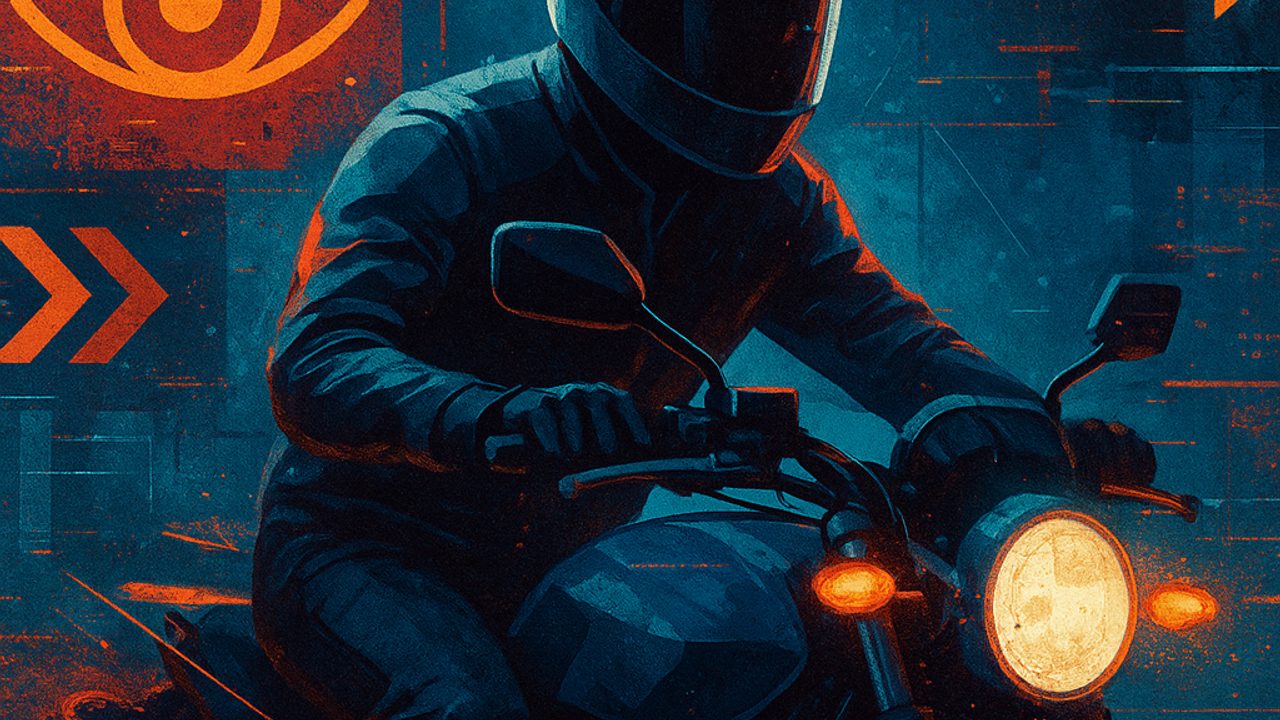
On a motorcycle, much of safety depends on something simple: others noticing you in time. Lighting and signaling are not just about following rules; they buy precious seconds in traffic.
For those just starting out, some mistakes are common because they seem like details. In practice, these details turn into pitfalls. Below are three of the most frequent — and how to avoid them in everyday riding.
Pitfall 1: riding with dim, burned-out, or improvised bulbs
A low beam that looks "ok" when stopped can disappear when the sun is shining straight at it. A weak taillight gets lost among cars. And the wrong bulb, adapted without criteria, usually lights up less than it promises.
Typical beginner mistakes:
- Not checking lights before heading out, especially during the day. - Replacing a burned-out bulb with any available model. - Relying only on the dashboard, without looking at the bike from the outside.
How to avoid it:
- Do a quick check before riding: low beam, high beam, taillight, brake light, and plate light. - Use bulbs with the correct specification for the motorcycle; incorrect wattage hurts visibility and can damage the system. - If someone comments that your light is weak, take it seriously. It usually is.
Pitfall 2: forgetting the turn signal on or not signaling in advance
A forgotten turn signal is a classic — and dangerous. Those behind you believe you are going to turn and act based on that. The opposite also happens: changing lanes or turning without signaling takes away the other person's chance to react.
Common situations:
- Making several maneuvers in a row and forgetting to cancel the turn signal. - Trusting that "the car already understood" your intention. - Turning the signal on right at the maneuver.
How to avoid it:
- Create the habit of canceling the turn signal after every maneuver, even if it seems unnecessary. - Turn the signal on a few seconds before acting, not during. - On quieter motorcycles, the turn signal is even more important to announce your presence.
Pitfall 3: thinking dark clothing and a small bike go unnoticed
Many people believe the headlight alone solves it. It doesn’t. Clothing color, contrast, and position on the road greatly influence the chance of being noticed.
What usually increases risk:
- Very dark helmets, jackets, and gloves at night. - Always riding in the same blind spots of cars. - Relying only on the bike’s small size to "slip through easily".
How to avoid it:
- Prefer gear with light or reflective areas, especially for nighttime use. - At night or in the rain, double your attention to lateral visibility — not just frontal. - Adjust your position in the lane to appear better in car mirrors.
Simple habits that help you be seen every day
It’s not about overdoing it, but about consistency. Small repeated actions make a real difference.
- Keep the low beam on at all times, even during the day. - Observe how cars react to your presence; if they don’t react, something is wrong. - Keep lenses clean: dust and mud greatly reduce light efficiency.
Lighting and signaling are also a language in traffic
Lights and turn signals are the most direct way to "talk" to those who share the road with you. When that conversation fails, scares, cut-offs, and sudden braking appear.
For beginners, taking care of this is one of the cheapest and most effective ways to increase safety. Being seen is not a matter of style — it’s a basic necessity on two wheels.
Comments
Comments are public and the sole responsibility of the author. Don’t share personal data. We may store technical signals (e.g. IP hash) to reduce spam and remove abusive, illegal, or off-topic content.