
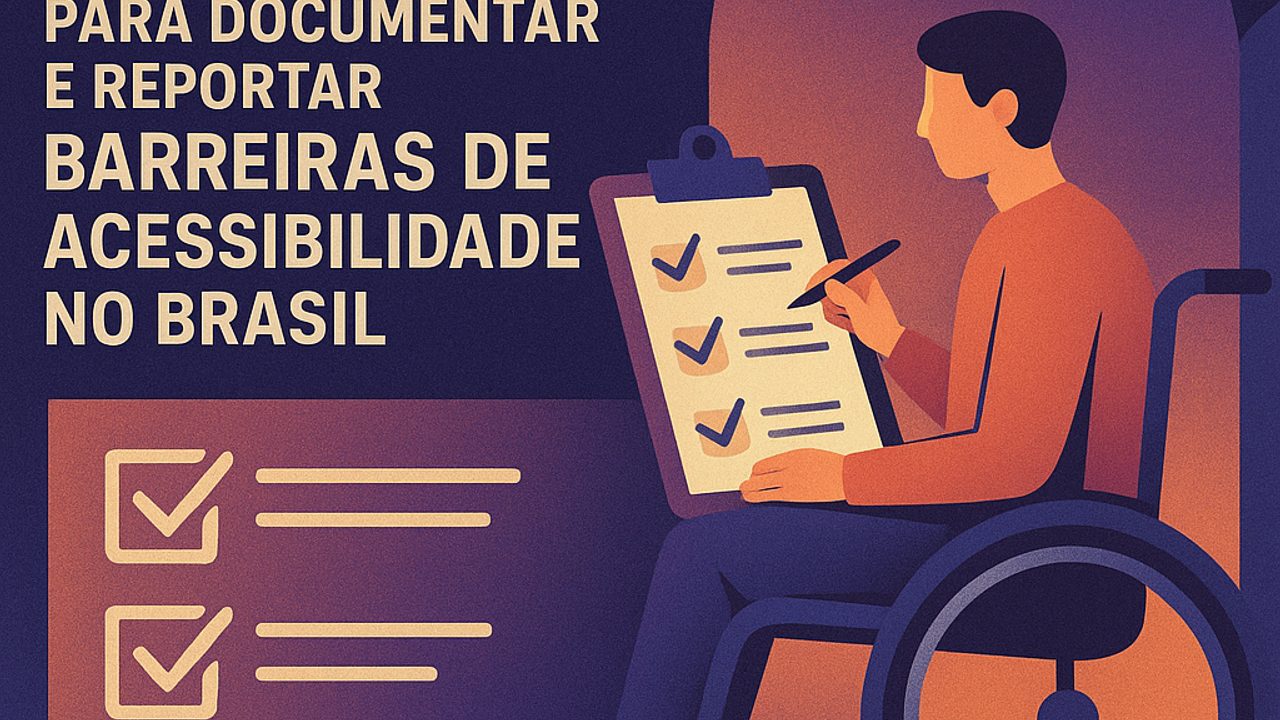
Accessibility barriers are still part of the daily lives of many people with disabilities and their families. Recording what happens and knowing whom to report to is an important step toward making environments, services, and transportation more inclusive.
This checklist brings together three essential items to document and report barriers clearly and responsibly in Brazil, strengthening social participation and dialogue with those who can promote improvements.
1) Identify and describe the barrier accurately
The first step is to observe what prevents or hinders access, use, or understanding of a space, service, or information. The more objective the description, the easier it will be to forward the report.
Include, whenever possible:
- Type of barrier (architectural, communication, attitudinal, technological, or transportation-related) - Exact location and date when it occurred - Situation experienced and practical impact on daily life
Inclusion tip
Avoid generic terms such as “does not work” or “is not accessible.” Describing the experience from the perspective of the affected person helps make the request more understandable and human.
2) Record evidence in an accessible and secure way
Documenting the barrier strengthens the report and reduces doubts about what occurred. The record does not need to be complex, but it should be organized.
Good documentation practices include:
- Photos or videos that show the barrier (respecting the privacy of third parties) - Screenshots, when the barrier is digital - Simple notes with date, time, and context
Attention to format
Whenever possible, keep files in accessible formats and clearly named, making it easier to share with family members, collectives, or service agencies.
3) Choose appropriate channels to report in Brazil
After identifying and recording, it is time to communicate. In Brazil, there are different channels that can be used depending on the type of barrier.
Among the most commonly used are:
- Ombudsman offices of municipalities, states, or public agencies - Customer service channels of companies and service concessionaires - Councils and secretariats focused on people with disabilities - Consumer protection agencies, when a service provision is involved
Clear and respectful communication
When reporting, organize the information from the checklist, be objective, and maintain a respectful tone. This encourages faster responses and reduces rework.
Quick checklist to save and use
Before sending the report, confirm that you have:
- Objective description of the barrier and its impact - Organized and legible evidence - Appropriate channel identified for the type of situation
Using this checklist helps transform individual experiences into useful information for building more accessible and inclusive environments for everyone.
Comments
Comments are public and the sole responsibility of the author. Don’t share personal data. We may store technical signals (e.g. IP hash) to reduce spam and remove abusive, illegal, or off-topic content.