
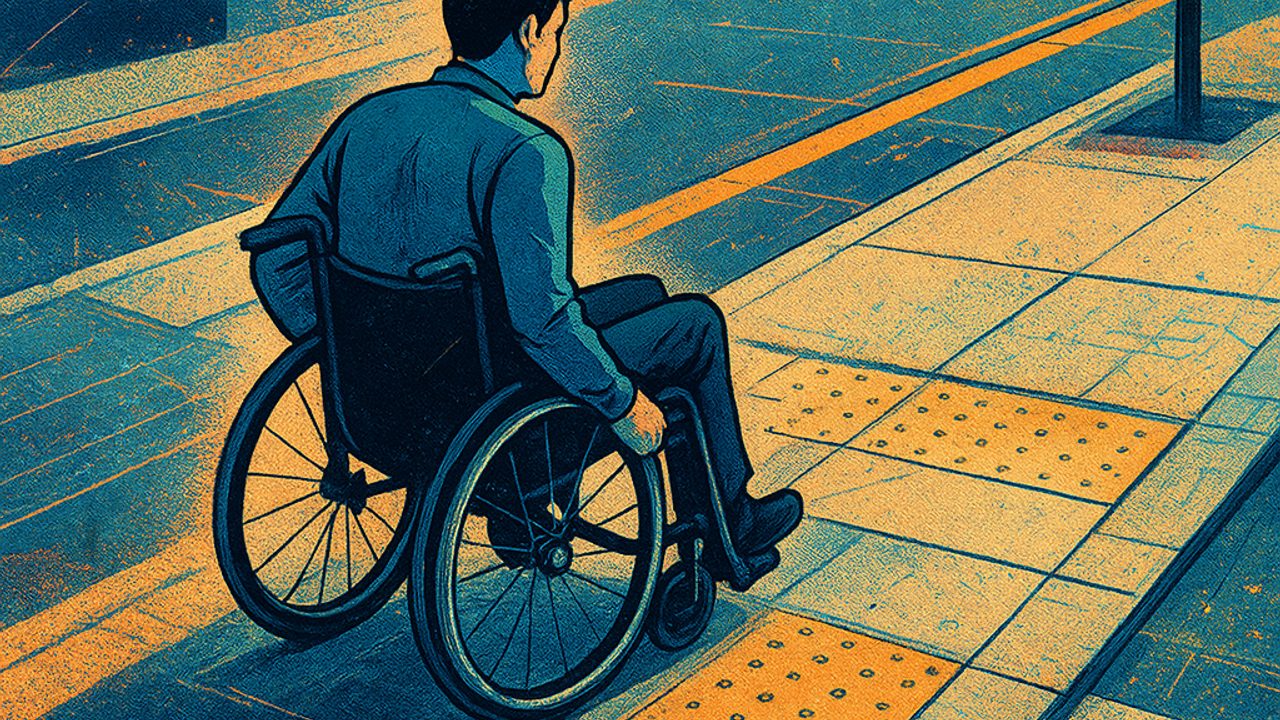
The sidewalk is the first mode of transportation. It is where many people begin and end any trip. When it fails, the city fails along with it — especially for people with disabilities, older adults, children, and those pushing strollers.
In Brazil, reality is diverse: good and bad segments coexist on the same street. This guide helps identify what supports inclusion and what creates barriers, with practical examples for everyday life.
Width and continuity: the basics that ensure passage
An accessible sidewalk is not just about ramps. Clear, continuous width allows people to pass one another, maneuver a wheelchair, or walk with support.
Points of attention: - Unobstructed clear path, preferably straight. - Gentle level changes between neighboring properties. - Absence of "pinch points" caused by poles, trash bins, or improvised steps.
When the clear path disappears, the person is pushed into the street — an avoidable risk.
Ramps: slope, placement, and finish
Well-built ramps connect different levels without excessive effort. Poorly built ones become obstacles.
Observe: - Comfortable slope, not resembling a garage ramp. - Placement aligned with the crossing, avoiding dangerous detours. - Non-slip finish, including when wet.
A ramp is not a disguised step
High edges, abrupt breaks, or ramps ending in holes negate the benefit. If a person has to ask for help, something is wrong.
Surface: firm, even, and readable while walking
The surface affects balance, comfort, and orientation. For inclusion, three words help: firm, even, and predictable.
Common good practices: - Stable surface, with no loose pieces. - Texture that does not slip. - Material changes only when they serve a clear function (such as alerts).
Tactile paving: when it guides and when it confuses
Tactile paving is essential for blind or low-vision people — as long as it is properly applied.
It works when: - It indicates continuous paths and real points of attention. - It does not lead to obstacles like poles or walls. - It maintains a pattern along the route.
It confuses when it appears broken, illogical, or interrupted by street furniture.
Common obstacles that break accessibility
Some problems repeat across Brazilian cities: - Vehicles parked on the sidewalk. - Tables, signs, and merchandise invading the clear path. - Trees with exposed roots left uncorrected. - Misaligned covers and grates.
Individually, they seem small. In sequence, they make the route unviable.
Crossings and corners: where sidewalk meets street
Inclusion depends on a safe transition between sidewalk and roadway.
What helps: - Curb ramps aligned with the crosswalk. - Good visibility between those crossing and those driving. - No steps before or after the crosswalk.
How to assess your everyday route with an inclusive lens
A practical tip is to walk the route at the pace of whoever has the greatest difficulty in that family group.
Useful questions: - Can you get through from start to finish without help? - Is there a safe alternative when something blocks the sidewalk? - Does the route remain accessible on rainy days?
Answering these turns the sidewalk from backdrop into a priority. Inclusion starts with the ground we walk on.
Comments
Comments are public and the sole responsibility of the author. Don’t share personal data. We may store technical signals (e.g. IP hash) to reduce spam and remove abusive, illegal, or off-topic content.