
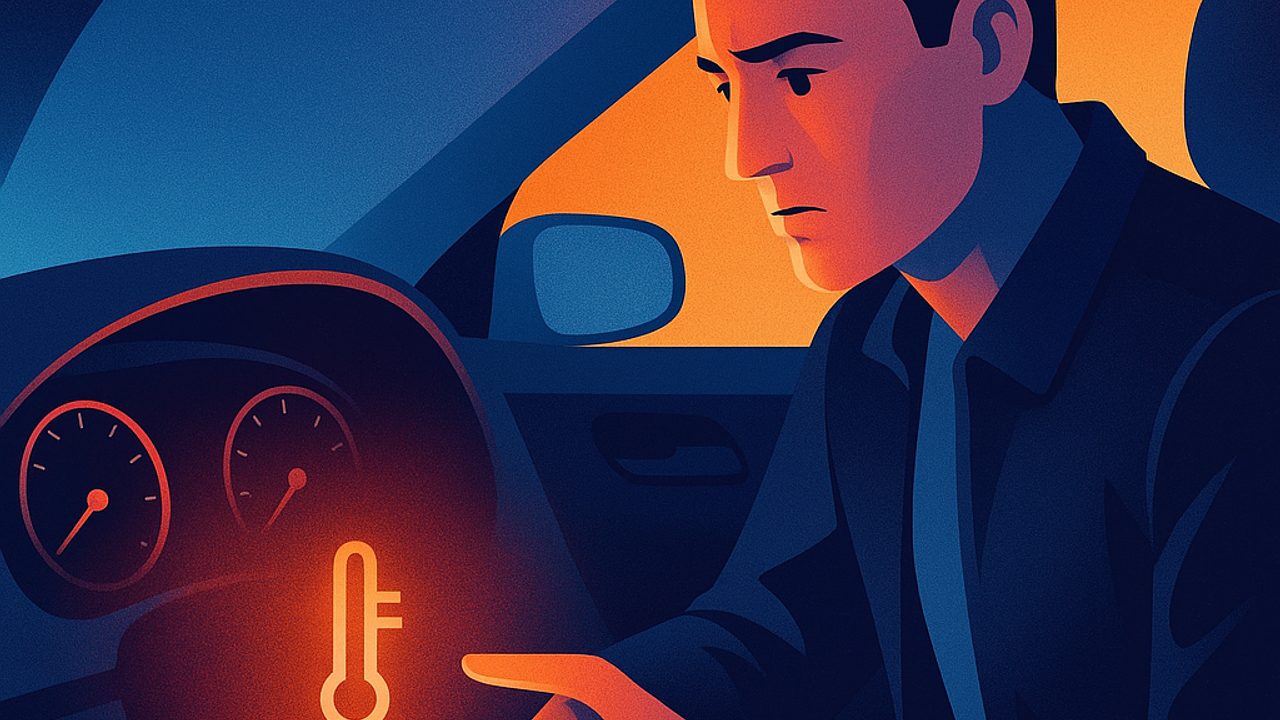
The scene is frightening: gauge climbing, strange smell, steam coming from the hood. For beginners, engine overheating often turns into panic.
Understanding what is myth and what is truth helps you make quick and safe decisions, without making the problem worse — and without putting anyone at risk.
Myth or truth: can you keep driving just until you "find a better place"?
**Myth.** Driving with an overheating engine greatly increases the risk of serious damage. If the temperature warning light comes on or the gauge reaches the red, the priority is to **stop safely as soon as possible**.
Follow these basic steps: - Reduce speed calmly. - Look for a shoulder, gas station, or quiet street. - Avoid stopping on curves or in places with poor visibility.
What to do in the moment: a safe step-by-step
Order matters. Small details make a difference for your safety and for the engine.
- Stop the car and turn off the engine. - Turn on the hazard lights. - Move away from traffic flow. - Wait for the engine to cool before taking any action.
Pay attention to the hood and the reservoir
**Never** open the hood immediately if there is steam. The system is pressurized and can cause burns. Wait at least 20 to 30 minutes, until there are no signs of pressure.
Myth or truth: does opening the hood solve it faster?
**Half-truth.** Opening the hood helps dissipate heat, but only **after** the system has lost pressure. Opening it beforehand can cause accidents. When it is safe, opening the hood facilitates heat exchange, but it does not "cure" the problem.
Does topping up with water solve it? When it can and when it can't
**It depends.** Topping up the reservoir with water can be an emergency solution only if: - The engine is cold. - The level is low. - There are no visible leaks.
Mixing plain water with coolant is not ideal for daily use, but it can help get out of a one-off situation. If the water level drops again quickly, do not keep driving.
Does turning on the air conditioning help or hurt?
**Truth: it hurts.** Air conditioning puts extra demand on the engine. When you notice the temperature rising: - Turn off the A/C. - If necessary, turn the interior heater on full (yes, even in hot weather). This helps remove heat from the engine.
Myth or truth: does overheating always mean a ruined engine?
**Myth.** Many cases end without major damage when the driver acts quickly. The problem usually turns into a loss when one insists on driving, ignores warnings, or tries to "make do" with a hot engine.
After the scare: can I go back to driving normally?
If the car has cooled down, the level has stabilized, and there are no warning lights on the dashboard, it is possible to drive **with caution** to a safe place. Watch for: - The temperature rising again. - Noises, burning smells, or leaks appearing.
Any unusual sign is a reason to stop again. Safety comes before haste — always.
Comments
Comments are public and the sole responsibility of the author. Don’t share personal data. We may store technical signals (e.g. IP hash) to reduce spam and remove abusive, illegal, or off-topic content.