
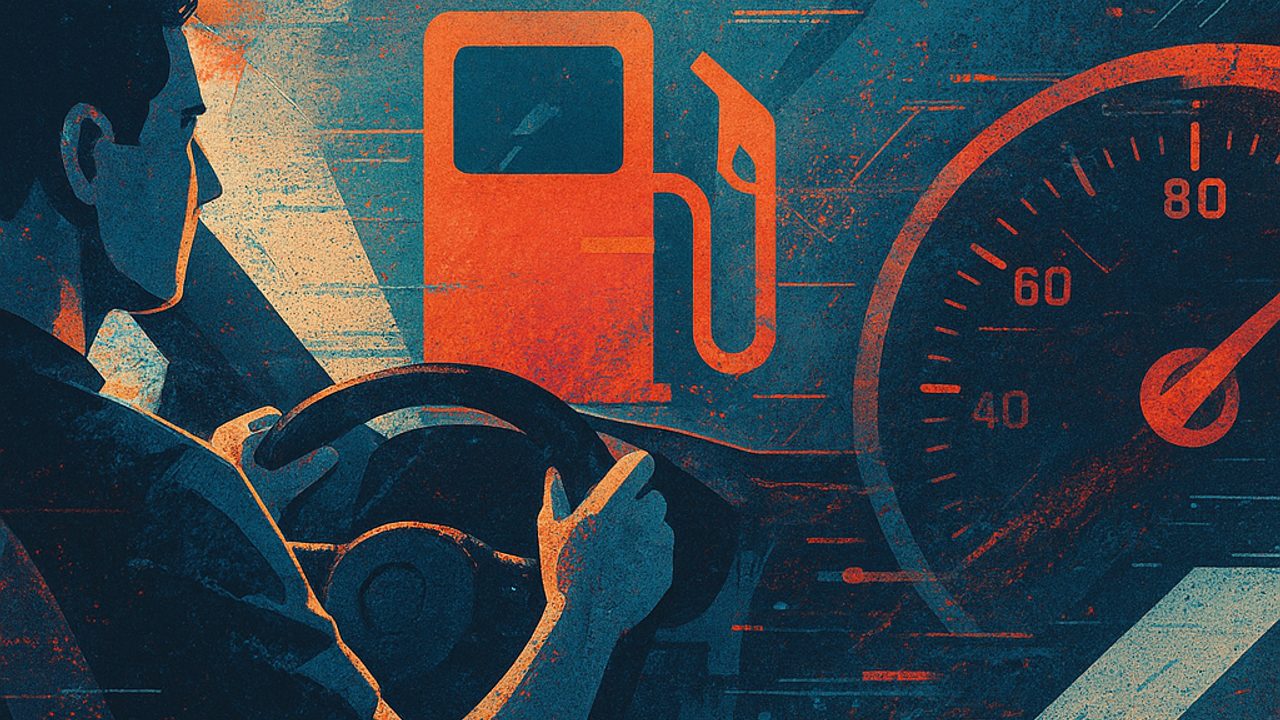
Saving fuel is a common desire, especially for those who are just starting to drive. The problem is that many popular tips mix good ideas with dangerous practices.
In daily driving, efficiency and safety need to go hand in hand. Below are myths and truths explained in a practical way, focusing on simple decisions that don’t put you or the car at risk — and that still help when it’s time to sell.
Does always coasting in neutral save fuel?
**Myth.** In modern cars, taking your foot off the accelerator with a gear engaged cuts fuel injection. In neutral, however, the engine needs fuel to keep running.
Besides not saving fuel, coasting in neutral reduces vehicle control, especially on downhill stretches. For beginners, this increases braking distance and makes quick reactions harder.
**Good practice:** keep a gear engaged and use engine braking. It’s more economical and safer.
Is accelerating very gently always better?
**Half-truth.** Sudden launches do use more fuel, yes. But excessively slow acceleration can disrupt traffic flow and lead to gear changes at inappropriate engine speeds.
The ideal approach is to accelerate progressively, keeping up with traffic. The engine works best when it reaches the correct RPM for each gear.
How to find the middle ground
- Pull away with moderate firmness. - Shift gears without over-revving. - Avoid holding high gears at low speeds.
Do very overinflated tires save more fuel?
**Dangerous myth.** Tires inflated above the recommended pressure reduce the contact area with the road. This may slightly lower consumption in very specific situations, but it harms grip and comfort.
In corners and during braking, the risk increases — something critical for those who are still gaining confidence behind the wheel.
**Useful truth:** keeping the manufacturer-recommended tire pressure helps fuel economy and preserves safety.
Is air conditioning a fuel economy villain?
**True, with caveats.** Air conditioning increases fuel consumption, especially in urban traffic. But turning it off isn’t always the best choice.
Driving with the windows open at higher speeds increases aerodynamic drag and can consume just as much — or more.
**Practical balance:** - At low speeds, prefer natural ventilation. - On the highway, use the A/C with the windows closed.
Does coasting downhill always help?
**Myth.** “Coasting” usually means excessive speed. This can cancel out any savings and still put extra strain on the brakes afterward.
Descending with control, with a gear engaged, keeps consumption low and avoids scares. For beginners, it makes a big difference in the feeling of control.
Maintenance matters more than it seems
**True.** Simple items make a real difference in fuel consumption and safety:
- Dirty filters make the engine work harder. - Worn spark plugs worsen combustion. - Poor alignment increases the effort needed to drive.
A well-maintained car responds better to inputs and creates a positive impression at resale time. Ongoing savings usually come more from maintenance than from tricks.
Driving with resale in mind also saves money
**True.** Smooth driving preserves the clutch, brakes, and suspension. This reduces long-term costs and increases the car’s market value.
For those just starting out, the gain is double: predictable driving increases safety and creates a usage history that’s easier to defend in a future negotiation.
Saving fuel isn’t about shortcuts. It’s about consistent choices that keep you in control of the car today — and with a more attractive vehicle to sell tomorrow.
Comments
Comments are public and the sole responsibility of the author. Don’t share personal data. We may store technical signals (e.g. IP hash) to reduce spam and remove abusive, illegal, or off-topic content.