
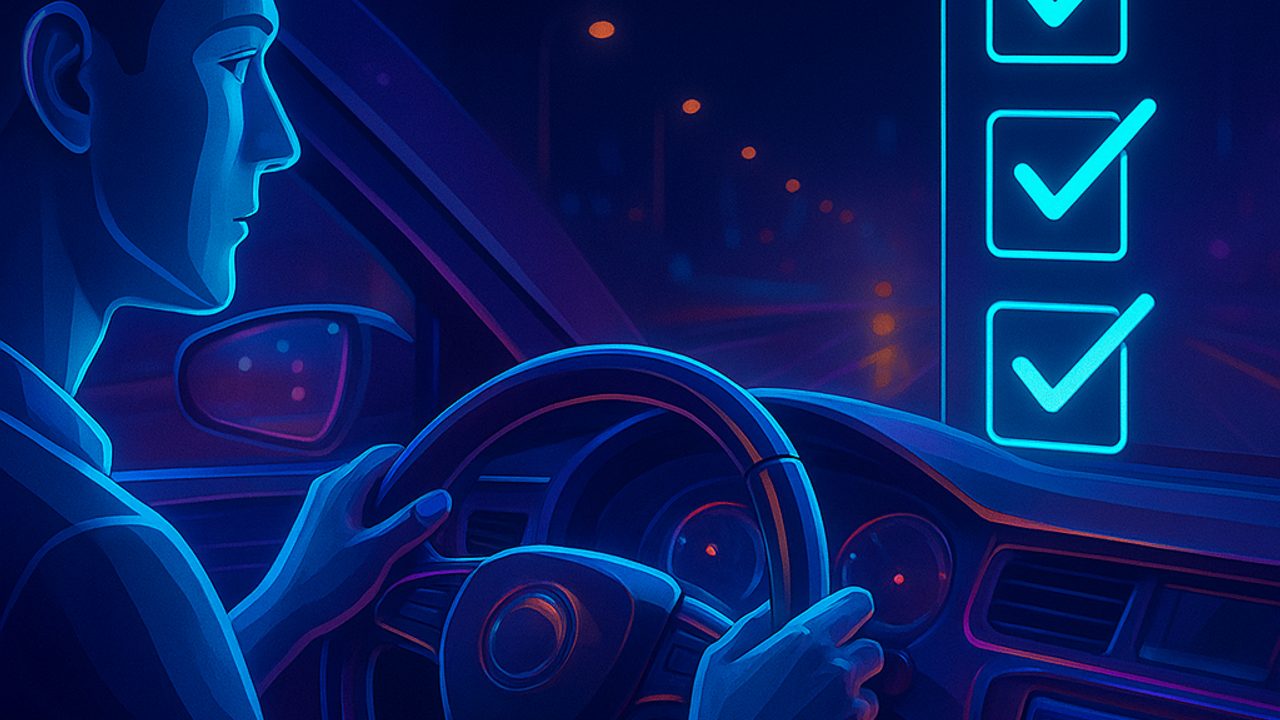
Driving at night changes the game: less light, more reflections, and a body already asking for rest. It’s not about driving slowly by rule, but about driving better.
A short checklist, applied every day, prevents common scares and reduces the chance of accidents on routine trips.
1) Glare under control from the start
Wrong lighting strains the eyes and delays reactions. Before leaving, adjust the basics and avoid improvising along the way.
Quick adjustments that make a difference
- **Rearview mirror in night mode**: reduces glare from headlights behind without losing visibility. - **Headlight height and alignment**: low beam should light the road, not the eyes of oncoming drivers. - **Windshield clean inside and out**: dirt scatters light and creates halos. - **Dashboard with moderate brightness**: strong interior light competes with road visibility.
During the drive
- Look away from oncoming headlights toward the **right edge of the lane** for a few seconds. - Avoid sunglasses or very light lenses at night; they can distort reflections.
2) Rest that supports quick decisions
Sleep isn’t just closing your eyes. At night, fatigue shows up sooner and demands continuous attention.
Before starting the engine
- **Hours of sleep**: fewer than 6 hours increases the risk of lapses. - **Light meals**: heavy meals cause drowsiness. - **Caffeine in moderation**: helps at first, but doesn’t replace a break.
Warning signs while driving
- Repeated yawning, long blinks, and difficulty maintaining speed. - “Automatic” thoughts and loss of awareness of the last few miles.
If any appear, **pull over in a safe place**, get out of the car, stretch, and resume only when attention returns.
3) Active attention to what changes in the dark
At night, pedestrians, cyclists, and animals appear with less contrast. Attention needs to be intentional.
Practical strategies
- **Speed compatible with headlight range**: you should be able to stop within what you can see. - **Greater distance from the vehicle ahead**: reflections can mislead depth perception. - **Reading the environment**: watch sidewalks, shoulders, and intersections before you reach them.
Technology helps, but doesn’t replace
- Lane-keeping assistants and collision alerts are support, not a pilot. - Use high beams only when there’s no one ahead; switch off when you see opposing lights.
A simple habit to close the checklist
Before heading out at night, do a **30-second ritual**: adjust mirrors and dashboard, assess your level of fatigue, and decide your initial speed. Repeated every day, this habit keeps driving predictable and safer.
Comments
Comments are public and the sole responsibility of the author. Don’t share personal data. We may store technical signals (e.g. IP hash) to reduce spam and remove abusive, illegal, or off-topic content.