
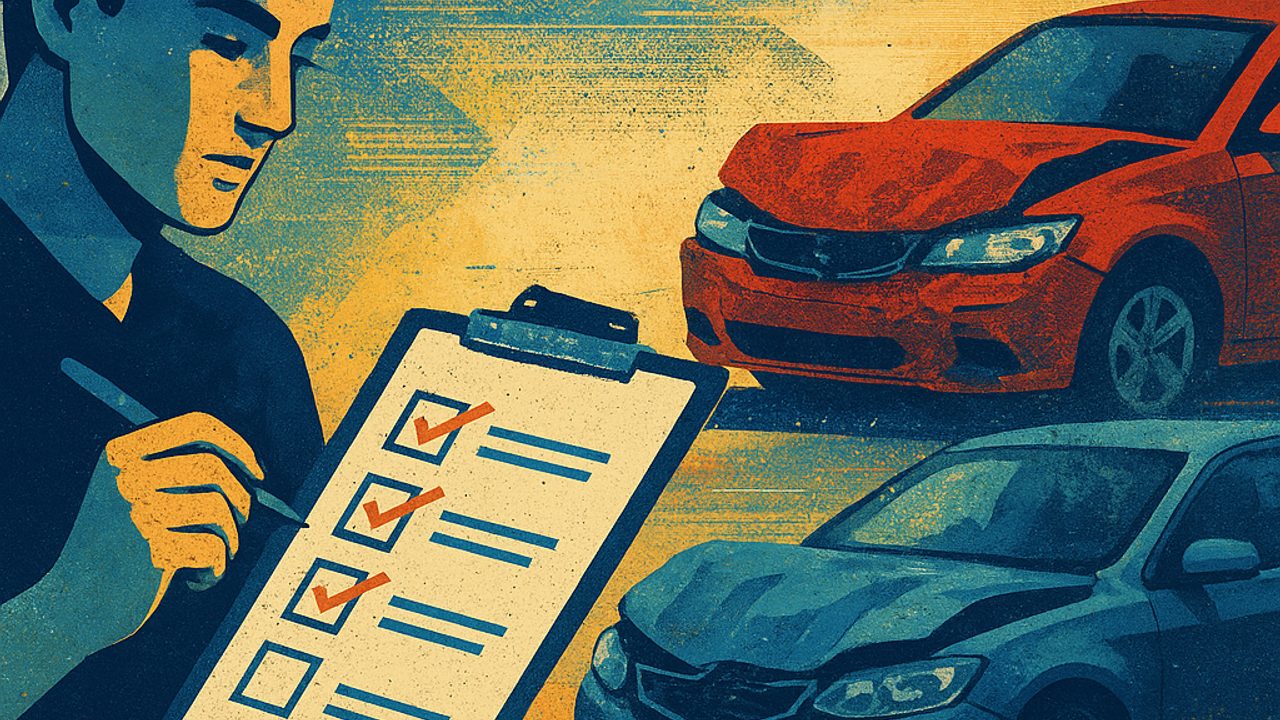
Even without injuries, a collision can create secondary risks in traffic. For beginner drivers, following a clear sequence helps keep everyone safe and avoid new incidents.
The focus of this checklist is everyday situations: objective actions, easy to remember and aimed at prevention, without going into legal aspects.
1) Prioritize scene safety
The first concern is to prevent the situation from turning into another accident. Before any other action, think about the surroundings and vehicle flow.
- Stay calm and quickly assess whether there are immediate risks. - If it is safe, turn off the engine and turn on the hazard lights. - Avoid staying in low-visibility spots, such as curves, hill crests, or traffic lanes.
Pay attention to the surrounding environment
Watch traffic, pedestrians, cyclists, and motorcyclists. Small distractions after a collision increase the risk of being struck or causing new crashes.
2) Make the vehicle visible to others
Visibility is a key factor in preventing secondary accidents. Other drivers need to identify the obstacle in advance.
- Use the hazard lights from the very first moment. - Place the warning triangle or another reflective device at a distance appropriate for the road. - In low-light conditions, avoid standing between vehicles or on the roadway.
Distance and positioning matter
The higher the speed of the road, the greater the distance the warning device should be placed. This gives approaching drivers time to react safely.
3) Maintain attention and avoid hasty decisions
After a collision, it is common to act on impulse. For beginner drivers, controlling attention helps avoid simple mistakes.
- Do not argue in the middle of the road or make sudden movements. - Avoid using your phone while exposed to traffic. - If you need to get out of the car, do so only when it is safe.
Habits that reduce risks in similar situations
Some everyday attitudes reduce the chance of collisions and make it easier to handle unexpected events:
- Maintain a safe distance from the vehicle ahead. - Reduce speed in higher-risk areas. - Regularly check basic vehicle safety items.
Mental checklist for the beginner driver
Before moving on, quickly remind yourself:
- Safe location? - Vehicle visible? - Attention on the surroundings?
Creating this habit helps turn a stressful situation into a more controlled and preventive action in traffic.
Comments
Comments are public and the sole responsibility of the author. Don’t share personal data. We may store technical signals (e.g. IP hash) to reduce spam and remove abusive, illegal, or off-topic content.