
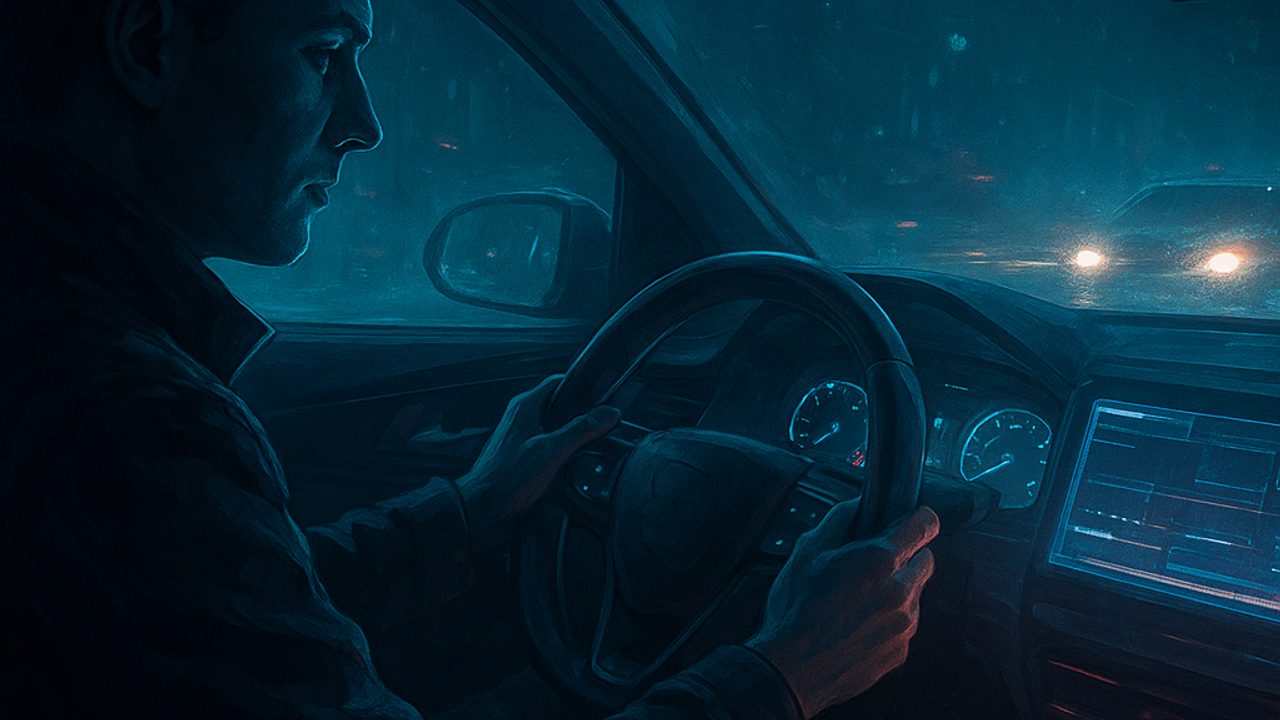
Driving at night requires simple yet decisive adjustments to maintain safety. Visibility changes, the body feels fatigue, and small lapses carry more weight.
This FAQ brings together objective answers to everyday situations, focusing on accident prevention and safer decisions behind the wheel.
How can I reduce glare from other vehicles’ headlights?
Glare is one of the main causes of discomfort and errors at night. To reduce its impact:
- Properly adjust the height of the headlights and the seat before setting off. - Slightly direct your gaze toward the right lane when passing vehicles coming in the opposite direction. - Keep the windshield clean inside and out; residue amplifies glare. - Avoid looking directly at the light source; use peripheral vision to maintain your path.
Do clear-lens glasses help?
Transparent anti-reflective lenses can reduce diffuse glare. Dark lenses at night, however, are not recommended, as they reduce overall visibility.
When should I use high beams and when should I avoid them?
High beams help on unlit roads but require responsible use:
- Use them on deserted roads and switch back to low beams when you see another vehicle. - Avoid high beams when following another car closely; they cause glare through rearview mirrors. - In fog or rain, prefer low beams and, if available, fog lights.
Fatigue at the wheel: which signs should not be ignored?
At night, the body tends toward rest. Watch for common signs:
- Frequent yawning and difficulty keeping your eyes open. - Loss of sense of time or of the last stretch traveled. - Sudden steering movements to correct your trajectory.
What should I do when I notice drowsiness?
- Stop in a safe place to rest. - Take regular breaks on long trips. - Avoid driving for long periods after an exhausting day.
Distance and speed: what changes at night?
With reduced visibility, reaction time increases. Simple adjustments help:
- Increase the distance from the vehicle ahead. - Reduce speed, even on familiar roads. - Pay extra attention at intersections and in areas with pedestrians.
How can I maintain attention on repetitive nighttime routes?
Routines can induce “autopilot.” To stay focused:
- Vary small habits, such as adjusting ventilation or posture. - Actively observe road signs and reference points. - Avoid internal distractions, such as screens and conversations that divert attention.
Nighttime rain: what extra precautions are needed?
The combination of darkness and wet pavement requires additional caution:
- Reduce speed even further. - Anticipate braking and avoid abrupt maneuvers. - Check windshield wiper operation and tire condition before setting off.
These simple practices, applied day to day, help make nighttime driving more predictable and safer for everyone on the road.
Comments
Comments are public and the sole responsibility of the author. Don’t share personal data. We may store technical signals (e.g. IP hash) to reduce spam and remove abusive, illegal, or off-topic content.