
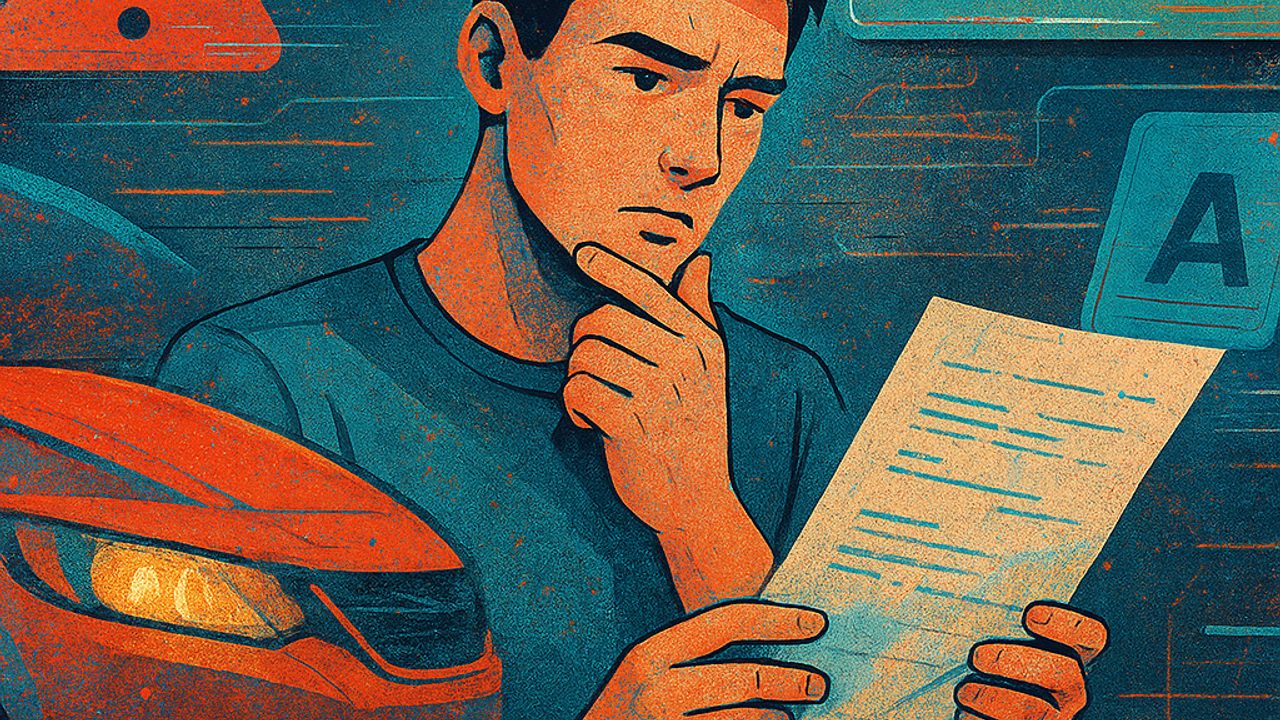
For those just starting to drive, IPVA, licensing, and CRLV‑e often turn into a confusing block of acronyms. The problem is that confusion leads to bad decisions: driving thinking “everything is paid” when it isn’t, or ignoring alerts out of fear of inspection.
The good news is that you can separate myth from truth and understand the basics with a focus on safety — without legal jargon and without panic.
Does overdue IPVA take the car off the road?
**Myth (with caveats).** IPVA is a tax. Paying late generates a fine, interest, and debt, but **it is not what, by itself, prevents the car from being driven** at that moment.
Where does the risk lie? In the cascade effect. Without settling the IPVA, you can’t complete the annual licensing. That’s when the problem shows up on the street.
For beginners, the safety point is simple: - Overdue IPVA doesn’t cause a breakdown, but **it can lead to a stop**. - A stop generates stress, haste, and poor decisions behind the wheel. - On trips, this increases the risk of distraction and conflict.
Expired licensing: truly a safety problem
**Truth.** Driving with expired licensing is an infraction and can lead to the vehicle being impounded.
In practice, this impacts safety because: - The car may be stopped in an unsuitable place. - You may be left stranded in an unfamiliar or dangerous area. - In the event of a breakdown or accident, the situation becomes more complicated.
Up‑to‑date licensing is what confirms the vehicle is legal to circulate that year. For learners, think of it as the car’s legal “green light.”
CRLV‑e: do you need to print it or is the phone enough?
**Truth with caveats.** The CRLV‑e is digital and **the document on your phone is valid**.
But for practical safety: - Have the official app installed and tested before leaving. - Log in and check whether the CRLV‑e opens offline. - Keep your phone charged.
For beginners, printing a simple copy still helps. It’s not mandatory; it’s redundancy. During a nighttime stop, with a dead phone or no signal, this avoids unnecessary tension.
Common myth: “I paid everything, so everything’s fine”
**Myth.** Payment is not synonymous with immediate regularization.
Some points that trip up beginners: - You paid today, but the system hasn’t updated yet. - You paid the IPVA and forgot the licensing. - You paid fees, but there’s an old fine blocking the process.
Before hitting the road or driving at night, confirm that the **current year’s CRLV‑e** is available. It’s the practical proof that everything is in order.
Documentation and safety in breakdowns and accidents
Here’s a rarely discussed point. Irregular documentation **does not cause the accident**, but **it makes the aftermath worse**.
In a shoulder breakdown or minor collision: - The stop tends to be longer. - The focus shifts from safety to bureaucracy. - You’re more exposed to traffic and stress.
For those still gaining confidence behind the wheel, reducing variables is part of defensive driving. Up‑to‑date documents are one of them.
Uncomfortable truth: enforcement isn’t random
**Truth.** Many beginners believe inspections are “bad luck.” That’s not quite so.
Situations that increase the chance of being stopped: - Driving at night with irregular lighting. - A visibly poorly maintained vehicle. - A dirty or hard‑to‑read license plate.
When documentation is up to date, the stop tends to be quick. When it isn’t, the situation escalates — and that directly affects your emotional and physical safety.
Quick checklist to avoid documentation mistakes
A simple habit prevents almost all problems: - Check the **current year’s CRLV‑e** on your phone. - Confirm that the licensing shows as paid. - Know the IPVA deadline (even if paying in installments). - Have phone battery or a printed copy.
It takes two minutes and saves a headache.
Documentation isn’t a detail: it’s part of safe driving
For beginners, safety isn’t just brakes, tires, and attention. It’s also avoiding situations that create pressure, fear, and poor decisions.
IPVA, licensing, and CRLV‑e don’t exist just to “avoid fines.” They help you drive with less stress, handle the unexpected better, and keep your focus where it really matters: driving calmly and safely.
Comments
Comments are public and the sole responsibility of the author. Don’t share personal data. We may store technical signals (e.g. IP hash) to reduce spam and remove abusive, illegal, or off-topic content.