
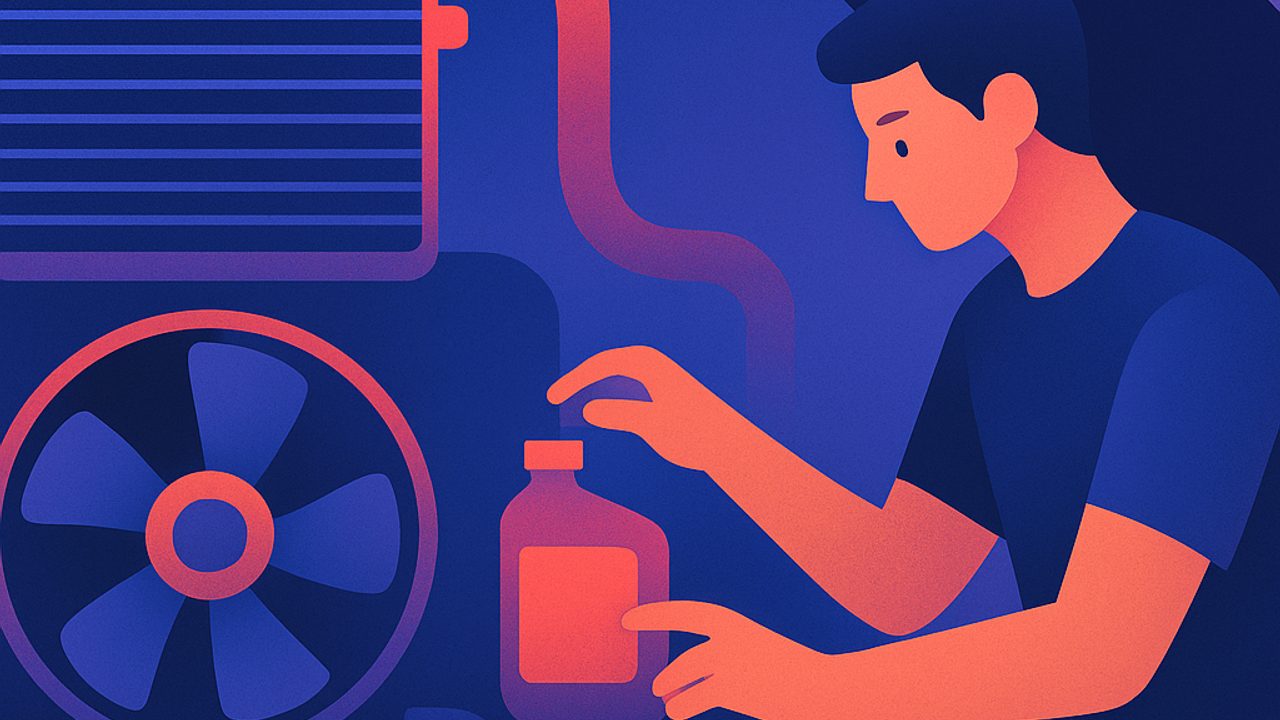
The engine naturally runs hot. What controls this temperature is the cooling system, and ignoring it is an invitation to breakdowns, smoke from the hood, and stopping in a dangerous place.
For those just starting out, three basic precautions solve most of the risks. They don’t require tools, only attention and routine.
1) The right coolant, at the right level
Radiator fluid is not just plain water. The correct coolant prevents rust, lubricates the water pump, and helps keep the temperature stable.
Quick checklist:
- **Use the specification indicated in the owner’s manual** (color and type matter). - **Correct mixture**: concentrated coolant needs dilution; ready‑to‑use does not. - **Level between minimum and maximum**, always with the engine cold.
Warning sign for beginners: topping up with water “just for today” becomes a habit. In the short term it may work; in the medium term, it creates corrosion and can clog the system.
2) Radiator and hoses: watch for leaks
A small leak often turns into a big one in heavy traffic. A quick look prevents surprises.
What to observe in the garage or after parking:
- **Stains on the ground** (colored liquid or a sweet smell). - **Dry, swollen, or cracked hoses**. - **Reservoir cap** without cracks and with a firm seal.
A burst hose causes rapid fluid loss and almost immediate overheating — a critical safety situation.
3) Temperature light and gauge: the right reaction at the right time
The dashboard warns you before the worst happens. Ignoring the warning is the most common mistake among beginners.
If the warning light comes on or the gauge rises too high
- **Reduce speed** and look for a safe place to stop. - **Turn off the air conditioning** to relieve the system. - **Shut off the engine** if the temperature keeps rising.
Never open the reservoir while it’s hot. Pressurized steam can cause severe burns.
A simple routine that makes a difference
Building habits helps more than memorizing rules:
- Check the coolant level **once a week**. - Take a look at the hoses **at every car wash**. - Pay attention to the dashboard **on climbs and in heavy traffic**.
Why this is about safety, not just maintenance
Overheating can shut the engine off at an intersection, on the highway, or in a tunnel. Beyond mechanical damage, the risk is being stranded in an exposed location.
With these three checks, beginners reduce the chance of sudden breakdowns and gain predictability — a basic requirement for driving safely every day.
Comments
Comments are public and the sole responsibility of the author. Don’t share personal data. We may store technical signals (e.g. IP hash) to reduce spam and remove abusive, illegal, or off-topic content.