
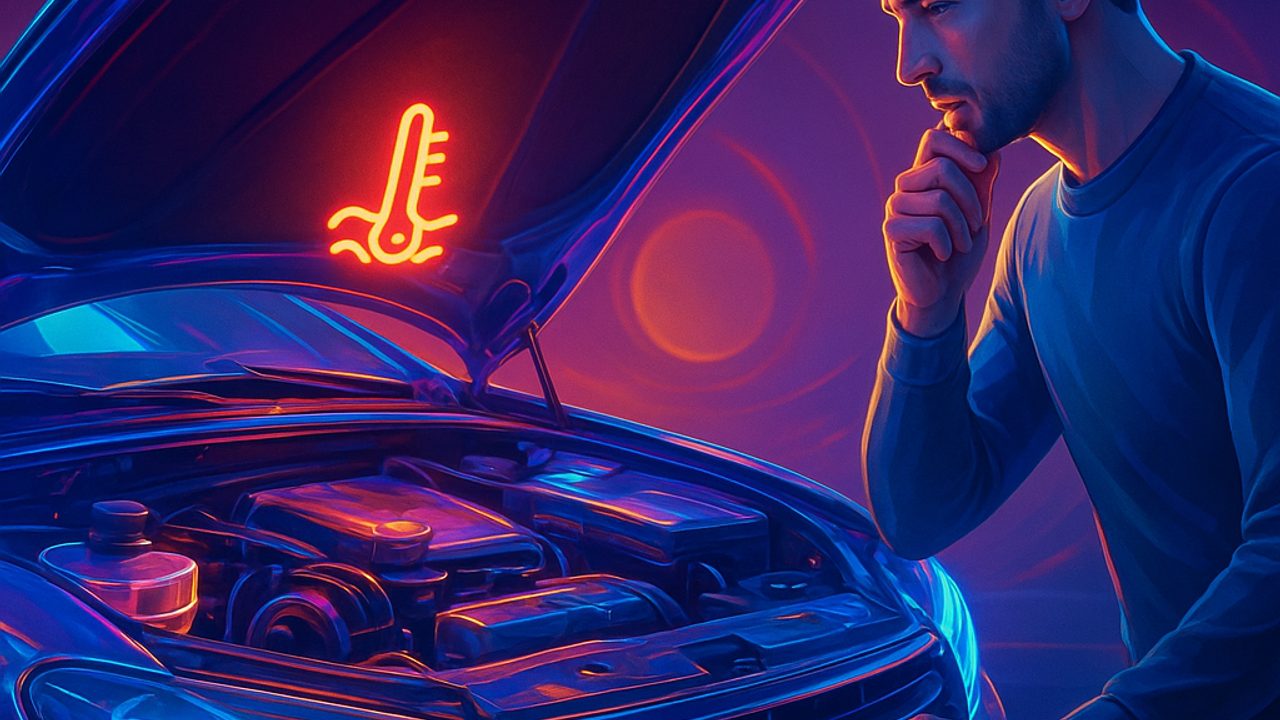
The cooling system works quietly, but when it fails, damage and risk appear quickly. For those just starting out, recognizing the right signs helps avoid dangerous decisions, such as continuing to drive with a hot engine.
Attention: coolant and radiator are not just maintenance items. They protect the engine from overheating, which can cause sudden stalling, loss of power, and even fire.
Sign 1: temperature warning light on or gauge climbing too high
This is the car’s most direct alert. A red light or a gauge near the maximum indicates that heat is out of control.
What to do safely: - Ease off, turn on the hazard lights, and look for a safe place to stop. - Turn off the engine only after parking; do not rev to “cool it down.” - Wait for the system to cool before any inspection.
Common mistake to avoid
Never open the reservoir or radiator cap with the engine hot. The system is pressurized and can cause severe burns.
Sign 2: coolant level drops frequently
If you top up the reservoir and, a few days later, the level has dropped, something is wrong. Normal evaporation does not explain frequent drops.
Possible causes: - Dried or cracked hose or a loose clamp. - Reservoir cap that doesn’t hold pressure. - Radiator leak.
What to do: - Check the level only with the engine cold. - Top up only to the indicated mark, without overfilling. - If the drop persists, avoid long trips until it’s checked.
Sign 3: spots on the ground, sweet smell, or steam
Colored spots under the car, a sweet smell after driving, or steam coming from the engine bay are clear clues of a leak.
How to act: - Stop as soon as possible in a safe place. - Observe where the leak is coming from, without touching hot parts. - Don’t improvise with plain water if the problem is recurring; it dilutes the coolant and reduces protection.
The right coolant makes a difference
Using only water is risky. The correct coolant raises the boiling point, prevents corrosion, and lubricates the water pump.
Good practices for beginners: - Use the type specified in the manual (ready-to-use or concentrated at the correct ratio). - Do not mix colors or brands without guidance. - Replace the fluid at the recommended intervals.
Radiator: silent signs of trouble
A radiator that’s dirty on the outside loses efficiency. Inside, corrosion reduces heat exchange.
Watch out for: - The cooling fan running constantly in traffic. - Overheating on mild uphill grades. - A history of using only water.
When not to continue driving
Stop the trip if: - The temperature light comes on again after topping up the level. - There is constant steam. - The engine loses power or starts to misfire.
In these situations, insisting increases the risk of severe damage and of breaking down in an unsafe location.
A simple habit that increases safety
A quick look at the reservoir with the engine cold, once a week, prevents surprises. It takes seconds and can save the engine — and you — from a scare on the road.
Comments
Comments are public and the sole responsibility of the author. Don’t share personal data. We may store technical signals (e.g. IP hash) to reduce spam and remove abusive, illegal, or off-topic content.