
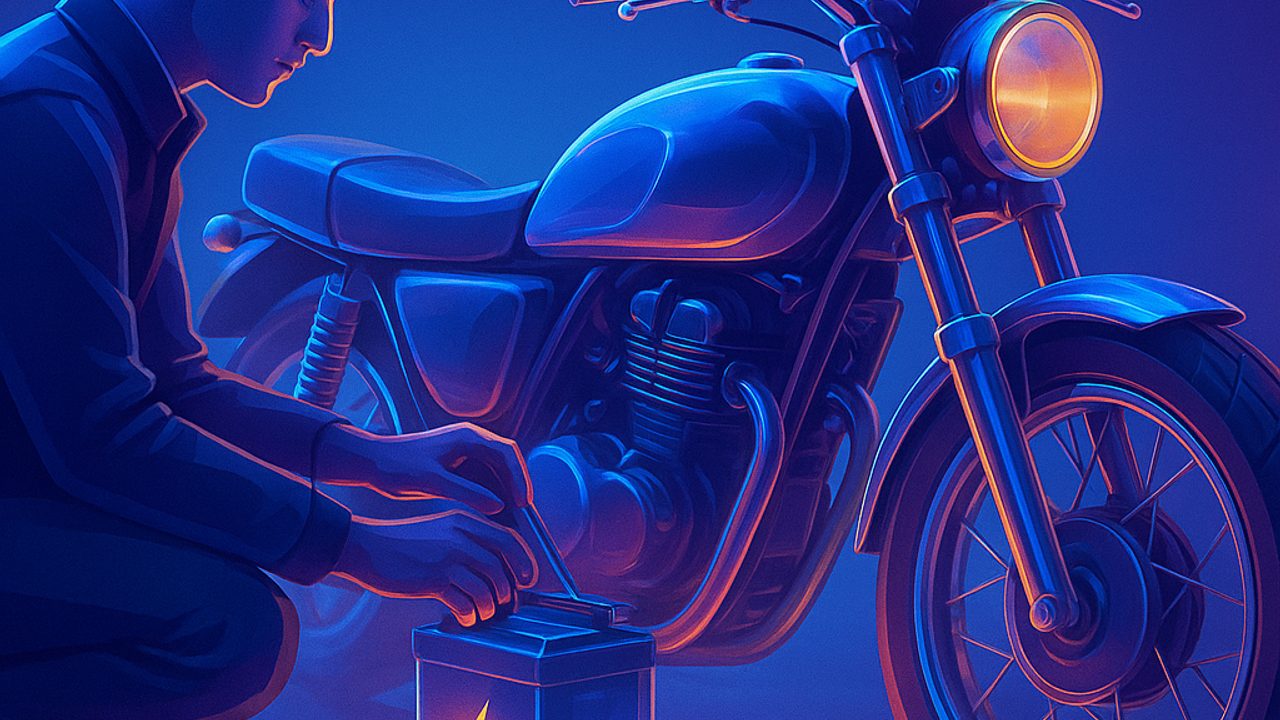
Leaving a motorcycle parked for weeks shouldn’t become a problem — but it does when small details go unnoticed. A dead battery, flat tires, and degraded fuel are the champions of headaches (and extra spending).
The good news is that beginners can prevent almost everything with simple, inexpensive habits. The focus here is everyday savings, without complications.
Battery: how to avoid discharge without spending
The battery suffers when the motorcycle sits unused. Alarms, the dashboard clock, and time itself slowly drain the charge. To save money:
- **Start the motorcycle at least once a week**, for 10 to 15 minutes, if possible. It helps maintain the charge without accessories. - **Avoid short, repeated starts**: starting and shutting off right away drains more than it recharges. - **If it will be unused for many weeks**, disconnecting the negative terminal already reduces discharge on many motorcycles.
When is it worth considering a charger?
Trickle chargers are useful, but not mandatory for everyone. For those who use the motorcycle infrequently, sharing one with a family member or borrowing from a friend can solve it without buying.
Tires: low pressure is costly
A parked tire naturally loses pressure. Riding with low pressure increases consumption and accelerates wear.
- **Check pressure before riding**, even if the motorcycle has been “sitting for only two weeks”. - **Follow the pressure recommended in the manual or on the swingarm**. Incorrect pressure wears tires and wastes fuel. - **Observe the contact point with the ground**: if the motorcycle stayed supported in the same spot for a long time, a slight deformation may appear and disappear after a few kilometers.
Fuel: what to do to avoid waste
Gasoline ages. It doesn’t go bad from one week to the next, but months of sitting require attention.
- **Avoid storing the motorcycle with the tank nearly empty**: this reduces internal moisture. - **If the stop will be long**, fill up with fresh fuel before returning to use. - **Prefer to ride a few kilometers** when you come back, to circulate the new fuel through the system.
And the cold start after weeks?
Do not force the throttle. Let the motorcycle stabilize at idle for a few moments. Forcing it now can cause misfires and higher consumption later.
Small habits that save money when returning to use
Before riding off as if nothing happened:
- Check the **oil level** and possible leaks. - Observe **brakes and clutch** during the first braking. - Listen for unusual noises in the first minutes.
These minutes of attention prevent trips to the shop for simple issues.
Where beginners spend the most without noticing
Some common mistakes after long stops:
- Trying to “fix it in a rush” with unnecessary replacements. - Ignoring tire pressure and wearing tires faster. - Forcing starts until the battery dies, when a simple recharge would solve it.
Savings here come from patience and basic checks.
Simple routine for those who use the motorcycle infrequently
If the motorcycle often sits unused:
- Set a **fixed day each month** to check the battery and tires. - Maintain **minimal regular use**, even if short. - Write down when the last refueling was.
These habits take little time and help keep the motorcycle ready — without wallet-shocking surprises when you most need to ride.
Comments
Comments are public and the sole responsibility of the author. Don’t share personal data. We may store technical signals (e.g. IP hash) to reduce spam and remove abusive, illegal, or off-topic content.