
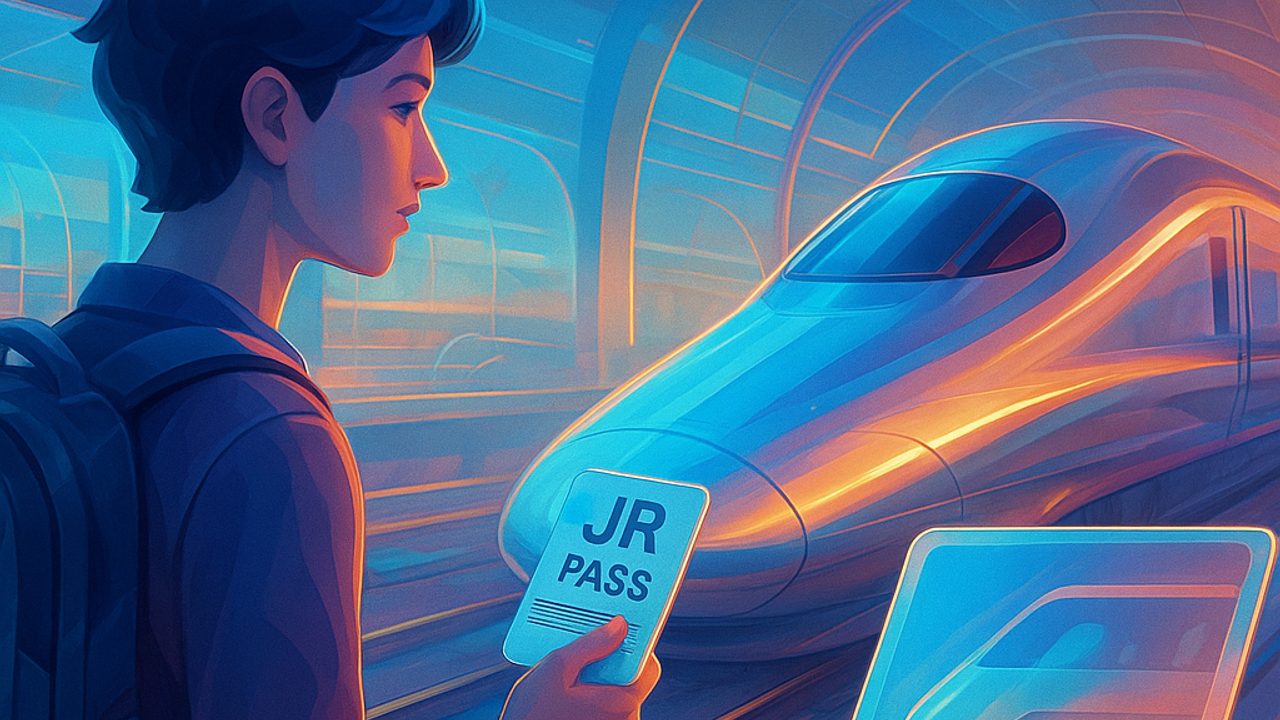
On a first trip to Japan, transportation can feel like a puzzle: lines, companies, types of trains. The JR Pass appears as a magical solution, but it’s not always the smartest choice.
The right decision depends on your itinerary, your travel pace, and how many cities you plan to connect by train. With a few simple criteria, you can choose without headaches.
What the JR Pass is and what it actually covers
The JR Pass is an unlimited-use pass on Japan Railways trains for a fixed period (usually 7, 14, or 21 days). It covers most JR trains, including many Shinkansen, as well as some urban lines and regional trains.
Important points: - It works best for long intercity travel. - Not all Shinkansen are included (the fastest ones are excluded). - It does not cover municipal subways or private lines common in large cities.
When the JR Pass makes sense
The pass usually pays off when you’re “crossing the country” in a short time. Think of an itinerary with long and frequent jumps.
Practical examples: - Tokyo → Kyoto → Osaka → Hiroshima in a few days. - A long round trip departing from Tokyo, such as to Kanazawa or Sendai. - A trip with fixed dates, making use of the pass every day.
In these cases, the savings come from volume: the more long segments, the better the cost-benefit.
When individual tickets are the best choice
For many first-time travelers, individual tickets are cheaper and offer more flexibility.
They work better if: - You’ll stay in one or two main cities. - Your long-distance trips are few or only one-way. - Your itinerary includes cities served by private lines.
Buying individual tickets also avoids the pressure of “having to use” the pass every day.
Big cities: why the JR Pass hardly helps
In Tokyo, Osaka, and Kyoto, daily transportation relies heavily on subways and private railways. The JR Pass covers only a small portion of these networks.
In practice: - You’ll use IC cards or local passes anyway. - The JR Pass is underused on urban days. - Individual tickets are quick to buy and easy to use.
For this reason, the pass rarely pays off for trips focused only on metropolitan areas.
How to compare costs without a complicated spreadsheet
You don’t need to do detailed calculations. A simple method helps:
- List your long train segments (city A → city B). - See how many days you would actually use JR trains. - Compare that with the minimum duration of the available JR Pass.
If the pass covers only part of the itinerary or forces you to rush to “make the most of it,” individual tickets tend to win.
Seat reservations: a detail that changes the experience
With individual tickets, you choose your seat at the time of purchase. With the JR Pass, reservations are free, but require stopping by the counter or machines.
For those who prefer spontaneity, buying segment by segment can be simpler.
Smart combinations: a pass doesn’t have to be all or nothing
Many people combine strategies: - Individual tickets for most of the trip. - A regional JR pass for a specific segment. - An IC card for urban travel.
This mix usually reduces costs and keeps the itinerary lighter.
Final tip for a first trip
If your itinerary is still open, avoid committing to a long pass. Start with individual tickets and see how you get around in the first few days.
Japan makes it easy to change plans — and the best pass is the one that matches your pace, not the other way around.
Comments
Comments are public and the sole responsibility of the author. Don’t share personal data. We may store technical signals (e.g. IP hash) to reduce spam and remove abusive, illegal, or off-topic content.