
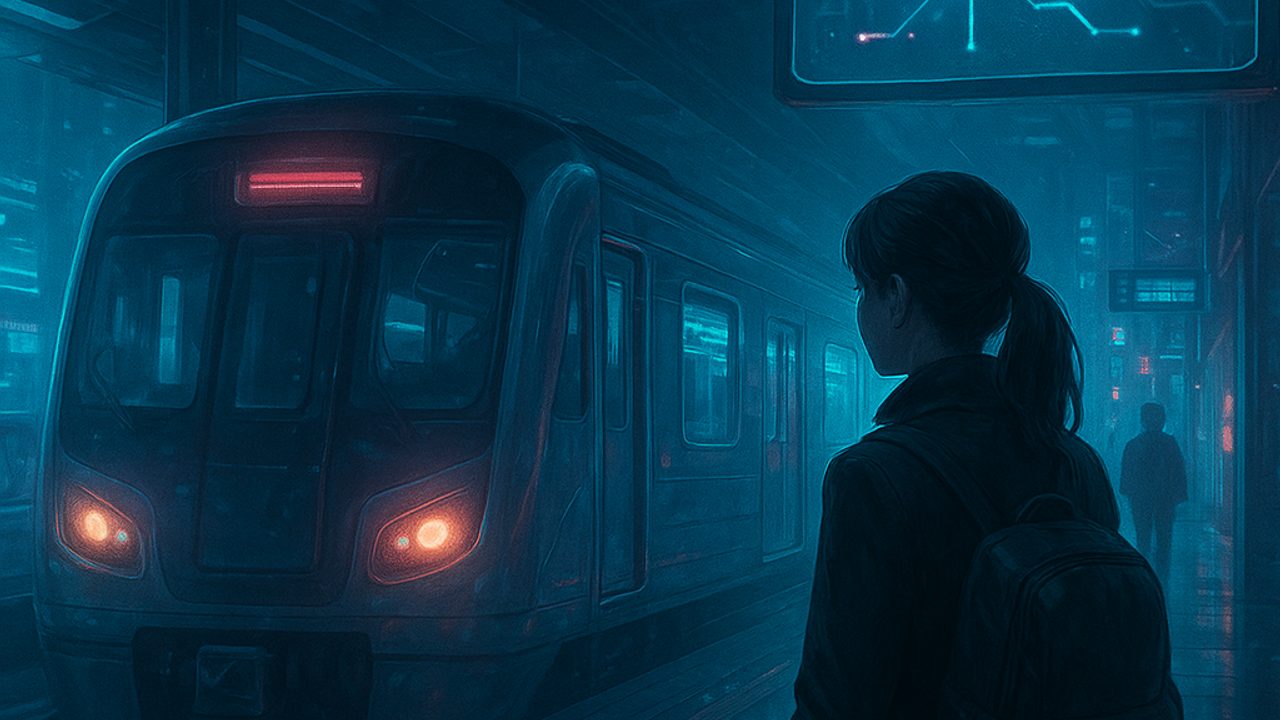
Seoul can be intimidating at first glance because of its size, but public transportation solves much of the challenge. The subway covers almost everything, buses connect less obvious areas, and T-money ties it all together on a single card.
With these three quick ideas, you’ll understand the essentials to get around with confidence from the very first day, without memorizing maps or relying on taxis.
1) Make the subway your starting point
Seoul’s subway is clean, punctual, and signposted in Korean and English. For first-time visitors, it’s the easiest way to get oriented between neighborhoods, attractions, and commercial areas.
What makes life easier on the subway
- Each station has a number and an English name, which helps you follow the route. - Line colors are consistent across maps, signs, and trains. - Screens inside the cars show the next station in real time.
If you can choose, stay near a major station or a main line. Even if you have to walk a bit more to your hotel, the gain in convenience is worth it.
2) Use buses for short trips and local connections
Buses work well where the subway doesn’t reach directly. They’re useful for going up hills, linking residential neighborhoods to central areas, or shortening long walks.
How not to get lost on Seoul buses
- Buses have colors that indicate the type (blue, green, yellow, red). - The display shows the next stop in Korean and English. - Payment is the same as the subway, using T-money.
In practice, it’s worth using buses when the subway would require many transfers or when the route feels too short to go down to the platforms.
3) Buy T-money right at the start
T-money is a reloadable card that works on the subway, buses, and even in some convenience stores. Having one from your very first trip simplifies everything.
Quick tips about T-money
- You can buy it at convenience stores and at subway machines. - Reloading is simple and accepts cash. - Fares are slightly cheaper than paying single tickets.
Keep the card until the end of your trip. It also works as a plan B if your phone runs out of battery.
Smart transfers save time
Between subway and buses, integrations are designed to reduce cost and waiting time. Just use T-money correctly when entering and exiting vehicles.
- Make the transfer within the allowed time to keep the integrated fare. - Follow the arrows and floor signs in larger stations.
Schedules and the city’s rhythm
Transportation starts early and runs late, but rush hour is intense during work times. If you can, avoid the subway between 7–9 a.m. and 6–8 p.m.
Outside these periods, traveling is more comfortable and even gives you a chance to calmly observe local daily life.
Small habits that make a difference
- Stand on the right on escalators; the left is for walking. - Wait for passengers to get off before entering the car. - Have your T-money ready when passing through the turnstiles.
With these details adjusted, Seoul stops feeling complex and becomes a city that’s easy to cross — station by station, neighborhood by neighborhood.
Comments
Comments are public and the sole responsibility of the author. Don’t share personal data. We may store technical signals (e.g. IP hash) to reduce spam and remove abusive, illegal, or off-topic content.