
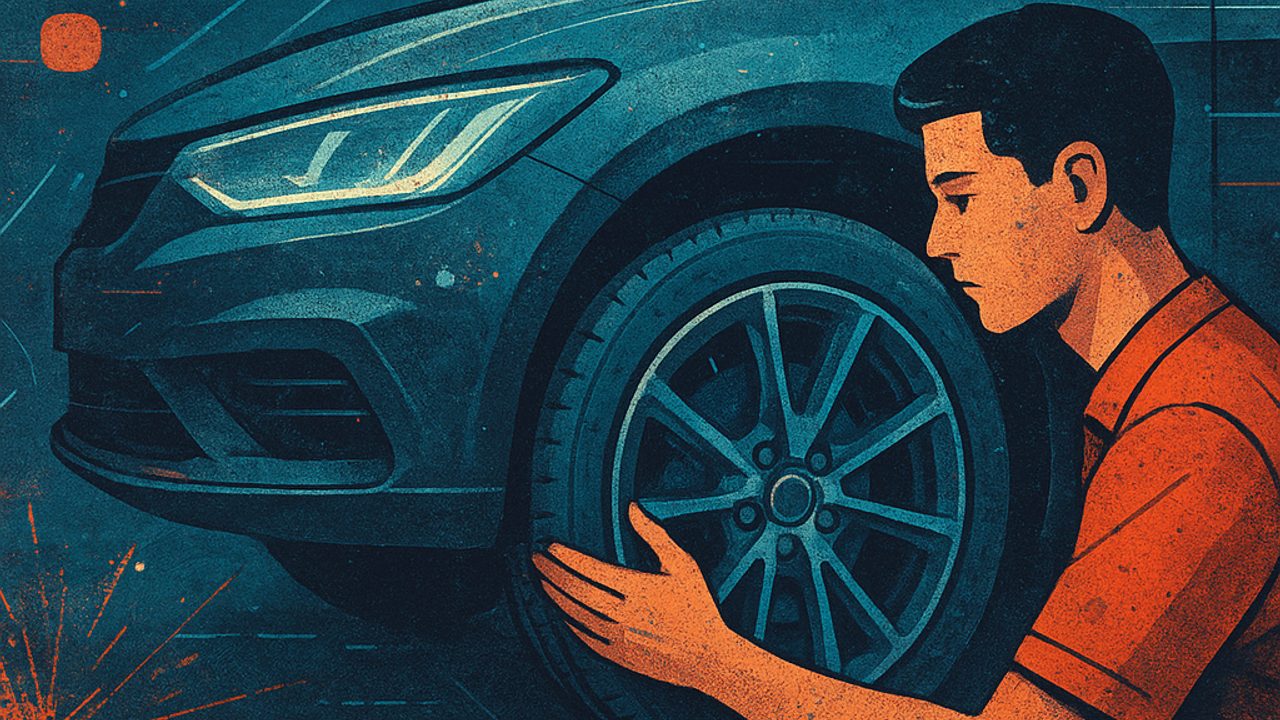
Wheel alignment and balancing often take a back seat until the car starts to “warn” you. The problem is that these warnings affect safety, especially in corners, during braking, and on wet roads.
The questions below are the most common among beginners. The answers are straightforward, without unnecessary technical terms, focusing on what changes in steering and what deserves immediate attention.
What is the difference between alignment and balancing?
Alignment adjusts the angles of the wheels so they point correctly and are parallel to each other. Balancing distributes the weight of the wheel/tire assembly so it rotates without vibration.
In practical terms: - **Incorrect alignment** pulls the car to one side and compromises stability. - **Poor balancing** causes vibration in the steering wheel and the car at certain speeds.
When should I do alignment and balancing?
The most common situations are: - Tire replacement. - Strong impact with a pothole, curb, or speed bump. - Crooked steering wheel when driving straight. - Steering wheel vibration above 60–80 km/h.
Even without symptoms, many drivers do a preventive check at every service or tire change. The key point is not to ignore clear signs.
What signs indicate an immediate safety risk?
Some signs deserve quick attention: - The car pulls to the right or left without you turning the wheel. - The steering wheel vibrates constantly at speed. - A feeling of instability in gentle curves. - Difficulty keeping the car in a straight line on the highway.
These symptoms reduce fine steering control, especially during emergency maneuvers.
Do alignment and balancing affect braking?
Yes. When the wheels are not properly aligned: - The car may **swerve during braking**. - The ABS has to work harder to correct the trajectory. - Stopping distance may increase in real-world situations.
On wet pavement, the risk is greater because the tire already has less available grip.
Is irregular tire wear related to this?
Most of the time, yes.
Common examples: - Wear only on the inside or outside of the tire: a sign of alignment out of spec. - “Cupping” or more worn areas: may indicate incorrect balancing or worn suspension.
Driving like this reduces the tire’s contact area with the road — something directly linked to safety.
Can I do only balancing or only alignment?
It depends on the symptom: - Vibration without the car pulling: usually balancing. - Car pulling or crooked steering wheel: alignment.
In practice, many service centers recommend doing both together, because one problem can mask the other. For beginners, this approach usually avoids rework.
Is it normal for the steering wheel to be slightly crooked after an impact?
It’s not normal, but it is common after potholes or wheel impacts. Even if the car “drives straight,” an off-center steering wheel indicates that something is out of adjustment.
Ignoring this sign increases tire wear and can compromise stability during quick maneuvers.
Do alignment and balancing replace a suspension inspection?
No. They correct adjustments, but they do not fix worn parts.
If there are: - Sharp knocks in the suspension, - Noticeable play, - Persistent instability even after the service,
it’s a sign that other components need to be checked. Proper adjustment only works well when the mechanical foundation is in good condition.
Comments
Comments are public and the sole responsibility of the author. Don’t share personal data. We may store technical signals (e.g. IP hash) to reduce spam and remove abusive, illegal, or off-topic content.