
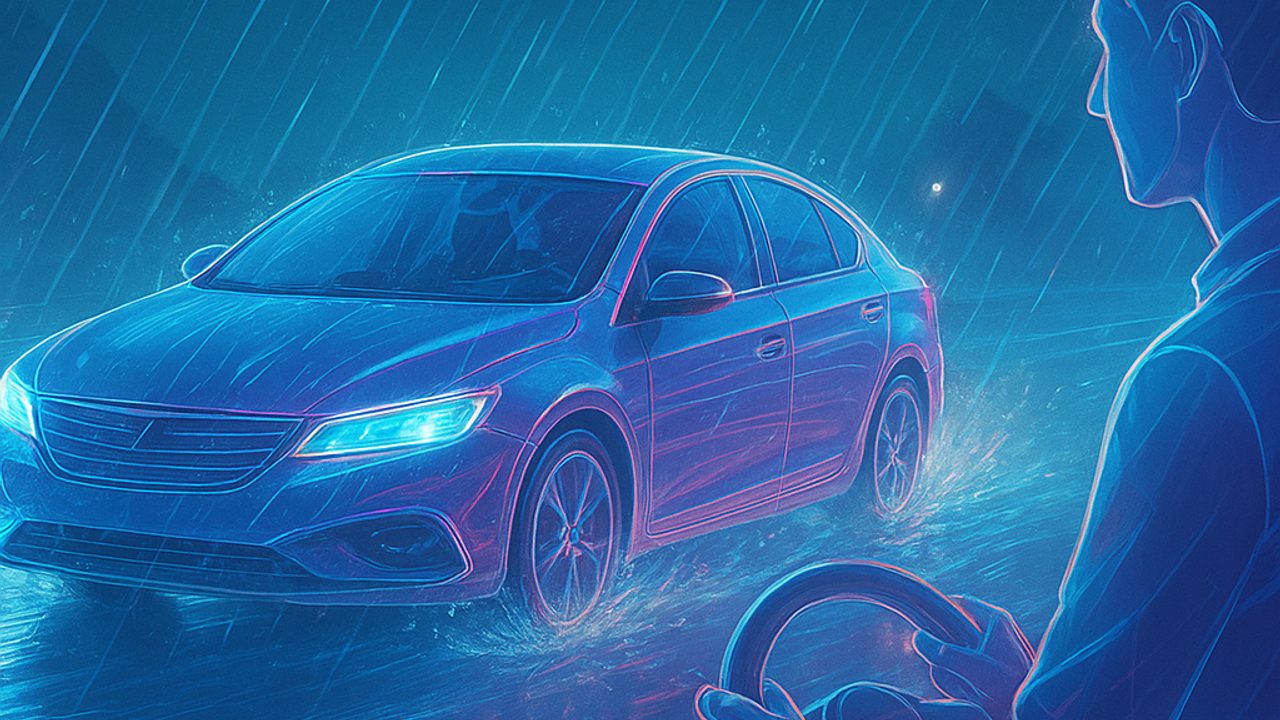
Aquaplaning is one of the most frightening situations behind the wheel because it takes away control of the car in seconds. It often shows up on ordinary rainy days, on the way to work or on the way home.
The questions below bring together frequent doubts and objective answers, focused on what works in daily life and helps prevent accidents.
What is aquaplaning, in practice?
It’s when the tire can’t drain the water from the road and starts to “float” on a thin layer. Without contact with the asphalt, steering, braking, and acceleration lose effectiveness.
Common signs: - the steering wheel suddenly feels light or loose; - the engine revs, but the car doesn’t respond; - the sensation that the car is sliding straight ahead.
In which situations does it happen most often?
Some combinations greatly increase everyday risk: - heavy rain after a dry period (oil and dirt remain on the surface); - deep puddles in driving lanes and truck ruts; - worn or improperly inflated tires; - speed above what’s appropriate for rain.
Do tires really make that much difference?
They do. They’re the main prevention factor.
Key points for daily use: - **Tread pattern**: deeper grooves drain water better. - **Inflation**: correct pressure helps the tire maintain contact with the asphalt. - **Uneven wear**: bald or "squared-off" tires lose efficiency in the rain.
What speed reduces the risk of aquaplaning?
There’s no magic number, but the logic is simple: the faster you go, the less time the tire has to drain water.
Good practices: - slow down before entering flooded sections; - maintain a steady speed, without abrupt acceleration; - increase the following distance.
What should you do at the exact moment the car aquaplanes?
The right reaction prevents the situation from getting worse: - gently lift off the accelerator; - hold the steering wheel firmly, without sudden turns; - avoid hard braking; - let the car regain contact with the road before resuming control.
What if I’m in a curve?
Double down on calm. Keeping the steering wheel pointed where you want to go helps the car realign when the tires regain grip.
Does braking help or hurt during aquaplaning?
In most cases, it hurts. Hard braking increases the loss of control.
Exception: - if the vehicle has electronic systems and the speed is already low, light pressure may help after grip returns.
Can you predict dangerous puddles?
Not always, but some clues help: - excessive shine on the asphalt indicates a water film; - deep marks left by trucks accumulate more water; - areas near clogged drains often form puddles.
Which simple habit most prevents aquaplaning day to day?
Anticipation. Slowing down before the rain intensifies, keeping tires in good condition, and driving smoothly are simple actions that greatly reduce risk — without requiring radical changes to your routine.
Comments
Comments are public and the sole responsibility of the author. Don’t share personal data. We may store technical signals (e.g. IP hash) to reduce spam and remove abusive, illegal, or off-topic content.