
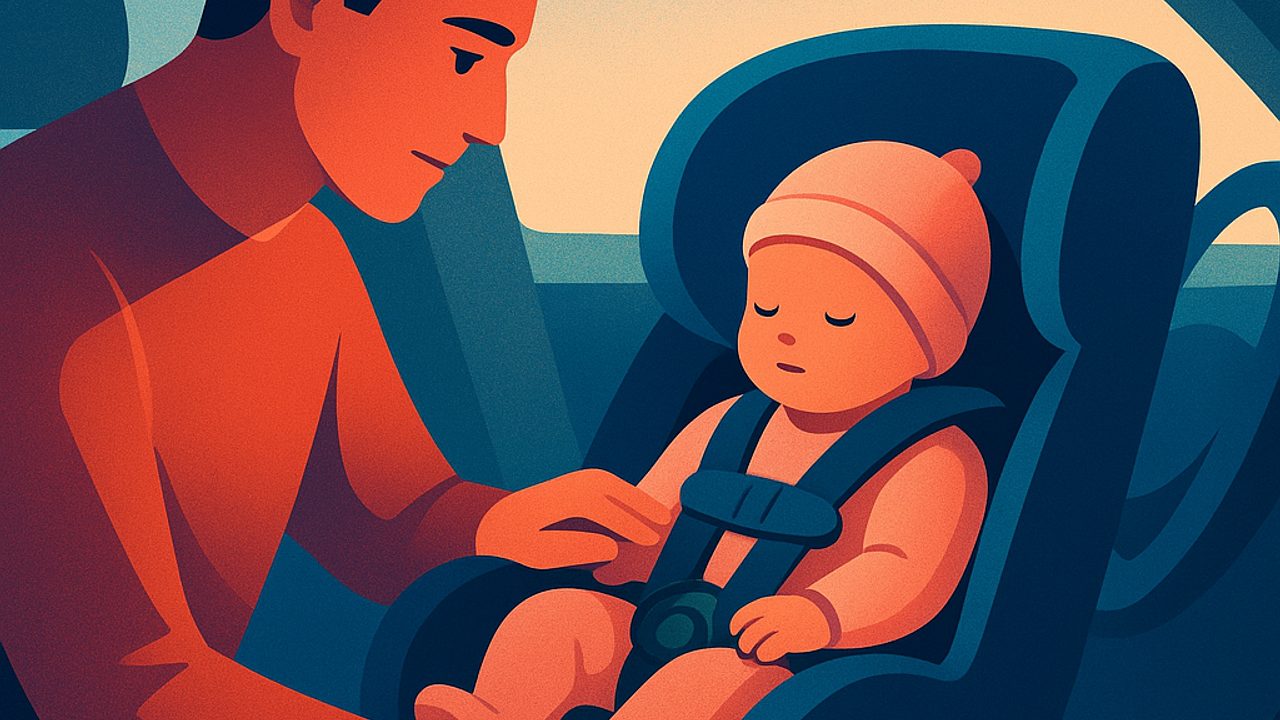
Transporting children is one of the greatest responsibilities behind the wheel. The child car seat is not a detail or an accessory: it is designed to work in common everyday situations, such as sudden braking and urban collisions.
For beginner drivers, understanding the basics — without excessive technical terms — helps create correct habits from the very first trip.
Why the car seat changes the outcome of an accident
A child’s body does not react like an adult’s in a collision. A larger head, more fragile neck muscles, and developing bones require specific restraint.
In urban traffic, the most frequent risks are:
- Unexpected braking - Low-speed rear-end collisions - Poorly calculated turns
The car seat reduces body movement and distributes impact forces more effectively, lowering the risk of serious injuries even when the accident seems “minor”.
Choosing a car seat: weight, height, and the child’s stage
More important than age is respecting the weight and height indicated by the manufacturer. This ensures that the harness and backrest work as intended.
In general, there are three stages:
- **Infant car seat**: rear-facing, recommended for the first months - **Convertible/forward-facing car seat**: forward-facing, with its own harness - **Booster seat**: used with the vehicle’s seat belt
Using an “advanced” stage too early is a common and dangerous mistake.
Correct installation matters more than the model chosen
A good-quality car seat that is poorly installed loses much of its effectiveness. Installation must be firm, with no lateral or forward looseness.
Everyday points of attention:
- Read the car seat and vehicle manuals - Test firmness with your hands: it should not move more than a few centimeters - Avoid makeshift solutions or adaptations
If the car has an Isofix system, use it as indicated. If using the seat belt, pay extra attention to the correct routing of the belt.
Position in the car: where the child is best protected
The rear seat is always the safest choice. Within it, the center position usually offers better protection against side impacts, when available and compatible with the car seat.
Avoid:
- Installing a car seat in the front passenger seat - Using an infant car seat facing forward
These decisions make a difference especially in urban collisions, which are the most common.
Common mistakes that often go unnoticed
Even attentive drivers can make everyday slip-ups:
- Loose or twisted car seat harness - Very bulky clothing on the child, creating invisible slack - Changing the installation “just for a short trip”
Small shortcuts increase unnecessary risks.
Quick check routine before setting off
Creating a simple habit helps maintain safety standards:
- Check that the car seat is firmly installed - Adjust the harness snugly to the child’s body - Verify that there has been no movement since the last use
This care takes less than a minute and fits well into the routine of those who are still gaining confidence behind the wheel.
Safety starts before turning on the car
For beginner drivers, the child car seat is also an emotional ally: it brings predictability to unexpected situations.
When the choice and installation are correct, there is more attention available for traffic, less anxiety behind the wheel, and more protection for those who depend entirely on your decisions.
Comments
Comments are public and the sole responsibility of the author. Don’t share personal data. We may store technical signals (e.g. IP hash) to reduce spam and remove abusive, illegal, or off-topic content.