
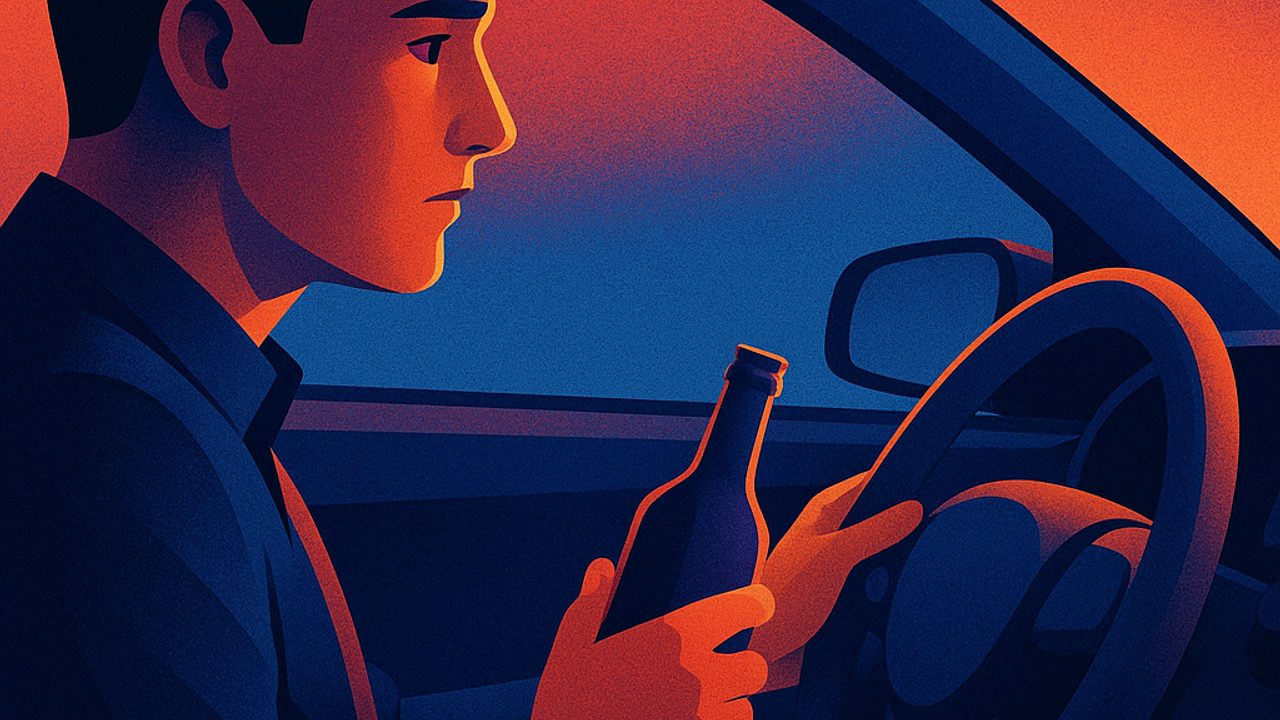
Alcohol and driving don’t mix. It sounds obvious, but in daily life the decision is often postponed: "just one," "it’s close," "I know the way." Defensive driving starts before the first sip, when you plan how you’ll get back.
The risks don’t appear only with large amounts. Small doses already affect reaction time, speed perception, and attention — exactly the trio that prevents collisions at intersections, curves, and during unexpected braking.
What alcohol changes in daily driving
Even on short, familiar routes, alcohol interferes with basic driving tasks. It’s not just about "swerving."
- Reaction time increases: that extra second makes a difference when braking for a pedestrian. - Peripheral vision is reduced: motorcycles and cyclists disappear from view. - Risk judgment drops: distance seems greater, speed seems lower. - Fine coordination worsens: staying in the lane and modulating the brake becomes harder.
Common situations where risk increases
Some everyday scenarios amplify the effect of alcohol.
- Leaving bars at night, with uneven lighting and mixed traffic. - Returning via local streets, full of unsignaled intersections. - Light rain, when the asphalt is deceptive and grip drops. - Passengers talking, loud music, and a vibrating phone.
Planning before the first sip
Defensive driving is planning. Deciding how to get back beforehand avoids improvisation when judgment is already compromised.
- Agree on a designated driver who won’t drink. - Set aside money for alternative transportation before going out. - Check schedules and nearby pickup points. - Let people at home know how you plan to return; this creates accountability.
When plan A fails
Unexpected things happen. Have a simple plan B: wait, change the mode of transport, or ask for help. The important thing is not turning urgency into a bad decision.
Safe alternatives for getting back
Choosing not to drive is also an active safety decision.
- App-based ride or taxi: predictable cost, less risk. - Night public transportation, when available. - A ride with a sober person, confirmed in advance. - Stay overnight at the location or nearby and return the next day.
If you realize you’re not fit to drive
Recognizing your limit is part of responsible driving.
- Don’t start the car "just to test." - Avoid arguments like "I can handle it." - Keep the keys out of reach if necessary. - Prioritize everyone’s safety, including your own.
A defensive habit that makes a difference
Turn planning your return into a routine, like fastening your seat belt or adjusting the mirror. Over time, deciding in advance becomes automatic. Defensive driving isn’t just technique behind the wheel; it’s a conscious choice outside of it.
Comments
Comments are public and the sole responsibility of the author. Don’t share personal data. We may store technical signals (e.g. IP hash) to reduce spam and remove abusive, illegal, or off-topic content.