
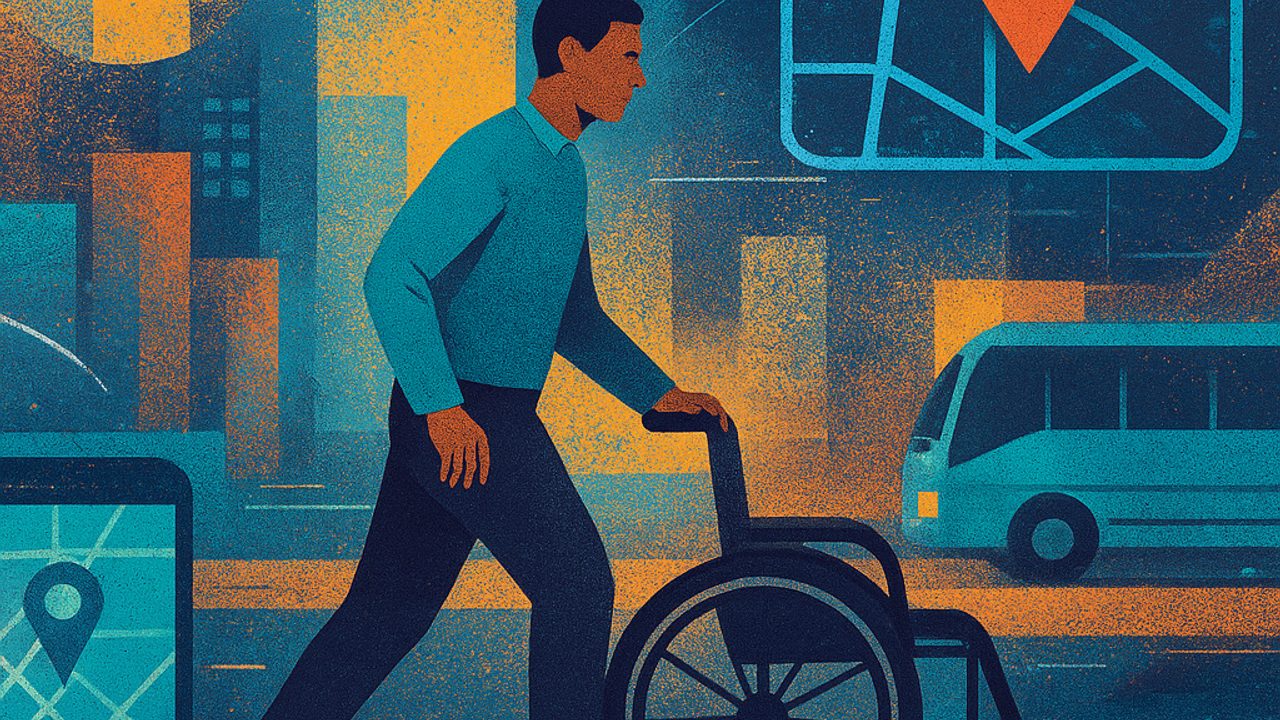
Planning an accessible trip in the city is the sum of small decisions. The fastest route is not always the safest or most comfortable for those who use a wheelchair, cane, stroller, or have reduced mobility.
With a few clear criteria, it is possible to reduce unforeseen issues and choose paths that work better in everyday urban life in Brazil.
Start with the basics: what makes a route accessible
Before thinking about maps and apps, it is worth aligning minimum criteria. They help filter options from the start.
- Continuous sidewalks, without unexpected steps - Ramps with adequate slope at corners - Crosswalks with curb cuts - Sufficient lighting, including at night - Crossings with reasonable traffic light timing
If the route fails in two or more of these points, it already deserves extra attention.
On foot: how to read the city beyond the map
Maps show streets; they do not show obstacles. When planning a walking route, observe the surroundings in advance whenever possible.
- Prefer streets known for commerce and services: they usually have better-maintained sidewalks - Be wary of shortcuts: "faster" passages may hide stairs or uneven surfaces - Consider the neighborhood’s terrain; long uphill stretches are tiring and require more effort
Practical tip for recurring routes
When you find a really good stretch, register it mentally or write it down. Reliable accessible routes become references for other nearby trips.
Public transport: what to check before leaving
Not every bus, train, or subway operates with the same level of accessibility every day. Planning helps avoid long waits.
- Off-peak hours make boarding and disembarking easier - Stops and stations with working elevators or ramps make a difference - Larger terminals tend to have support staff
When there is more than one possible line, choose the one that requires fewer transfers.
Route apps: how to use them without falling into traps
Apps help, but they do not replace critical judgment. Many do not consider physical barriers.
- Enable options to avoid stairs when available - Compare two different routes before deciding - Read user comments about accessibility when they exist
Use the app as a base, not as absolute truth.
Combine modes of travel strategically
Sometimes, the best solution is to mix a short walk with transport.
- Getting off one stop earlier can avoid a bad sidewalk - Walking a bit more to reach an accessible station is worth it - Stops near hospitals and public centers are usually better adapted
Thinking in blocks of movement gives more control over the journey.
Always have a plan B
Unexpected issues happen: broken elevators, sidewalk construction, crowded vehicles. An alternative plan reduces stress.
- Know where benches are for breaks - Identify covered places to wait - Keep a parallel route in mind
Planning accessible routes is not overcautious. It is a practical way to ensure autonomy, safety, and predictability when using the city.
Comments
Comments are public and the sole responsibility of the author. Don’t share personal data. We may store technical signals (e.g. IP hash) to reduce spam and remove abusive, illegal, or off-topic content.