
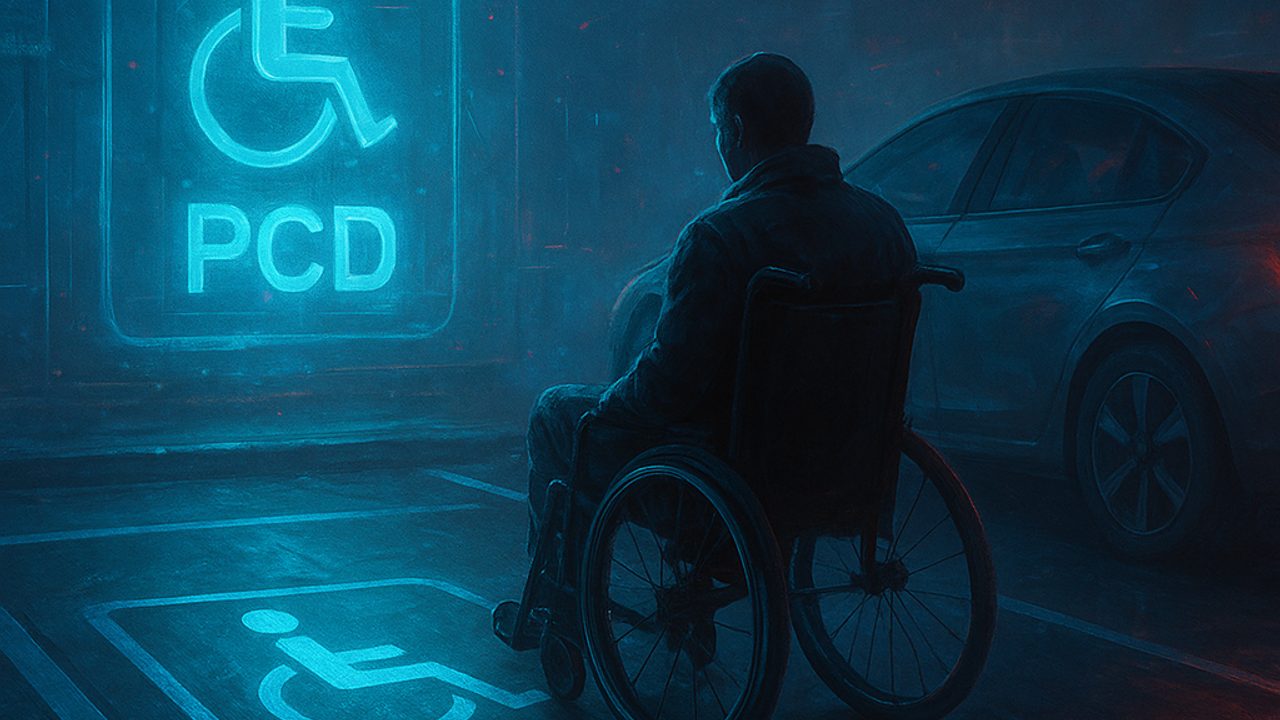
Parking spaces reserved for people with disabilities (PCD) are a basic urban accessibility resource. Even so, they still generate doubts, abuse, and conflicts in everyday life.
When used properly, these spaces shorten distances, reduce risks, and allow more people to move around independently. When disrespected, they become yet another barrier in cities already full of obstacles.
What is a PCD parking space and why it exists
A PCD parking space is an area reserved for vehicles transporting people with disabilities or reduced mobility. It is usually located closer to entrances, elevators, or accessible routes.
The goal is not privilege. It is to compensate for inequalities in the urban environment, such as:
- Uneven sidewalks or lack of ramps - Long distances between parking and destination - The need to open the door wider for wheelchair transfers - Use of support equipment such as walkers or prosthetics
Without this reservation, many people simply stop accessing services, work, or leisure.
Who can use a PCD parking space in Brazil
The use of the space is linked to the person, not the vehicle. A personal car, a family member’s car, a caregiver’s car, a taxi, or a ride-hailing service can be used — as long as the person with a disability is being transported.
In general, the following are entitled:
- People with physical, visual, intellectual, or multiple disabilities - People with permanent or temporary reduced mobility - People with Autism Spectrum Disorder
The practical rule is simple: without the beneficiary in the vehicle, the space should not be used.
Parking permit: what it represents
The PCD parking permit is the document that authorizes use of the space. It must be visible on the car’s dashboard, with the front facing up.
Some important points:
- The permit is personal and non-transferable - It can be used in any vehicle transporting the person - It has an expiration date and may need renewal
Using someone else’s permit, even with “good intentions,” invalidates the right and harms those who truly need the space at that moment.
Where the rules apply in practice
The rules apply both to public streets and to private parking lots for collective use, such as:
- Shopping malls - Supermarkets - Hospitals and clinics - Universities - Public agencies
Even in places with controlled access gates, the PCD space must be respected. Charging for parking does not remove the obligation to reserve the space nor authorize improper use.
Signage that truly works
To be accessible, a parking space needs:
- Vertical signage (sign) - Horizontal floor markings - Adequate dimensions for maneuvering and door opening - An accessible route to the building entrance
A space isolated by steps, obstacles, or level differences loses its function, even if it is “within the law” on paper.
Common violations and real impacts
Stopping “just for a moment” in a PCD space is one of the most frequent violations. Other common situations include:
- Using the space without a permit - Expired or illegible permit - Permit displayed, but without the person in the vehicle - Large vehicles occupying part of the lateral circulation area
The impact goes beyond the fine. For those who arrive later and cannot find an accessible space:
- The activity may be canceled - The risk of falling increases - The person depends on help from others - Autonomy is compromised
Everyday respect: attitudes that make a difference
Inclusion is also about behavior. Some simple attitudes help make the use of spaces fairer:
- Not questioning or harassing those who use the space - Avoiding judgments based solely on appearance - Not using the space “just for a few minutes” - Notifying management when the space is poorly located or blocked
Not every disability is visible. Respect begins when we understand that.
When the space does not exist or is irregular
The absence of PCD spaces or inadequate signage is still common. In these cases, it is worth observing:
- Whether the location has significant public flow - Whether there is physical space for adaptation - Whether other special spaces were prioritized
Documenting the situation, reporting it to management, and following up on changes helps transform the space. Accessibility improves when it is demanded with information and consistency.
PCD parking as part of a more accessible city
A PCD parking space does not solve everything. It works best when integrated with accessible sidewalks, step-free entrances, clear communication, and respectful service.
Treating it as a detail or a favor is a common mistake. It is a basic right and a measure of how the city deals with the diversity of bodies and ways of moving.
Respecting the space is a simple gesture. For many people, it is the difference between going and not going.
Comments
Comments are public and the sole responsibility of the author. Don’t share personal data. We may store technical signals (e.g. IP hash) to reduce spam and remove abusive, illegal, or off-topic content.