
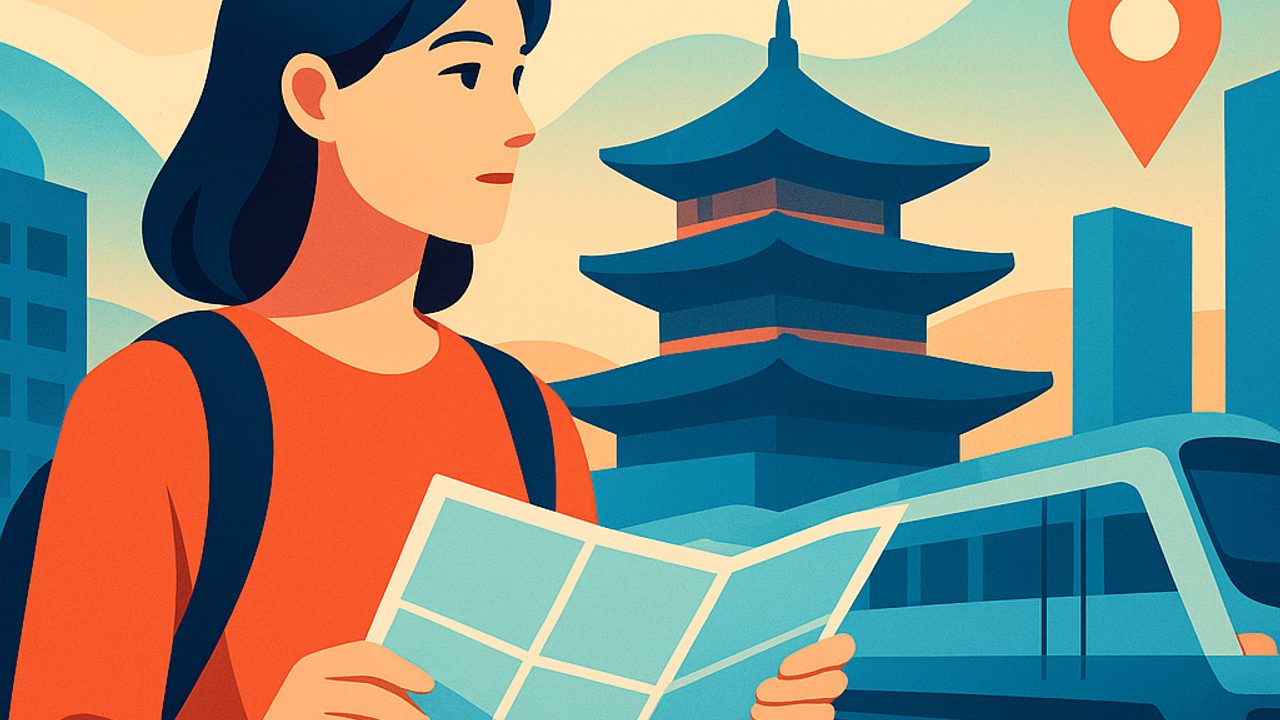
Arriving in South Korea can bring that feeling of information overload: huge neighborhoods, stations with multiple lines, and names that change depending on the map. The good news is that the system works very well — and learning the basics already solves 90% of the logistics.
Below are straightforward answers to the questions that most often come up on a first trip, with a focus on urban culture and practical experiences.
How to choose a good neighborhood to stay in
For a first trip, think less about a “famous neighborhood” and more about easy access to the subway. In large cities like Seoul and Busan, being close to a strategic station matters more than being next to a tourist attraction.
Prioritize neighborhoods that: - Have a large or transfer station (two or more lines) - Offer restaurants, cafés, and shops within walking distance - Work well at night, with constant activity
This makes it easier to return late, improvise plans, and feel local life without relying on taxis.
Are stations more important than neighborhoods?
In practice, yes. Many people orient themselves by station name, not by neighborhood. A single neighborhood may have several stations, and one station can serve very different areas.
Important cultural tip: when arranging meetups, it’s common to agree on the station exit. Some stations have more than 10 exits, each leading to a different block.
How not to get lost in large stations
Central stations may feel like labyrinths, but they follow a clear logic.
It works best like this: - First follow the line color and number - Then look for the name of the terminal station (train direction) - Only at the end think about the exit
Platforms, corridors, and signs usually have basic English, and the maps are consistent with one another.
Is it worth changing accommodations to see other areas?
For a short first trip, no. Staying in one neighborhood saves time and energy. Urban transportation covers long distances well, and changing hotels rarely pays off.
Exception: when you change cities (for example, from Seoul to Busan). In that case, it makes sense to reorganize your base.
How to plan day-to-day transportation
Ideally, think in terms of stations, not isolated attractions. Grouping visits that are on the same line or in the same area reduces transfers and unnecessary walking.
A useful local habit: - Choose a base station for the day - Explore everything around it on foot - Only then move on to the next area
This makes the pace more natural and less of a “race against the clock.”
Is walking safe and part of the experience?
Yes. Walking is one of the best ways to understand urban Korea. Side streets hide cafés, small shops, and markets that don’t appear in classic itineraries.
Even at night, central areas are usually well lit and lively. The key is to observe local flow and follow the rhythm of the street.
How to deal with plan changes and improvisation
South Korea is friendly to improvisation. Frequent transportation, predictable schedules, and good signage help you adjust your itinerary without drama.
If something doesn’t go as expected: - Go back to the nearest station - Recalculate the route calmly - Use the extra time to eat or explore the surroundings
Many great experiences arise precisely in these unplanned intervals.
Comments
Comments are public and the sole responsibility of the author. Don’t share personal data. We may store technical signals (e.g. IP hash) to reduce spam and remove abusive, illegal, or off-topic content.