
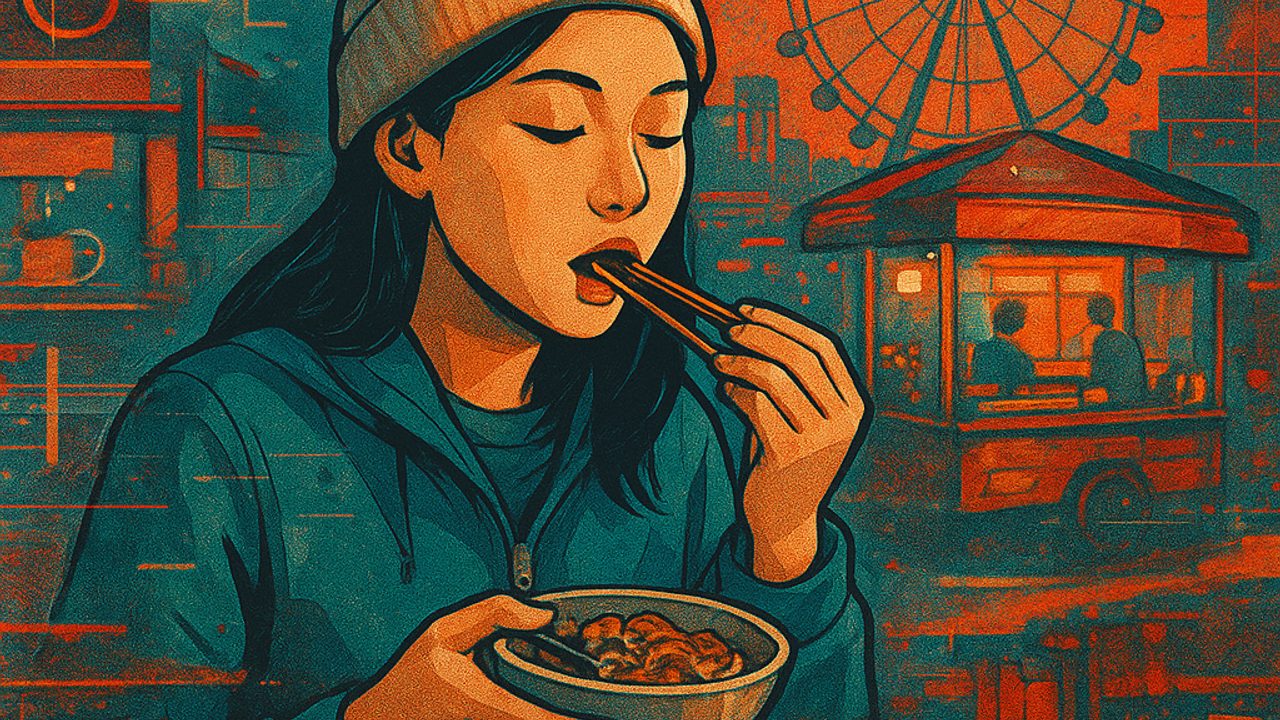
Korean cuisine shows up in the details: the quick order at the counter, the themed café on the corner, the market that stays open late. For first-time visitors, understanding the local rhythm helps you eat better — and with less anxiety.
The good news is you don’t need to know Korean or decipher long menus. With a few simple choices, you can have authentic experiences from day one.
Cafés beyond coffee: how to choose and enjoy
Cafés in South Korea are social spaces. Many open early, others are busy at night, and there are options for every style — from minimalist to playful.
- Watch the counter: display cases with cakes and breads make choosing easier without relying on the language. - Size matters: drinks are often large; order the smallest if you want something light. - Make yourself comfortable: sitting to work or chat for hours is common.
Orders without complications
Self-service kiosks are common. Most have an English option and accept cards. If you prefer the counter, pointing works — and a smile helps.
Traditional markets: where the day happens
Markets are ideal for trying several dishes in small portions. They mix quick meals, fresh ingredients, and long-standing stalls.
- Go hungry and curious: take a lap before deciding. - Cash or card: both are accepted, but smaller stalls may prefer a local card. - Eat at the counter: sitting there sparks interaction and speeds up ordering.
What to try without fear
Hot dishes made to order, comforting broths, and simple noodles are safe choices. If there’s a line, it’s a good sign.
Night street food: flavors and rhythm
At night, streets and areas near stations fill with carts and stalls. It’s informal, fast, and tasty.
- Order to go: eating standing up is common. - Sauces on the side: if you don’t tolerate heat, ask for less chili. - Share: portions are generous and ideal for splitting.
Table etiquette that makes everything easier
Small habits avoid awkward moments:
- Wait for elders to start (in traditional settings). - Use a spoon for soups and rice; chopsticks are for sides. - Don’t spear food with chopsticks.
Timing and realistic expectations
Lunch can be early and quick. Dinner also starts early, but street food keeps hunger at bay late into the night. In cafés, desserts replace meals for many people.
How to read menus without reading Korean
Photos help. Chili icons indicate spice level. Repeated words around the neighborhood usually point to local specialties — it’s worth trusting them.
Bringing home edible souvenirs
Markets and convenience stores have snacks, teas, and sweets that are easy to carry. Choose sealed packages and check expiration dates.
By paying attention to the rhythm and staying open to trying new things, eating in South Korea becomes part of the journey — simple, accessible, and full of pleasant surprises.
Comments
Comments are public and the sole responsibility of the author. Don’t share personal data. We may store technical signals (e.g. IP hash) to reduce spam and remove abusive, illegal, or off-topic content.