
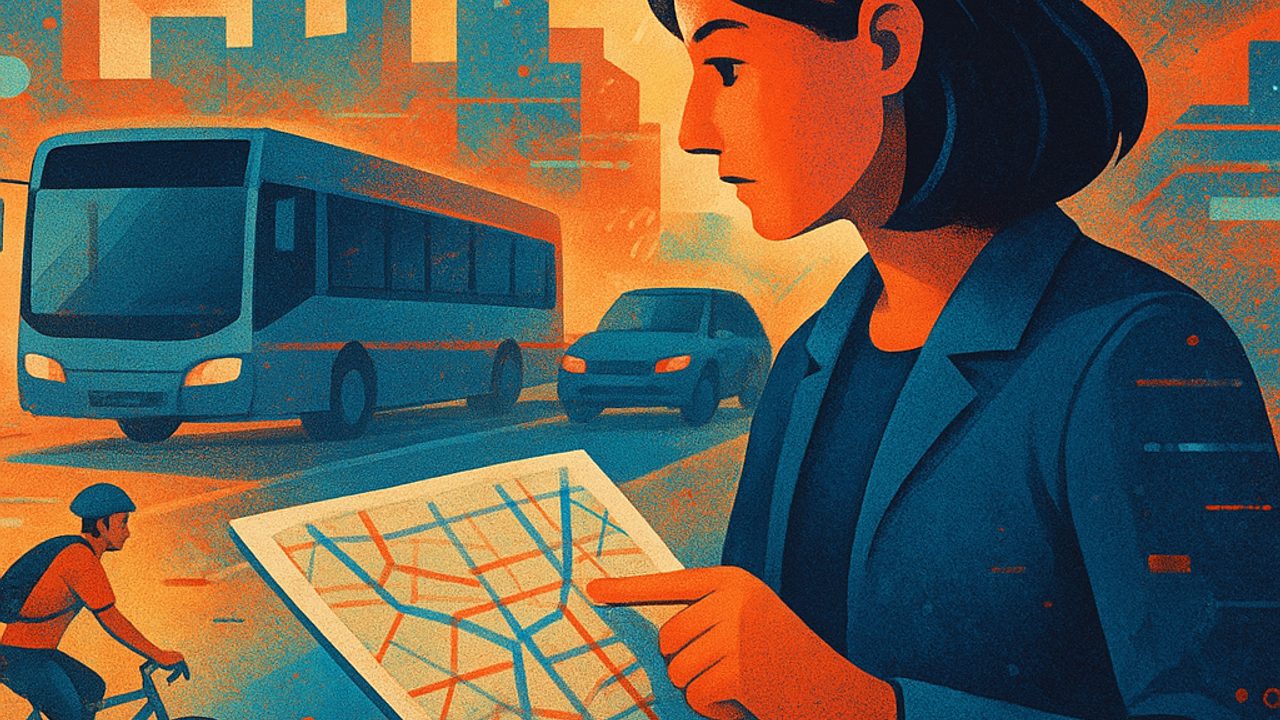
Planning an urban trip isn’t just about deciding where to go. It’s about thinking where to stop, when to move, and how to react to common city situations. Small choices made before leaving reduce exposure to risks and avoid rushed decisions along the way.
In urban routines, safety almost always goes hand in hand with predictability. The less improvisation, the lower the chance of conflict, delays, or uncomfortable situations.
Start with the stops, not just the route
Many people plan a route as a continuous line: origin, path, destination. In practice, the city works in blocks. Stops are part of the journey and deserve attention.
Before leaving, it’s worth identifying:
- Stop points in busy, visible locations - Alternatives in case the main stop is crowded, closed, or surrounded by degradation - Places where it’s possible to wait without being isolated
This applies to everything: bus stops, stations, short-term pickup spots, bike racks, or even a sidewalk to check your phone. Stopping well is as important as moving well.
Time changes risk — even in the same place
A route that’s safe at 8 a.m. may not be at 10 p.m. The surroundings change, foot traffic drops, businesses close, and lighting becomes decisive.
When planning timing, consider:
- Volume of people circulating - Transport operations (longer intervals increase waiting time) - Public lighting and commercial activity
Moving your departure 20 minutes earlier or later can sometimes greatly reduce waiting time in sensitive locations. In central areas, leaving with the peak is often more predictable than arriving at the start of the lull.
Avoid critical decisions in critical locations
Choosing an alternative route, replying to a long message, or searching for an address in the middle of the street increases exposure. Planning helps push these decisions into controlled environments.
Simple best practices:
- Define a main route and an alternative before leaving - Save addresses and references offline - Adjust notifications so you don’t need to stop in unsafe places
If you need to decide something, look for places with visibility, flow, and a quick exit. Gas stations, storefront entrances, and service areas are usually better than empty corners.
Public transport: safety starts while waiting
A large share of urban incidents happens outside the vehicle. Waiting time concentrates distraction and vulnerability.
Some precautions help:
- Position yourself where you can see and be seen - Avoid headphones that completely isolate you - Keep bags and backpacks in front of your body in crowded places
If waiting stretches beyond what was expected, reassessing is part of planning. Switching lines, changing stops, or adjusting timing can be safer than insisting.
On foot, by bike, or scooter: micro-decisions matter
With micromobility, planning is shorter, but no less important. Small decisions repeated every day shape risk.
Before leaving, think about:
- Segments with better lighting and lateral visibility - More predictable intersections, even if they aren’t the fastest - Safe places to stop without blocking passage
Avoiding deserted shortcuts, even if they save a few minutes, is usually a poor trade-off in daily urban use.
Car and motorcycle: plan where not to stop as well
In motorized travel, the focus is often on flow. Urban safety requires attention to forced or improvised stops.
It’s worth mapping in advance:
- Appropriate pickup and drop-off locations - Short-term parking in busy areas - Gas stations or service areas along the way
Stopping in double parking, at corners, or in poorly lit places increases conflict and exposure. Sometimes driving an extra block solves it.
Have a simple, realistic plan B
Urban planning isn’t about creating complex scenarios, but having basic exits. A clear plan B reduces decisions under stress.
Practical examples:
- Another nearby line or station - An alternative time you already know - A slightly longer route that’s busier
The goal isn’t to predict everything, but to avoid having no option when something goes off plan.
Urban safety is routine, not an exception
Planning stops, timing, and routes with safety in mind doesn’t need to be bureaucratic. Over time, it becomes a habit. The city changes every day, but certain patterns repeat.
Those who observe these patterns and adjust their movement in advance tend to face fewer surprises. It’s not about fear; it’s about reading the environment and making conscious choices in everyday city use.
Comments
Comments are public and the sole responsibility of the author. Don’t share personal data. We may store technical signals (e.g. IP hash) to reduce spam and remove abusive, illegal, or off-topic content.