
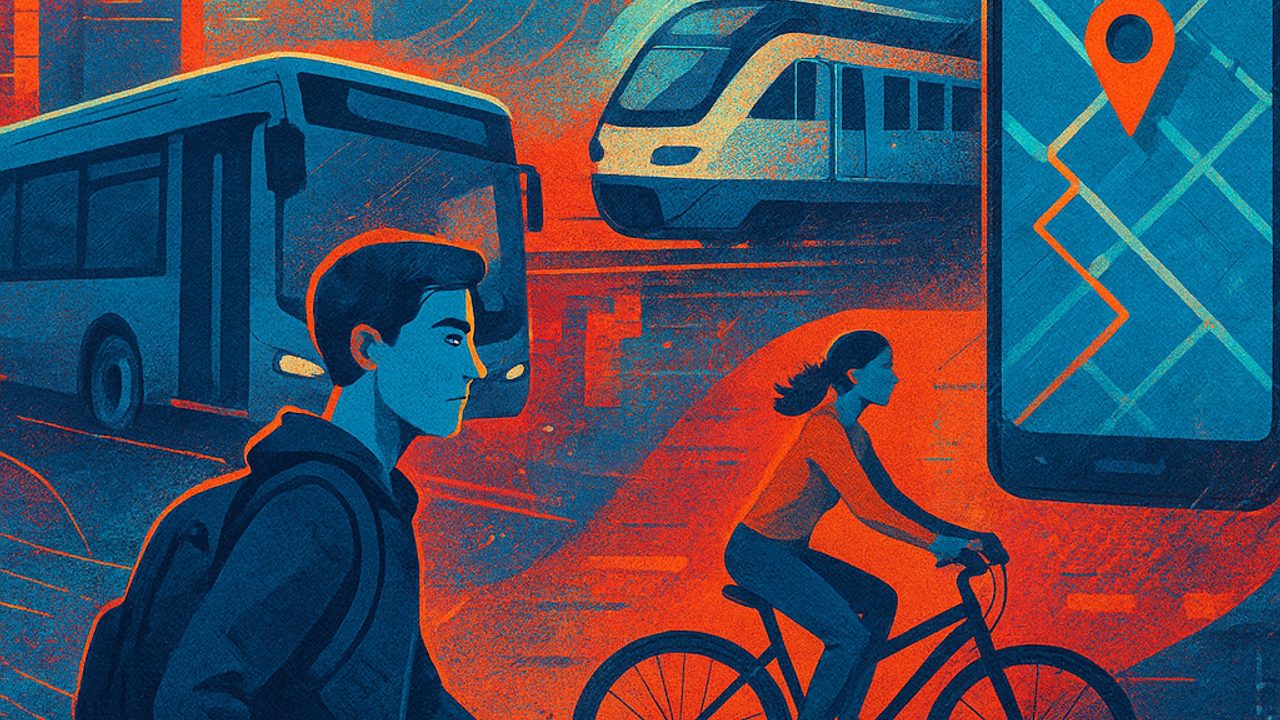
Moving well around the city isn’t just about choosing the shortest path. In urban areas, safety depends on small decisions: where to switch modes, what time to travel, and how to respond to unexpected situations.
When a route is planned in advance, combining modes intelligently, the journey tends to become more predictable — and less exposed to common everyday urban risks.
Combining modes reduces exposure, not just saves time
Using more than one means of transport on the same trip can reduce critical segments, such as fast roads, sparsely populated areas, or conflict points between vehicles and pedestrians.
Some practical examples:
- Walk to a bus stop with more foot traffic before taking public transport. - Use a bicycle or scooter only for the initial or final stretch, avoiding dangerous avenues. - Integrate bus, subway, or train to reduce time spent in higher-risk areas.
The logic is simple: less time in vulnerable places usually means more safety.
Timing changes everything — including the level of risk
The same route can be safe at 8 a.m. and problematic at 10 p.m. Foot traffic, lighting, and transport availability vary greatly throughout the day.
When planning:
- Prefer times with higher activity at stops and stations. - Assess whether waiting times increase too much outside peak hours. - Consider alternative routes for nighttime or low-demand periods.
Anticipating this scenario avoids improvisation at more sensitive moments.
Transfer points deserve extra attention
Switching buses, exiting the subway to walk, or parking a bicycle are critical moments. That’s when attention is divided and the surroundings don’t always help.
Good practices include:
- Prioritizing well-lit places with constant circulation. - Avoiding isolated stops, even if they save a few minutes. - Observing entrances and exits before getting off the vehicle.
A well-chosen transfer point is worth more than a theoretically faster route.
Route planning is also a plan B
Even with everything defined, the city changes quickly: delays, blocked roads, crowded vehicles. Having alternatives thought out in advance reduces decisions under pressure.
It’s worth mapping:
- A secondary route using another mode. - A safe place to wait if something goes off plan. - Cutoff times to change strategy without exposing yourself.
Planning doesn’t rigidly lock the path; it creates room for choice.
Extra attention on the final stretches of the trip
The last meters often concentrate risks: fewer people, accumulated fatigue, and the feeling of “I’ve already arrived.” That’s exactly when many people relax too much.
Whether on foot, by bike, or after parking:
- Stay aware of your surroundings until you enter a safe place. - Avoid using your phone at that moment. - Prefer familiar paths, even if they’re a bit longer.
Finishing the trip carefully is part of the planning.
Safety is also a habit, not just a route
Combining modes and planning paths helps, but behavior sustains safety in everyday urban life. Observing the environment, anticipating situations, and respecting the limits of your own travel make a constant difference.
The city is dynamic. Those who move well are those who adapt the plan without giving up the basics: predictability, attention, and conscious choices.
Comments
Comments are public and the sole responsibility of the author. Don’t share personal data. We may store technical signals (e.g. IP hash) to reduce spam and remove abusive, illegal, or off-topic content.