
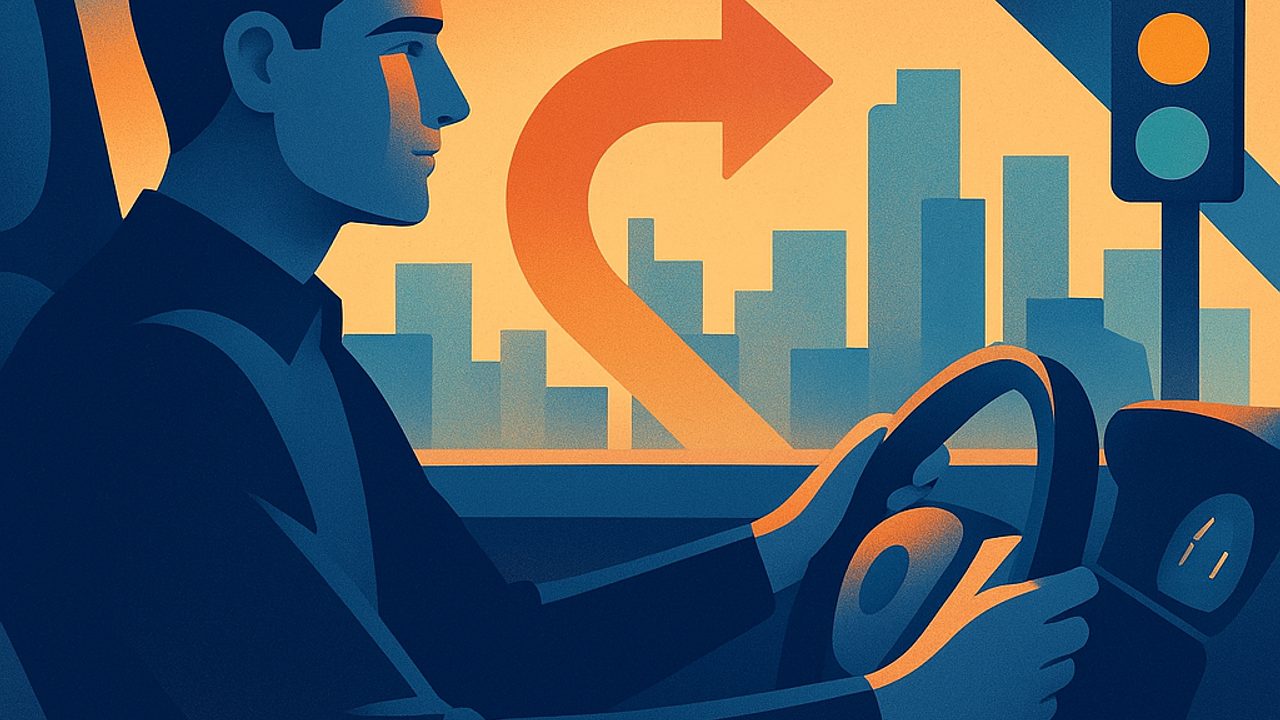
In urban traffic, safety and time savings are often treated as opposites. The idea that "driving faster" solves delays still appears strongly, even on short trips.
In practice, the biggest time wasters come from common, repeated decisions: poorly chosen routes, avoidable conflicts, unnecessary stops, and small incidents that turn into major delays. Some myths hinder more than they help.
Myth: speeding makes up for it in urban traffic
The city does not reward continuous speed. Signals, intersections, crosswalks, and buses set the pace.
Accelerating hard between one traffic light and the next usually leads to: - Hard braking and vehicle wear - Greater chance of conflict with pedestrians and motorcycles - Longer stops at the next light
Truth: consistency saves more time
Keeping a predictable pace, anticipating stops, and respecting the flow reduce invisible delays. Fewer scares mean fewer micro-stops, fewer detours, and less time lost to rework along the route.
Myth: shortcuts are always faster
Smaller streets seem tempting, but they hide typical risks of the urban grid: - Vehicles stopped in double parking - Last-minute deliveries - Pedestrians outside the crosswalk
A shortcut that gets stuck for two minutes cancels out any planned gain.
Truth: predictable roads save time overall
Routes with more traffic control, even if slightly longer, tend to be more consistent. Predictability reduces unexpected stops and conflicts that break the rhythm of the trip.
Myth: following rules causes delays
Coming to a complete stop, using turn signals, or waiting your turn is still seen as a waste of time. In daily urban life, this usually produces the opposite effect.
Ignoring rules increases: - Arguments and blockages - Risk of minor accidents - Long stops to resolve avoidable situations
Truth: flow comes from collective agreement
When everyone knows what to expect, traffic moves better. Small gestures of predictability avoid conflicts that cost far more minutes than the time "saved" by breaking a rule.
Myth: multitasking at the wheel helps save time
Adjusting an app, replying to a message, or changing music while moving seems harmless, but it fragments attention.
In the city, this usually leads to: - Delayed reactions at intersections - Abrupt stops - Route errors that require turning back
Truth: full attention reduces detours and rework
A simple lane mistake or wrong turn can cost five, ten minutes. Anticipating decisions before leaving or at safe stops keeps the trip cleaner and more direct.
Myth: small conflicts don’t affect total time
Horns, cut-offs, and space disputes seem quick, but they create waves of delay.
Each conflict increases the chance of: - Traffic backing up behind - Pedestrians hesitating - Other drivers reacting defensively
Truth: avoiding conflict is a time strategy
Yielding when it makes sense, keeping distance, and not competing for space reduces the domino effect. Less tension, fewer interruptions — and the clock is grateful.
Myth: safety is only about avoiding serious accidents
In the city, what steals the most time isn’t major collisions, but smaller incidents: - Light contacts - Near misses - Stops to argue or reorganize flow
Truth: reducing micro-risks keeps trips moving
Anticipating intersections, observing others’ behavior, and respecting urban limits reduce these interruptions. The gain doesn’t show in a single day, but in the cumulative routine.
Road safety as an ally of urban time
When safety becomes a habit, the trip becomes more predictable. And predictability, in the city, is worth more than top speed.
Reducing risks isn’t about going slower — it’s about going better. With fewer detours, fewer conflicts, and fewer unexpected stops, time stops slipping away in traffic.
Comments
Comments are public and the sole responsibility of the author. Don’t share personal data. We may store technical signals (e.g. IP hash) to reduce spam and remove abusive, illegal, or off-topic content.