
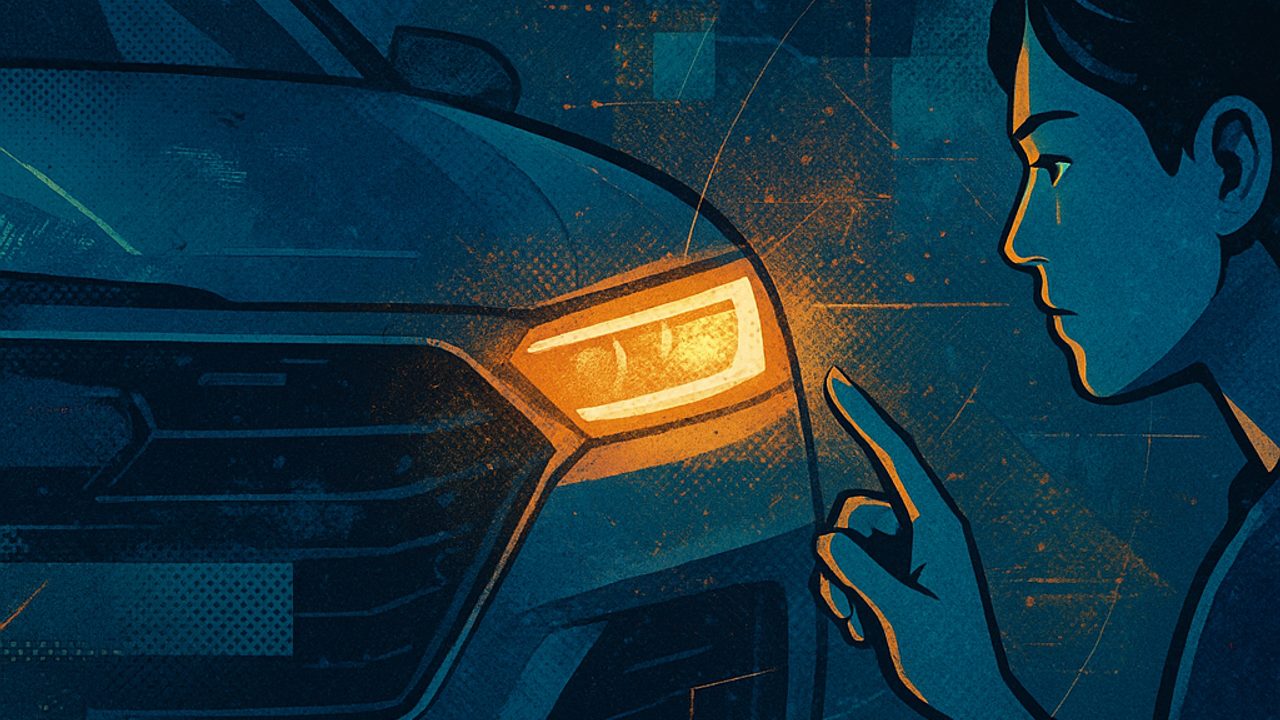
A large part of nighttime scares comes from a simple detail: poorly maintained lighting. For beginners, it’s common to believe in shortcuts that promise better visibility — and end up blinding others or worsening your own vision.
Beyond safety, headlights and bulbs matter when it’s time to sell the car. Burned-out lights, misaligned beams, or improvised modifications draw negative attention during inspections and negotiations.
Myth: a “stronger” bulb always lets you see better
More power does not mean more safety. Bulbs above the manufacturer’s specification can overheat, deform the reflector, and scatter light where it shouldn’t go. The result is worse contrast on the road and glare for oncoming drivers.
**Truth:** the right bulb, in the right headlight and properly adjusted, delivers more visibility than excessive power.
Truth: beam adjustment makes as much difference as the bulb
Low beam set too high blinds; too low shortens range. Potholes, shock replacement, and even excess load change the beam angle.
- Check whether the light cutoff is symmetrical. - If someone flashes their headlights at you at night, suspect misalignment. - A simple adjustment solves it and improves road readability.
Myth: high beams are the solution for any dark road
Using high beams continuously on two-lane roads reduces perception of terrain and reflections. It also blinds others and increases the risk of delayed reactions from the other driver.
**Truth:** high beams are situational. Use them when there’s no traffic ahead and lower them before meeting someone.
Myth: “plug and play” LED or xenon has no problem
Swapping halogen for LED/xenon without a compatible optical design scatters light. Even if it “looks bright,” the illumination becomes uneven.
**Truth:** without a proper setup (lens, focus, and heat dissipation), the modification worsens safety and devalues the car at resale.
Truth: fog lights do not replace low beams
Fog lights are made for specific conditions: fog, heavy rain, or dust. They illuminate low and short.
- Using them in dry weather does not improve visibility. - They can confuse drivers behind you.
Myth: lens polishing solves everything
Polishing helps when the lens is yellowed, but it’s not a miracle. If the internal reflector is burned or the bulb is weak, the light will still be poor.
**Truth:** combine clean lenses, the correct bulb, and proper beam adjustment.
Quick checklist before driving (or listing the car for sale)
- Low beam, high beam, turn signals, parking lights, and brake lights working - Same color and intensity on both sides - Aligned and symmetrical beam - Clean lenses with no cracks
Taking care of lighting is inexpensive compared to the safety benefits. And when it’s time to sell, it’s one of those details that shows care and avoids unnecessary discussion during inspection and negotiation.
Comments
Comments are public and the sole responsibility of the author. Don’t share personal data. We may store technical signals (e.g. IP hash) to reduce spam and remove abusive, illegal, or off-topic content.