
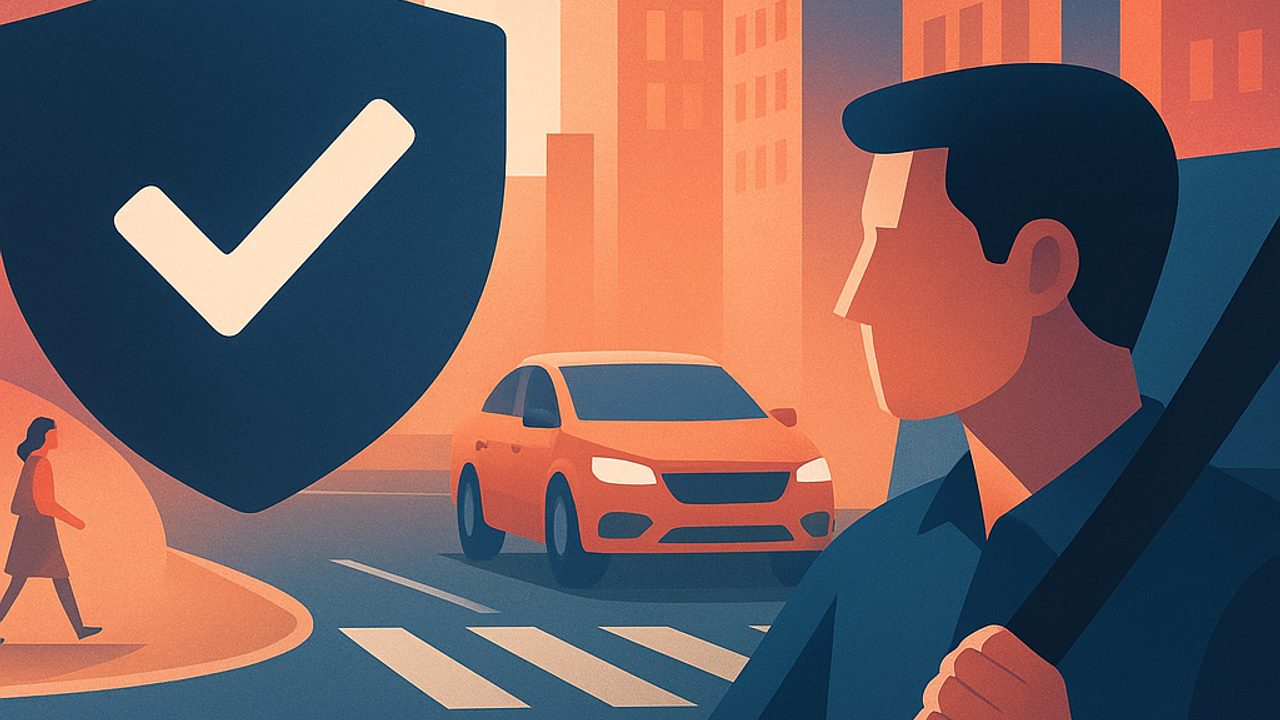
In city traffic, many people act on autopilot. They repeat habits because “it’s always been this way” or because they heard someone say it works. The problem is that some of these habits increase risk without us realizing it.
Understanding what is myth and what is truth in urban road safety helps make more conscious decisions, whether on foot, by bicycle, motorcycle, car, or public transportation.
Myth: low speed always means low risk
Reducing speed is essential, but it doesn’t solve everything. In urban areas, many crashes happen at relatively low speeds, especially at intersections, during turns, and in parking maneuvers.
Risk increases when attention drops. Moving slowly while looking at your phone, for example, can be more dangerous than maintaining a speed appropriate for the road with full attention to your surroundings.
Truth: intersections concentrate more danger than long avenues
Even busy avenues tend to be predictable. Urban intersections, on the other hand, bring together multiple flows, pedestrians, cyclists, and quick decisions.
Some simple precautions greatly reduce risk:
- Slow down before the crosswalk, even with a green light - Avoid rapid acceleration after the traffic light - Seek eye contact with those who are about to cross the road
Myth: knowing the route well eliminates surprises
Familiarity can become an enemy of safety. Those who take the same route every day tend to anticipate situations that do not always repeat themselves.
New construction, a relocated bus stop, changes in traffic light timing, or increased flow at certain hours are common examples. Attention drops precisely where the person thinks they “already know everything.”
Truth: predictability is worth more than haste
In urban traffic, being predictable reduces conflicts. Signaling before changing lanes, maintaining a steady trajectory, and respecting right of way help others react better.
This applies to all modes:
- Pedestrians who cross at a steady pace - Cyclists who avoid zigzagging between cars - Drivers who don’t change their minds in the middle of a maneuver
Myth: safety equipment makes up for distraction
Seat belts, helmets, airbags, and modern brakes save lives, but they do not replace attention. Most urban incidents involve brief distraction: a phone notification, an adjustment on the dashboard, a poorly timed conversation.
Technology helps, but it does not correct poorly made decisions in critical seconds.
Truth: the surroundings say a lot about the risk of a road
Observing the environment is one of the most efficient ways to reduce risks. Schools, bars, street markets, bus stops, and bike lanes indicate greater unpredictable circulation.
A quick reading of the surroundings allows behavior to be adjusted before a problem appears:
- Ease off the accelerator - Increase lateral distance - Prepare for an unexpected stop
Myth: road safety depends only on enforcement
Enforcement is important, but everyday urban life is made up of micro-decisions. Most of them happen far from officers or cameras.
Simple attitudes, repeated every day, tend to have more real impact on reducing risks than fear of a fine.
Truth: urban safety is built on small habits
Looking twice before crossing, respecting the timing of other modes, choosing a calmer hour, and accepting losing a few seconds are practices that add up.
In the city, road safety is not a great heroic gesture. It is consistency, attention, and less impulsive choices along the way.
Comments
Comments are public and the sole responsibility of the author. Don’t share personal data. We may store technical signals (e.g. IP hash) to reduce spam and remove abusive, illegal, or off-topic content.