
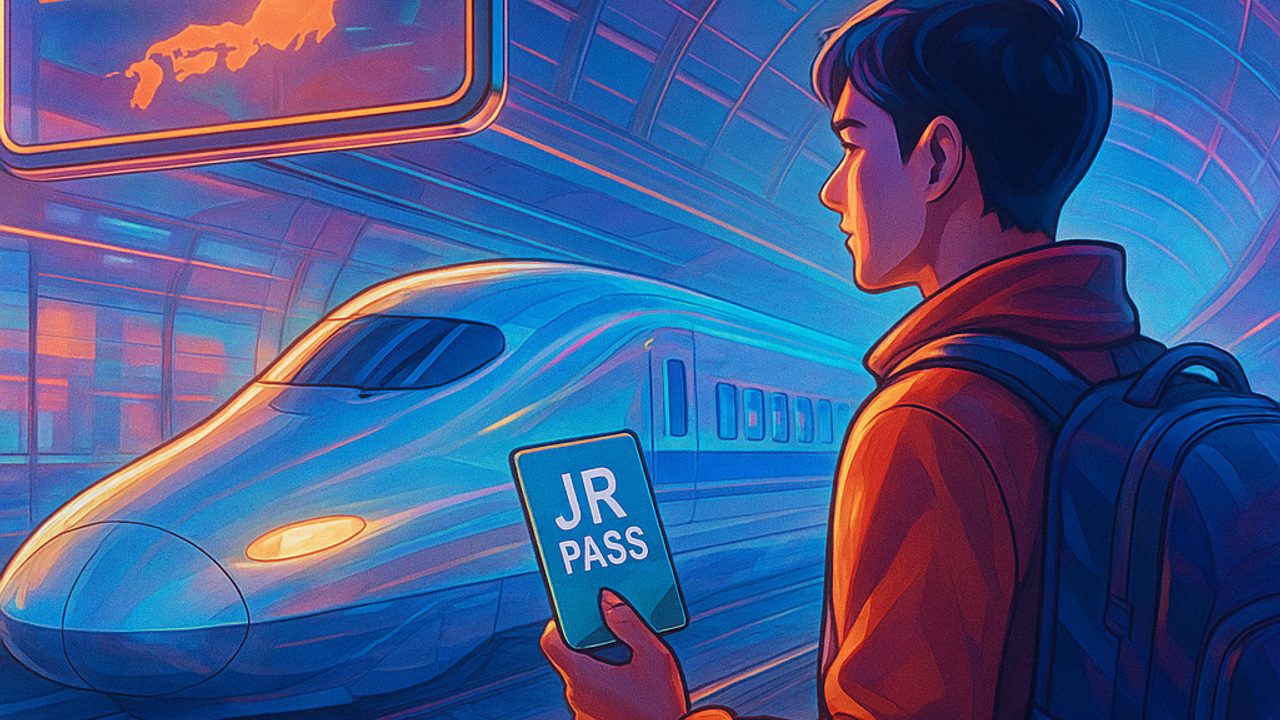
Three days go by fast in Japan. The good news is that you can experience a lot — temples, historic neighborhoods, street food, and efficient transportation — without turning transport into a headache.
The classic question comes up early: JR Pass or individual tickets? The answer depends less on the “best” option and more on how your days are designed. A well-structured itinerary saves time and money.
What the JR Pass really offers on a short trip
The JR Pass is an unlimited pass from Japan Railways, excellent for long distances and multiple cities. In just a few days, however, it only makes sense if there are significant intercity trips.
It works well when you: - Use the Shinkansen to go beyond a main base - Take at least one longer day trip - Prefer simplicity: boarding trains without thinking about fares
It may not be worth it when: - Most of your time is spent within a single city - You rely more on private subways (very common) - The itinerary is compact and cultural
Individual tickets and IC cards: the everyday combo
For Tokyo, Kyoto, and Osaka, individual tickets with an IC card (such as Suica or Pasmo) handle almost everything. You enter and exit stations without calculating fares for each trip.
Practical advantages: - Pay only for what you use - Works on subways, urban trains, and buses - Also works for small purchases
For a short first trip, this combo is usually the lightest and most flexible option.
Suggested itinerary: 3 days focused on culture (and how to get around)
Day 1 — Historic and everyday Tokyo
Single base in Tokyo. Morning in traditional neighborhoods, afternoon in modern areas, evening on a food street.
Recommended transport: - Subways and urban trains - IC card or individual tickets
Here, the JR Pass brings no real advantage.
Day 2 — Cultural day trip (Nikkō or Kamakura)
Temples, nature, and a more contemplative pace. The trip takes 1 to 2 hours from Tokyo.
Recommended transport: - JR train to the base city - Individual ticket or regional pass
If this is the only long-distance trip, it is usually still cheaper to pay separately.
Day 3 — Tokyo + local experience
Museum, market, cultural ceremony, or creative neighborhood. Short, frequent trips.
Recommended transport: - Subways and urban lines - IC card
A perfect day to get around without thinking about passes.
When the JR Pass starts to be worth it in 3 days
The JR Pass begins to make sense if you change the itinerary to something like: - Tokyo → Kyoto (Shinkansen) - Kyoto → Osaka - Return or another JR day trip
Even then, it’s worth checking: - How many segments are actually JR - Whether there will be time to enjoy the travel
On very intense trips, the pass simplifies things. On contemplative trips, it can be restrictive.
Quick tips to decide without stress
- Define the cities before buying any pass - Count how many days will include intercity trains - If in doubt, start with an IC card and buy long-distance tickets separately - On short itineraries, flexibility usually beats “unlimited”
Choosing the right ticket is less about saving cents and more about keeping the right pace. In three days, Japan rewards those who move lightly and have time left to observe.
Comments
Comments are public and the sole responsibility of the author. Don’t share personal data. We may store technical signals (e.g. IP hash) to reduce spam and remove abusive, illegal, or off-topic content.