
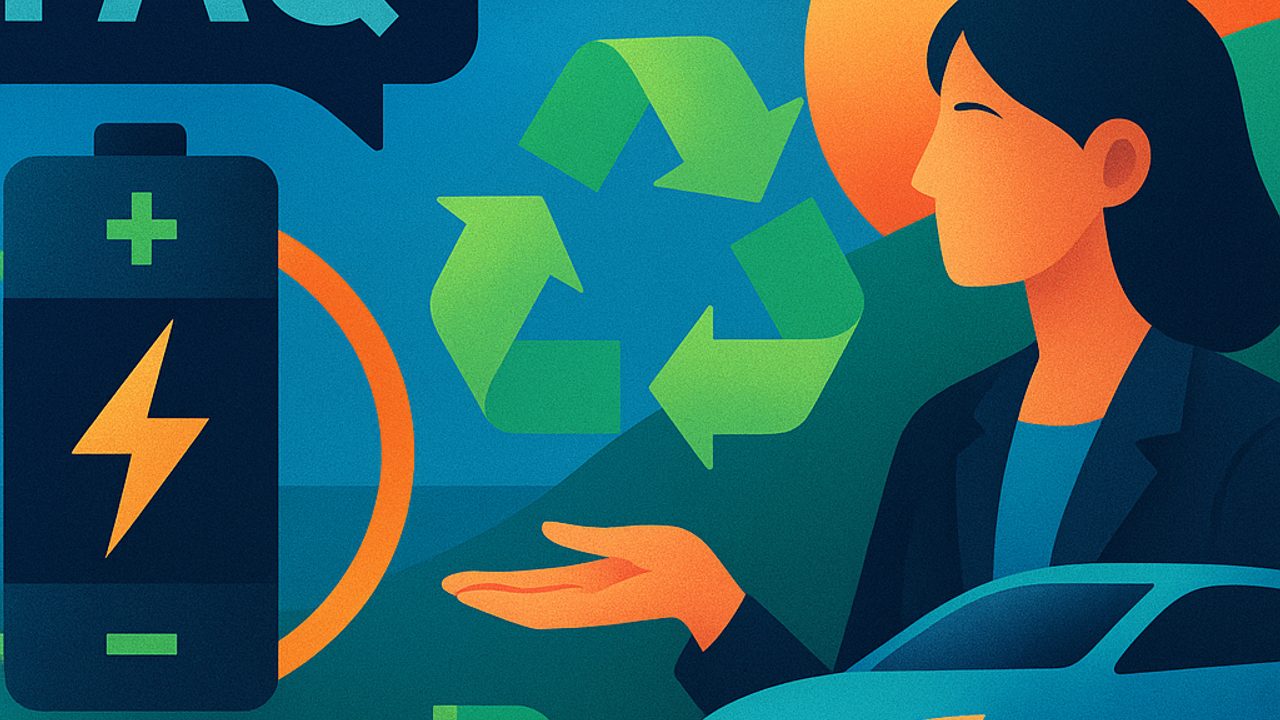
Batteries are everywhere: in cell phones, electric cars, and solar systems with storage. When they reach the end of their useful life, a practical question arises: what happens to them in Brazil?
This FAQ brings together direct answers for beginners, without jargon. The idea is to clarify what already exists, where the bottlenecks are, and which paths are being built.
What does it mean to recycle a battery?
Recycling a battery is not just shredding the material. The process involves:
- Proper collection and transportation, for safety - Controlled disassembly or shredding - Separation of materials such as metals, plastics, and electrolytes - Chemical or thermal treatment to recover components
In practice, not everything turns back into a new battery. Part of the materials goes to other industrial supply chains.
Which types of batteries are most recycled today in Brazil?
Currently, the most recycled are:
- **Lead-acid batteries** (automotive): a mature and well-structured chain - **Common and alkaline batteries**: partial recycling, focused on metals
What about lithium-ion batteries?
Lithium-ion batteries (present in electronics, solar systems, and electric vehicles) still have limited recycling in the country. Part of the material is processed locally, but more complex stages usually depend on being sent abroad.
Why is recycling lithium batteries more difficult?
Some practical reasons:
- Varied chemistries (LFP, NMC, NCA, among others) - Fire risk if handling is inadequate - High cost of separation processes - Still small volume of discarded batteries, which reduces scale
With the increase in electric vehicles and stationary storage, this equation is starting to change.
Does Brazil have rules for battery disposal and recycling?
Yes. Batteries fall under the logic of **reverse logistics**, which assigns responsibilities to manufacturers, importers, distributors, and retailers.
In practice, this means that:
- Collection points are mandatory for some types of batteries - Companies must prove environmentally appropriate destination - Consumers should not dispose of batteries in regular household waste
Enforcement still varies greatly between regions.
What happens to a battery after it is collected?
The typical path involves:
- Temporary storage in a safe location - Transportation to specialized companies - Processing to recover materials
Is everything reused?
No. Some components are recovered efficiently, others still have low economic return. The current goal is to reduce environmental risks and make the most of what is possible within technical limitations.
Does recycling alone solve the environmental impact of batteries?
No. Recycling is only part of the equation. Other important points include:
- Increasing battery lifespan - Reusing batteries in less demanding applications (second life) - Designing batteries from the outset with disposal in mind
These strategies help reduce pressure on raw materials and recycling systems.
What will change in the coming years in Brazil?
Some trends already underway:
- Investments in more complete recycling plants - Gradual standardization of processes - Growth in the volume of lithium batteries available for recycling
Progress is incremental, but necessary to keep up with the energy transition and the increase in energy storage in the country.
Comments
Comments are public and the sole responsibility of the author. Don’t share personal data. We may store technical signals (e.g. IP hash) to reduce spam and remove abusive, illegal, or off-topic content.