
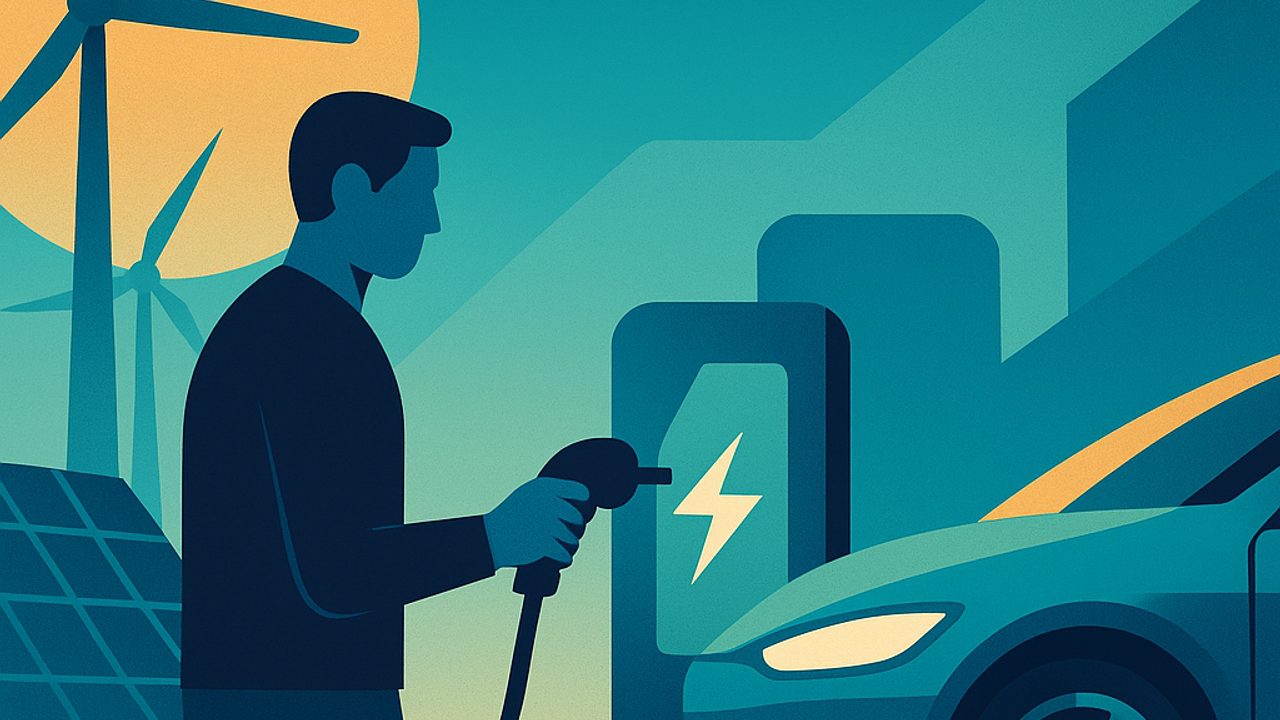
Charging electric vehicles (EVs) in Brazil takes place within an electrical system with very particular characteristics. Understanding this background avoids wrong expectations and helps use energy more efficiently.
For those just starting out, there is no need to master jargon. It is enough to know how the power mix works, when the grid is under more pressure, and what changes between charging at home, at work, or on the street.
Where electricity in Brazil comes from
The foundation of the Brazilian power mix is renewable, with a strong presence of hydroelectric plants. In years with regular rainfall, this means relatively clean and stable energy. In dry periods, more thermal plants come into operation.
In practice, the energy that reaches an EV charger can come from: - Hydroelectric plants, which account for the largest share of the system - Wind and solar, with growing participation - Thermal plants fueled by gas, oil, or coal, activated when water or wind is lacking
This mix changes throughout the year and influences both the cost and the environmental footprint of charging.
What this changes for those who charge an electric vehicle
When the mix is more renewable, charging tends to have a lower environmental impact. In moments of system stress, electricity becomes more expensive and more emissions are added to the equation.
For the user, this translates into two clear perceptions: - Charging times make a difference in the final cost - The idea of “zero emissions” depends on the context of the electrical system
The vehicle remains efficient, but it is not isolated from the reality of the grid.
Charging times and pressure on the grid
The Brazilian electrical system has times of higher demand, generally in the late afternoon and early evening. This is when homes, businesses, and industries consume more at the same time.
Charging an EV during this period can: - Increase energy costs - Contribute to local load peaks - Accelerate the need for grid reinforcements
Whenever possible, charging outside peak hours helps the system operate in a more balanced way.
Nighttime charging: an advantage with caveats
Charging at night is usually cheaper and more convenient, but neighborhoods with many EVs may feel the impact if everyone plugs in at the same time. That is why chargers with power control are gaining importance.
Types of charging: home, work, and public spaces
Each environment interacts with the power mix in a different way: - At home, charging is slower and more predictable, ideal for daily use - At work, it can take advantage of periods of lower grid demand - In public spaces, fast charging concentrates a lot of power in a short time
Fast-charging stations are useful, but they require robust infrastructure and planning to avoid overloading local transformers.
Solar energy and electric vehicles: where it makes sense
The combination of solar panels with EVs is common in Brazil, but it has limits. Solar generation happens during the day, while many cars are charged at night.
Without control or storage systems, solar mainly helps to: - Reduce overall household consumption - Offset part of the energy used for charging
It is not a direct connection, and this often surprises those who are just starting out.
The role of conscious consumption in the transition
Electric vehicles are part of the energy transition, not an isolated solution. The positive impact increases when they are accompanied by simple habits: - Avoid unnecessary charging - Adjust charger power to your routine - Pay attention to how and when energy is used
Understanding the power mix is the first step toward using an EV in a way that is more aligned with the Brazilian reality — technical, environmental, and operational.
Comments
Comments are public and the sole responsibility of the author. Don’t share personal data. We may store technical signals (e.g. IP hash) to reduce spam and remove abusive, illegal, or off-topic content.