
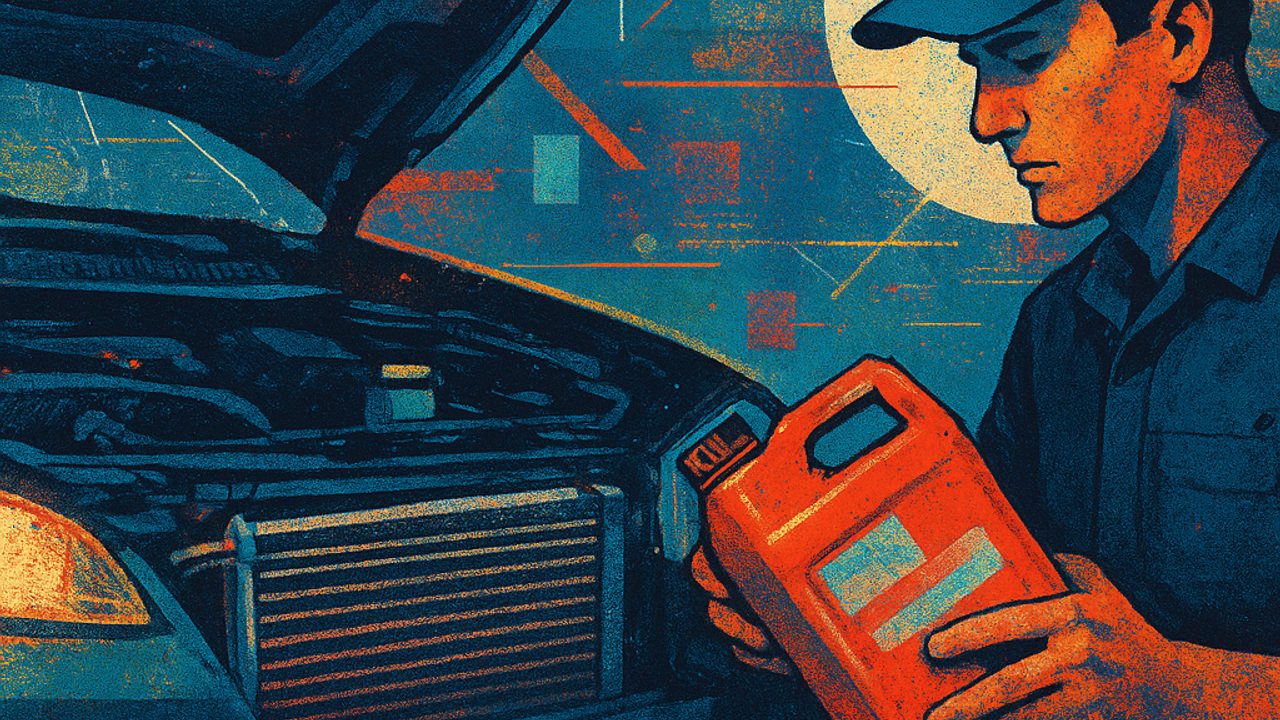
The cooling system keeps the engine at the right temperature. When it fails, losses come quickly — and so does risk. For those selling a car, it is one of the points that most raise suspicion during an inspection.
With a few simple precautions and some slightly more technical ones, it is possible to reduce risks, show care, and deliver a reliable car to the next owner.
What the cooling system does (and why it matters)
The engine generates a lot of heat. The cooling system controls this temperature to prevent warping, gasket failure, and seizure. It works together:
- Radiator dissipates heat - Coolant (mixed with water) protects and carries heat - Hoses, thermostat, and pump maintain flow
When one link fails, the dashboard warns — or the engine suffers in silence.
Correct coolant: composition, level, and safe replacement
No plain tap water. The correct coolant protects against corrosion, excessive temperature rise, and freezing (in cold regions).
Practical points:
- Use the type recommended in the manual (organic, inorganic, or hybrid) - Respect the indicated proportion (usually 50/50) - Check the level only with the engine cold
When to replace the coolant
Coolant ages. Over time, it loses its properties and becomes an enemy of the system.
- Common intervals: 2 to 5 years, depending on the product - Dark, rusty, or particle-filled fluid is a sign for replacement
Radiator: visual inspection that avoids headaches
The radiator suffers from dirt, impacts, and corrosion. A careful look already reveals a lot.
Check:
- Bent or clogged fins - Leaks on sides and welds - Traces of dried coolant (whitish or colored)
External cleaning with water and low pressure helps. Strong jets can make things worse.
Hoses, clamps, and cap: details that make a difference
Simple parts can cause major failures.
- Hoses should not be brittle or swollen - Clamps must be tight, without rust - The reservoir cap maintains correct pressure; if it fails, the system boils
Replacing these items is cheap compared to the damage they prevent.
Advanced procedures: bleeding and thermostat
After replacing coolant, trapped air in the system can cause overheating. Bleeding removes bubbles and normalizes circulation.
Thermostat
It controls when the engine starts cooling through the radiator. Stuck, it causes two problems:
- Closed: engine overheats too quickly - Open: engine runs cold, increasing consumption and wear
In deeper services, it is worth testing or replacing it.
Safety and resale: how to present a well-maintained system
For driving and for selling, transparency helps.
- Never open the system when hot: risk of severe burns - Keep records of coolant replacement - Show the reservoir clean and at the correct level during inspection
A well-maintained cooling system conveys confidence. And confidence makes negotiation easier, without unpleasant surprises along the way.
Comments
Comments are public and the sole responsibility of the author. Don’t share personal data. We may store technical signals (e.g. IP hash) to reduce spam and remove abusive, illegal, or off-topic content.