
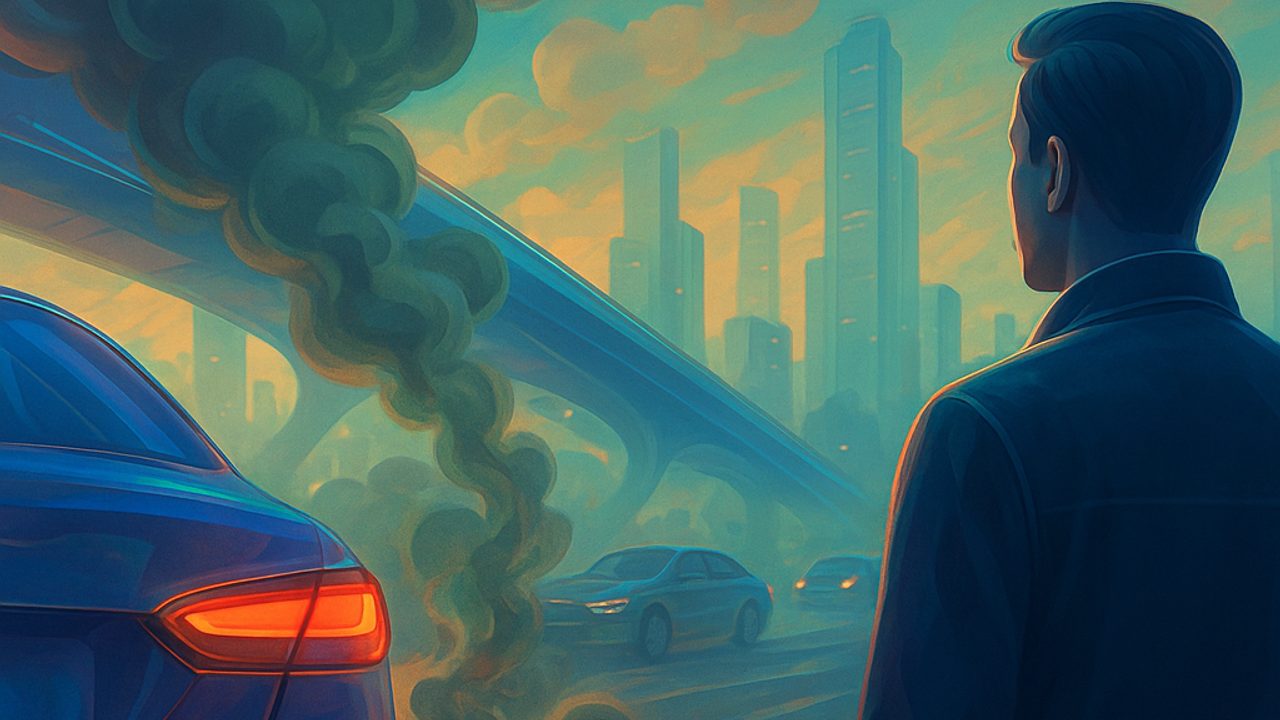
City air doesn’t get dirty by chance. It responds to how we move, the type of vehicle, the fuel, and even the time we leave home.
In daily life, small decisions add up to big effects. Understanding the concepts helps you choose better — without magical promises, focusing on what actually reduces emissions.
The basics: where traffic emissions come from
Most pollution linked to traffic comes from fuel combustion and physical wear of the vehicle. This includes:
- Exhaust gases (such as nitrogen oxides and carbon monoxide). - Fine particulate matter, generated both by combustion and by tire and brake wear. - “Invisible” emissions from congestion: engines running longer, frequent starts and stops.
Cars, motorcycles, buses, and trucks contribute in different ways, but the pattern repeats: the more time and effort the engine expends, the greater the load released into the air.
Pollutants that matter day to day
Not every pollutant has the same impact. In urban traffic, some deserve special attention:
- **Particulate matter (PM2.5 and PM10):** penetrates deep into the lungs and worsens air quality even far from roads. - **Nitrogen oxides (NOx):** linked to heavily loaded engines and congestion. - **Volatile organic compounds:** increase with cold starts and poor maintenance.
These pollutants don’t stay “trapped” on the avenue. They spread to nearby neighborhoods, schools, and residential areas.
The role of speed, congestion, and cold starts
Speed isn’t just about getting there faster. It changes how much is emitted per kilometer.
- Stop-and-go traffic raises emissions because of constant starting and stopping. - Very high speeds also worsen engine efficiency. - **Cold starts** are critical: in the first minutes, the engine emits more.
Simple adjustments that make a difference
- Group errands to avoid multiple short starts. - Prefer off-peak hours when possible. - Maintain a steady pace instead of unnecessary acceleration and braking.
Beyond the tailpipe: tires, brakes, and the road
Even electric vehicles generate air pollution through mechanical wear. Tires and brakes release fine particles, especially in heavy traffic.
In everyday terms, this means:
- Heavier vehicles tend to emit more non-exhaust particles. - Smooth driving reduces wear. - Proper tire inflation helps reduce friction and consumption.
From basic to advanced: choices that reduce emissions
Some decisions are immediate; others require planning but deliver ongoing benefits:
- **Basic:** up-to-date maintenance, properly inflated tires, avoiding excess load. - **Intermediate:** combining modes (walking to public transport), well-planned carpooling, less congested routes. - **Advanced:** rethinking the need for a car on certain trips, choosing more efficient vehicles for real-world use, organizing schedules to avoid peak hours.
The key point is to align the mode of transport with the type of trip — not the other way around.
How to measure impact without overcomplicating
Not everyone will calculate grams of pollutants. But you can track practical signals:
- Fuel consumption over the weeks. - Time spent stopped in traffic per trip. - Frequency of tire and brake maintenance.
When these indicators improve, emissions tend to fall as well. In the end, reducing air pollution from traffic is less about one big decision and more about consistency in daily choices.
Comments
Comments are public and the sole responsibility of the author. Don’t share personal data. We may store technical signals (e.g. IP hash) to reduce spam and remove abusive, illegal, or off-topic content.