
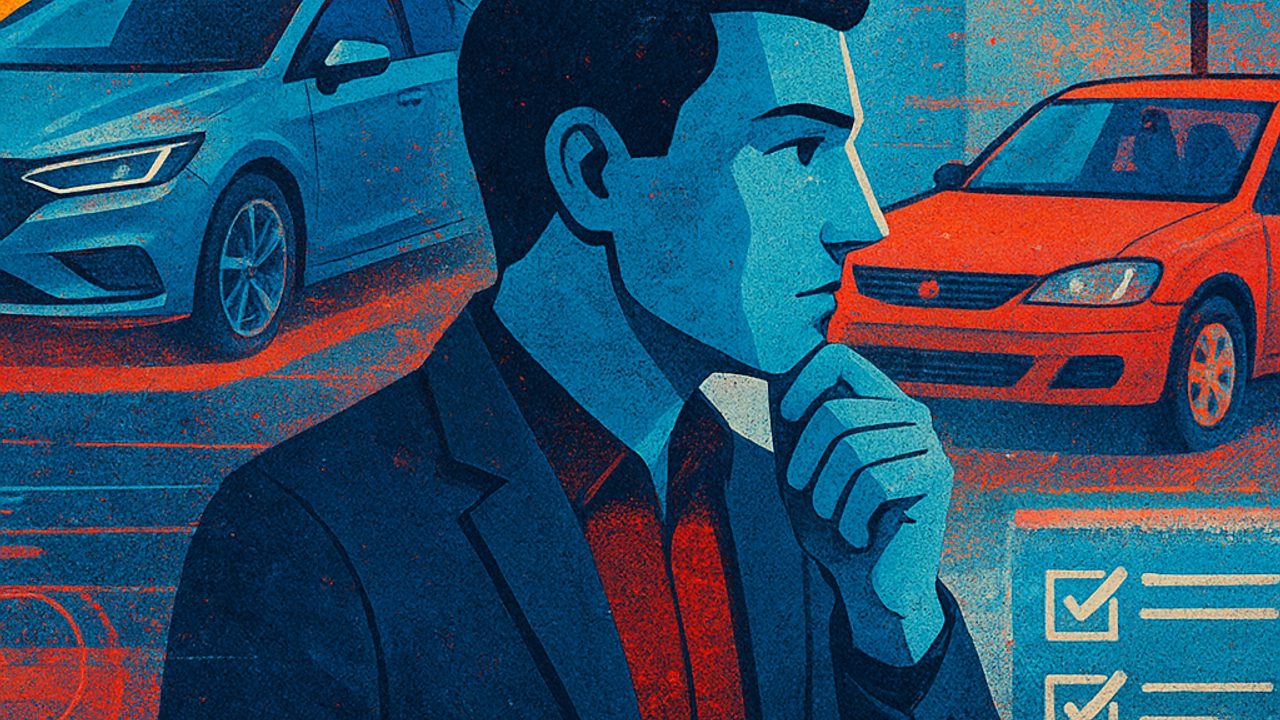
The choice between a dealership and a private seller usually starts with price, but ends with purchase security. Where there is haste, vague promises, or sloppy paperwork, scams find room.
This checklist focuses on what really changes between the two paths and brings three essential checks to reduce common risks in Brazil.
Where the risk changes: dealership vs. private seller
In general terms, the dealership offers structure and sales history; the private seller offers flexibility and lower prices. Risk does not disappear on either side — it just changes form.
- **Dealership**: tends to have a registered business number (CNPJ), a fixed address, and processes, but may push unclear services, accessories, or fees. - **Private seller**: direct negotiation and competitive price, but greater exposure to irregular documents, hidden intermediaries, and pressure to close quickly.
Understanding these differences helps apply the right checklist at the right time.
Checklist 1 — Seller and vehicle identity
This is the foundation for avoiding listing scams and “a car that doesn’t belong to the seller.”
What to check at a dealership
- Active CNPJ compatible with vehicle sales activity. - Invoice or purchase and sale contract in the company’s name. - Chassis number and license plate physically checked against the vehicle documents.
What to check with a private seller
- Vehicle document in the name of the person signing the sale. - Avoid intermediaries who “handle everything” without a clear power of attorney. - Be suspicious of long stories justifying an urgent sale.
Common scams arise when the seller’s identity does not match the vehicle’s.
Checklist 2 — Money: how to pay without losing proof
The payment method is one of the points most exploited by scammers.
At a dealership
- Demand itemization of amounts: vehicle, fees, services, and accessories. - Keep receipts for down payments, installments, and any refunds. - Watch out for “administrative fees” without objective explanation.
With a private seller
- Prefer identified bank transfers. - Avoid payments to third-party accounts. - Never hand over the full amount before signing the receipt.
If the payment leaves no clear trail, the risk increases.
Checklist 3 — Delivery, receipt, and after-sales
Many problems appear after the car leaves the garage.
Critical points at a dealership
- Delivery deadline in writing, including promised accessories. - Warranty conditions explained without ambiguity. - Service order for any agreed adjustment.
Critical points with a private seller
- Properly filled-out purchase and sale receipt. - Immediate communication of the sale to avoid future fines. - Agree in writing on what will be delivered with the vehicle.
Without records, an agreement becomes one person’s word against another’s.
When “cheap” and “safe” meet
Low price is not synonymous with a scam, just as structure does not guarantee integrity. What protects the consumer is method: verify identity, record payment, and formalize delivery.
Applying the three checklists according to the type of seller reduces dangerous shortcuts and leaves less room for unpleasant surprises.
Comments
Comments are public and the sole responsibility of the author. Don’t share personal data. We may store technical signals (e.g. IP hash) to reduce spam and remove abusive, illegal, or off-topic content.