
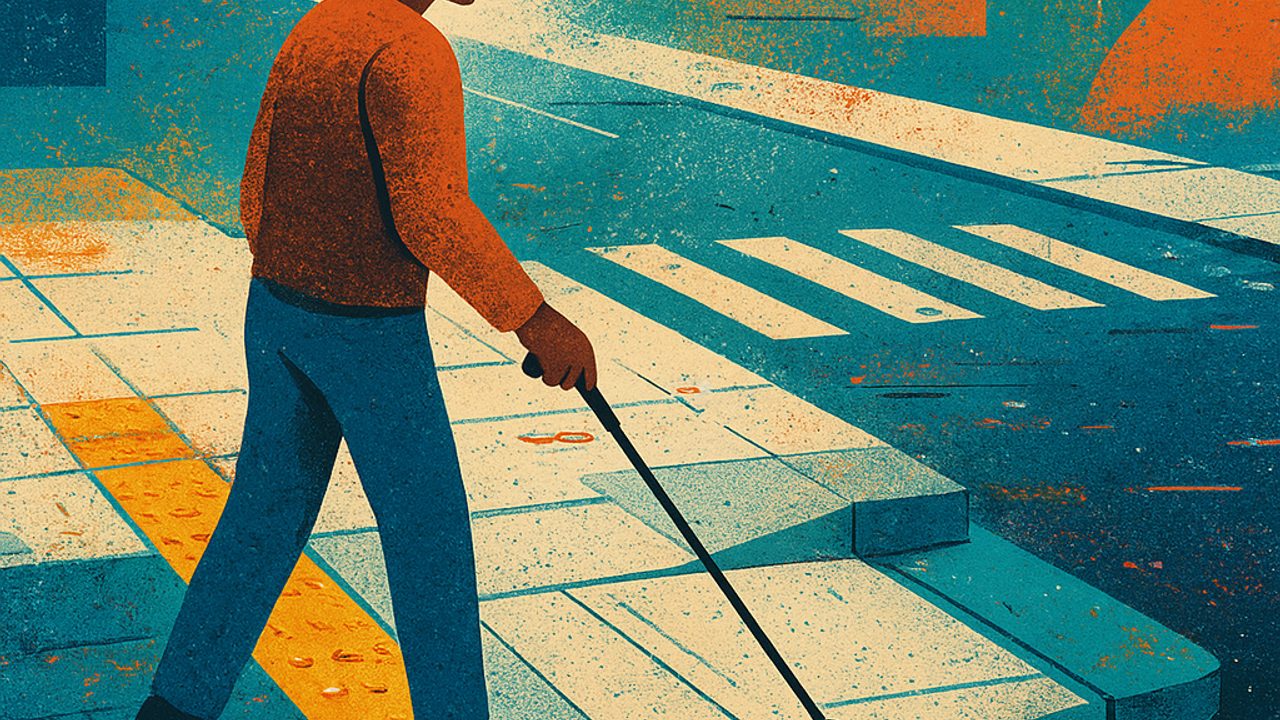
A good sidewalk is one that lets you move forward without scares, detours, or improvisation. For many people, this goes unnoticed. For those who use a wheelchair, cane, stroller, or have low vision, every meter counts.
In Brazil, the lack of standards and irregular maintenance create avoidable barriers. Understanding the basics about ramps, surfaces, and obstacles helps identify problems and demand more effective solutions.
Access ramps: when they help and when they hinder
A ramp is not a street-corner decoration. When poorly built, it becomes a risk. Excessive slope, hidden steps, or lack of handrails can make access impossible.
Points to watch in daily life: - Gentle slope that allows going up and down with control. - Direct connection to the crosswalk, without "jumps" or level changes. - Firm, non-slip surface, including on rainy days.
Improvised ramps made of concrete or asphalt, common after resurfacing, often create a new obstacle in place of the old one.
Sidewalk surface: regularity matters more than aesthetics
Pretty stone does not guarantee safe circulation. Uneven, loose, or slippery surfaces require extra effort and increase the risk of falls.
In residential and commercial areas, observe: - Continuous surface, without holes or loose slabs. - Avoid highly polished materials that become slippery easily. - Smooth transitions between different types of surface.
Patchwork sidewalks, with a "quilt" of materials, make it harder to read the path and quickly tire those with reduced mobility.
Tactile paving: guidance, not decoration
Tactile paving has a clear function: guiding people with visual impairments. When installed without criteria, it loses meaning or creates confusion.
Good practices include: - Directional strips pointing to safe, continuous paths. - Warning before crossings, stairs, or abrupt changes. - Color contrast in relation to the surrounding surface.
Avoid common situations such as tactile paving leading to poles, walls, or blocked areas.
Common obstacles that break accessibility
Even wide sidewalks can be inaccessible due to poorly positioned interferences.
The most frequent: - Poles, signs, and trash bins in the middle of the clear path. - Tables, merchandise, and A-frame signs encroaching on the passage. - Unpruned vegetation, with branches at face height.
The so-called clear path should allow continuous circulation, without zigzags or dangerous detours.
Corners and crossings: where problems pile up
It is at corners that many routes get stuck. Lack of ramps, water accumulation, holes, and level differences add up to vehicle traffic.
Warning signs: - Ramp that ends outside the crosswalk. - Open or uneven storm drain. - Curb ramp lowered on only one side of the street.
An accessible crossing starts on the sidewalk and ends on the opposite sidewalk, without interruptions.
Maintenance: accessibility also ages
A sidewalk that is accessible today may not be tomorrow. Construction, tree roots, and natural wear change the scenario quickly.
Worth observing: - Sinkholes after utility works. - Uneven manhole covers. - Temporary patches that become permanent.
Regular maintenance is part of accessibility, not an urban luxury.
The perspective of those who move around every day
Those who walk through the city learn to read the sidewalk. Small details indicate whether the path is reliable or whether it will be necessary to look for an alternative route.
Creating more accessible cities involves listening to these experiences and treating the sidewalk as essential infrastructure. It is not a favor; it is the foundation for more people to move around with autonomy and safety.
Comments
Comments are public and the sole responsibility of the author. Don’t share personal data. We may store technical signals (e.g. IP hash) to reduce spam and remove abusive, illegal, or off-topic content.