
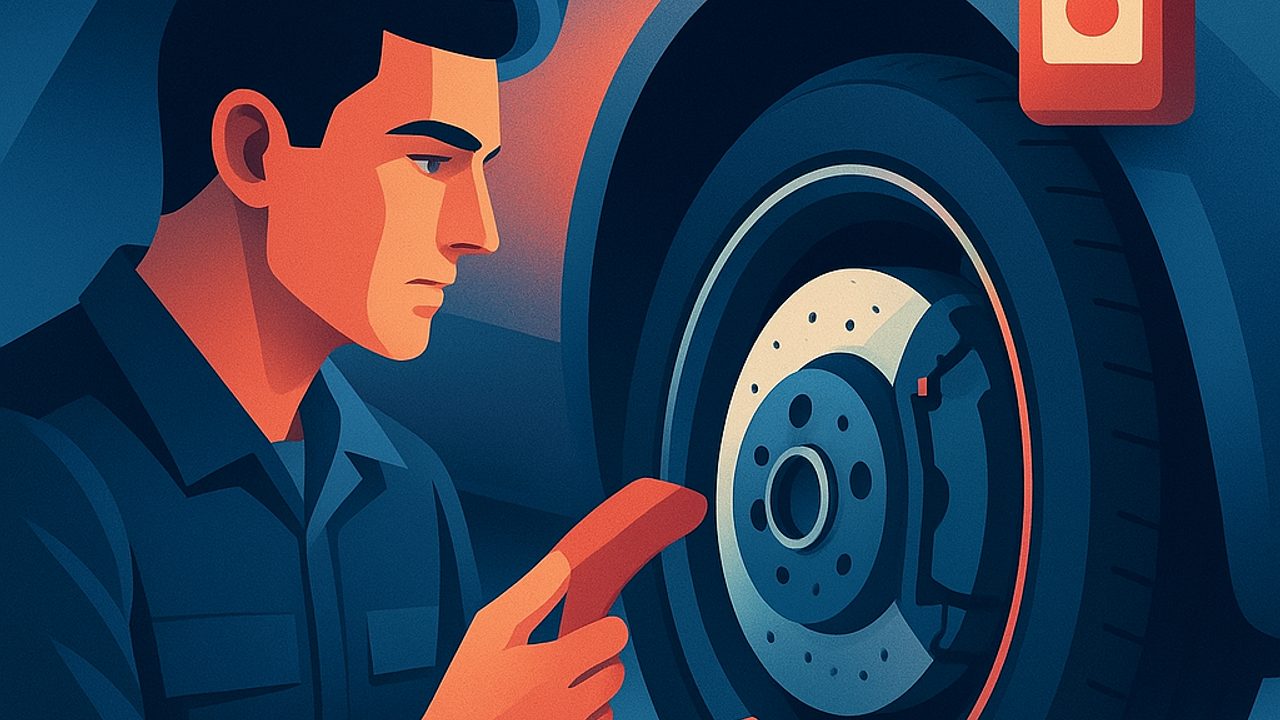
Brakes don’t allow for improvisation. For beginners, understanding the basics helps avoid scares in traffic and keeps the car ready to drive — and to sell.
The answers below are straightforward, focused on safety and everyday use. No complicated terms.
When should I replace the brake pads?
Replace them when clear signs appear or when the minimum thickness is reached. The most common alerts:
- Constant metallic squeal when braking. - Pedal starting to travel more than normal. - Wear warning light (on some models).
As a practical reference, many pads last between 30,000 and 50,000 km, but usage rules: heavy traffic and long descents shorten their life.
Do worn pads damage the disc?
Yes. Driving until the pad is fully worn usually marks the disc. The cost goes up because, besides the pad, the disc may also need replacement.
Quick tip
If the mechanic suggests replacing pads and discs together, ask why and ask to see the part. Discs with deep grooves or warping compromise braking.
Do brake discs really warp?
They do. The classic symptom is steering wheel vibration when braking, especially at medium/high speeds.
Common causes:
- Repeated hard braking with the assembly very hot. - Cold water right after intense use (puddles, washing). - Incorrect wheel torque.
Ignoring vibration reduces efficiency and increases stopping distance.
Does brake fluid need to be changed even without leaks?
Yes. The fluid absorbs moisture over time, losing efficiency.
Signs of expired fluid:
- “Spongy” pedal. - Less firm braking on descents.
Typical interval: every 1 to 2 years, according to the manual. Preventive replacement is a safety item.
Can I top up the fluid instead of replacing it?
Topping up only fixes the level momentarily. It does not renew the properties of the old fluid.
Attention
Frequent drops in level may indicate pad wear or a leak. It’s worth investigating before continuing to drive.
Can different types of fluid be mixed?
Not recommended. Different types (DOT 3, DOT 4, etc.) have distinct characteristics. Mixing can lower the boiling point and compromise braking.
If you don’t know which is in the car, the safe route is a complete replacement with bleeding.
What should I check in the brakes before listing the car?
To sell with peace of mind and safety:
- Pads with good thickness. - Discs without vibration or noise. - Clear fluid within the service interval.
Up-to-date brakes avoid stalled negotiations and build buyer confidence — besides protecting the driver.
Comments
Comments are public and the sole responsibility of the author. Don’t share personal data. We may store technical signals (e.g. IP hash) to reduce spam and remove abusive, illegal, or off-topic content.