
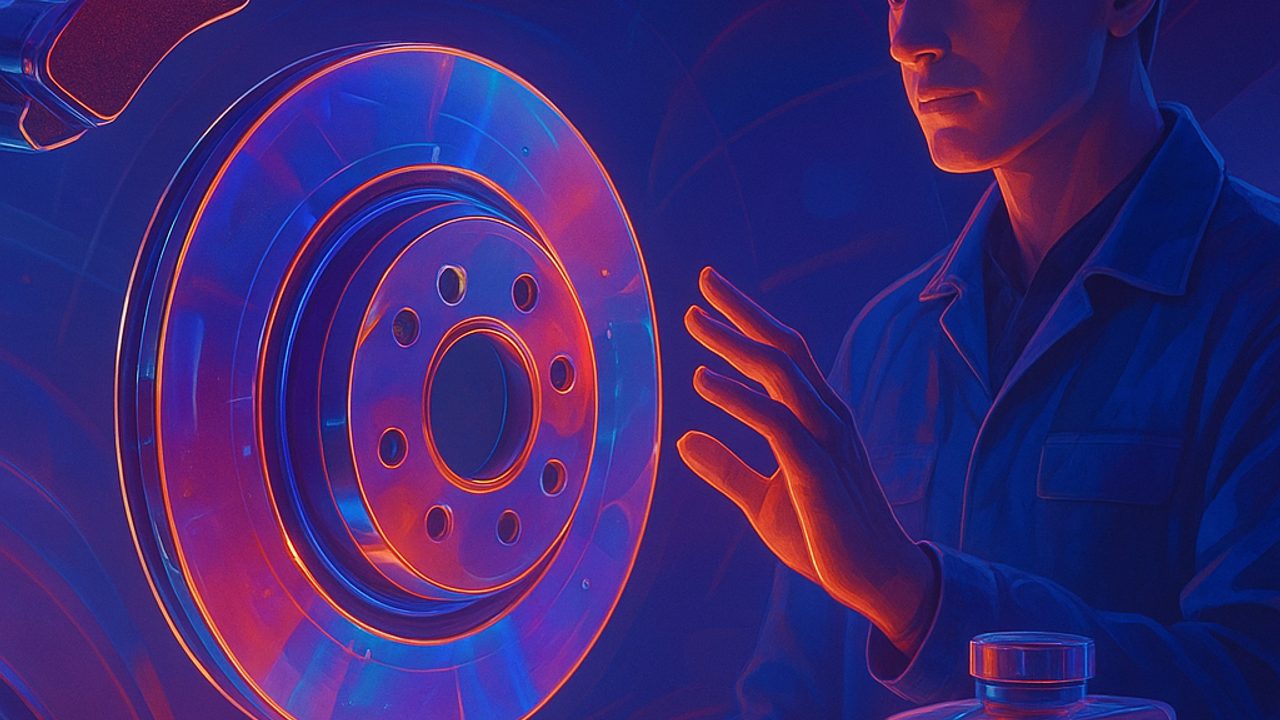
Brakes usually don’t give much warning before failing. That’s why everyday myths can turn into real risk, especially for those who are learning.
Understanding the basics about pads, discs, and fluid helps you drive more safely and also weighs positively when it comes to resale.
Myth: pads only need replacement when they make noise
**Truth:** noise is a late warning. Pads wear out before that.
- Many models have a material that starts squealing when it’s at the limit. - If you wait for constant noise, the pad may already be at the end and start scoring the disc. - In urban use, periodic visual inspection avoids having to replace everything at once.
For those who plan to sell, worn-out pads give the impression of neglect and become a bargaining point for discounts.
Truth: the disc isn’t eternal — but it’s not replaced every time
Discs last longer than pads, but they’re not “forever.”
- Replacing discs at every pad change is excessive in most cars. - Deep grooves, vibration when braking, and reaching minimum thickness call for replacement. - Warped discs increase braking distance, even with new pads.
A disc in good condition makes the pedal more predictable and is appreciated in a purchase inspection.
Myth: brake fluid only drops when there’s a leak
**Truth:** the level can drop as pads wear.
- As the pad gets thinner, the piston moves out and “uses” fluid from the reservoir. - Topping up without checking the pads can mask pending maintenance. - Leaks are the exception, but they need immediate attention.
Never ignore a rapid drop in level or stains on the ground.
Truth: brake fluid expires — even without driving much
The fluid absorbs moisture from the air over time.
- Moisture lowers the boiling point and makes the pedal feel spongy during long braking. - A car that’s rarely used also needs periodic fluid changes. - Old fluid compromises safety on descents and in heavy traffic.
At resale, a recent fluid change history conveys care and up-to-date maintenance.
Myth: hard braking always wears the system more
**Truth:** the problem is unnecessary repetition.
- Firm, occasional braking is expected in safety situations. - Riding the brakes heats the system and accelerates wear. - Anticipating traffic and using the brakes progressively preserves everything.
This simple habit helps both the driver and whoever evaluates the car later.
Truth: pedal feel is an important signal
Your foot feels what your eyes don’t see.
- A very low or spongy pedal indicates air or tired fluid. - Vibration when braking points to an uneven disc. - Uneven response may be contaminated pads or irregular wear.
Noting these signs and correcting them early avoids scares and adds value in negotiation.
For beginners: three quick and safe checks
- Check the fluid level and color (too dark is a warning). - Pay attention to noises, vibrations, and changes in the pedal. - If in doubt, request a simple visual inspection before listing the car.
Well-maintained brakes don’t draw attention — and that’s exactly what’s expected from a safety item.
Comments
Comments are public and the sole responsibility of the author. Don’t share personal data. We may store technical signals (e.g. IP hash) to reduce spam and remove abusive, illegal, or off-topic content.