
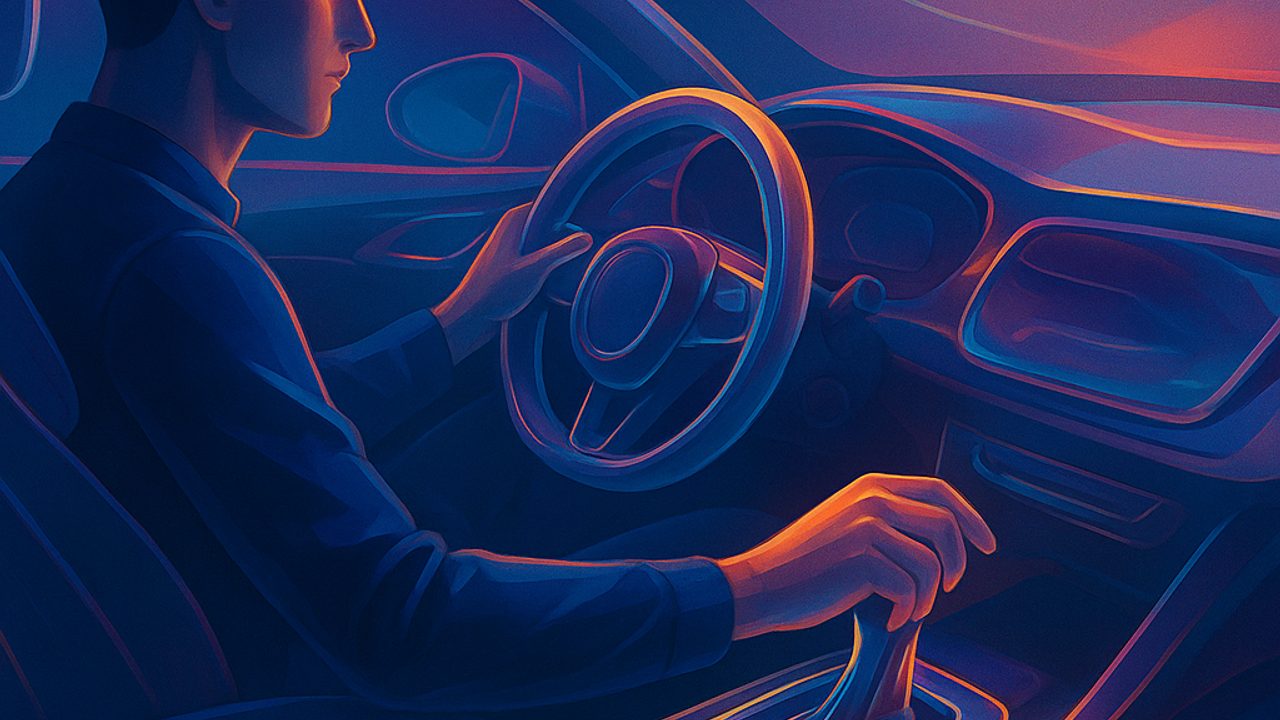
Those coming from a manual transmission usually have the same questions when switching to an automatic. The answers below go straight to the point, with a focus on safety in daily use.
Can I shift from D to R (or vice versa) while the car is moving?
No. Bring the vehicle to a complete stop before shifting between D (Drive) and R (Reverse). Shifting while the car is moving puts stress on the transmission assembly and can cause jerks or engagement failures — in addition to increasing the risk of collisions during maneuvers.
In quick stops, should I use N or stay in D?
Stay in D with your foot on the brake. At traffic lights and short traffic jams, there is no safety benefit in shifting to N (Neutral). Excessive shifting can cause unexpected engagement when moving off, especially on slopes.
When does N make sense?
- During long stops, such as very slow queues. - While pushing the vehicle (a rare and occasional situation).
Can I use P (Park) before pulling the parking brake?
It’s not ideal. First apply the parking brake; then engage P. This prevents the car’s weight from being “hung” on the transmission, reducing jolts when moving off and the risk of the vehicle moving on inclines.
On hills, what is the safest sequence?
To park uphill or downhill:
- Stop the car with the service brake. - Apply the parking brake. - Slowly release the service brake. - Engage P.
When leaving, do the reverse. This simple routine prevents the car from rolling and protects the transmission.
Do I need to warm up the transmission before driving?
No. In modern cars, it’s enough to drive gently for the first few minutes. Avoid hard acceleration right after starting; this helps the transmission operate within the ideal temperature range and reduces abrupt responses.
Is it safe to tow or be towed with an automatic transmission?
It depends on the model, but the safety rule is to avoid it. Towing with the wheels on the ground can damage the transmission if it’s not designed for that. In case of breakdown, prefer a flatbed tow truck.
Is changing the transmission fluid always necessary?
Follow the manufacturer’s recommendation. Old fluid can cause slipping and loss of response, which affects safety. On the other hand, changing it without proper criteria can also cause problems. If in doubt, watch for signs such as jerks, delayed engagement, and noises — and seek a technical evaluation.
What should you never do with an automatic transmission?
- Descend long slopes only in D, without using lower gear positions (when available). - Accelerate hard while the car is still engaging. - Keep your foot on the accelerator and the brake at the same time. - Ignore dashboard warnings related to the transmission.
These simple precautions reduce day-to-day risks and preserve the transmission’s operation, which also adds value when it’s time to sell the car.
Comments
Comments are public and the sole responsibility of the author. Don’t share personal data. We may store technical signals (e.g. IP hash) to reduce spam and remove abusive, illegal, or off-topic content.